

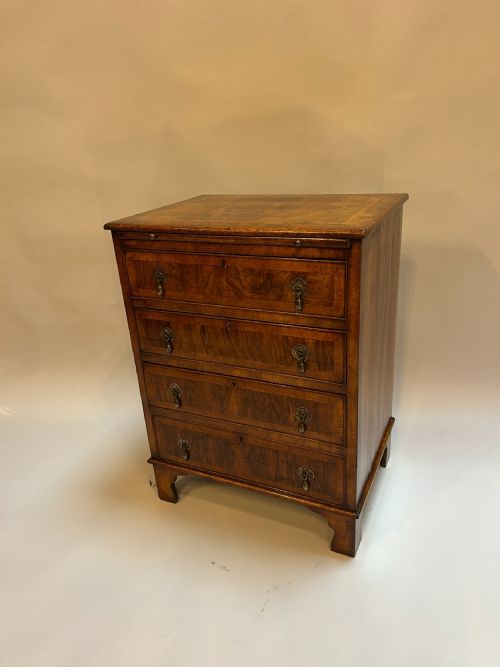
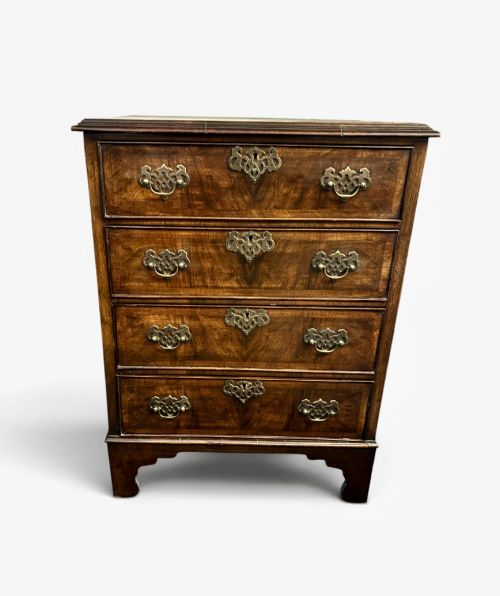
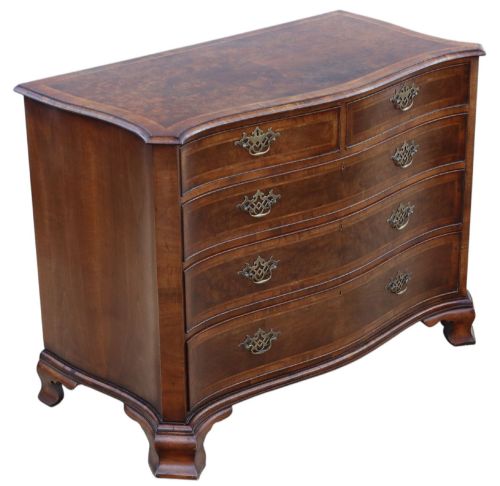
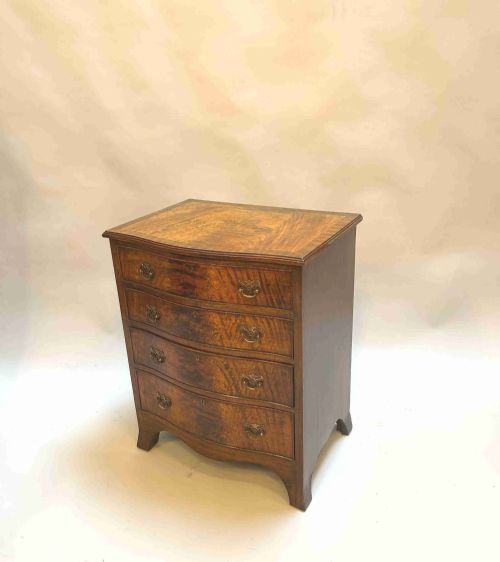


Vintage Walnut Bachelor Chest
A vintage walnut bachelor chest brings compact, figured timber and classic proportions to a room, offering both surface space and deep drawers.
Vintage Walnut Bachelor Chest
A vintage walnut bachelor chest is a compact chest of drawers, often found in smaller proportions suited for bedside or living space use. These pieces bridge the gap between traditional cabinet making and domestic practicality.
The selections here span from the eighteenth century through the Edwardian era up to the 1920s and 1930s, encompassing Georgian styles and Queen Anne revivals. You will encounter straightforward chests alongside serpentine commodes and bedside pairs.
Burr walnut and figured veneers dominate the surface appearance, supported by secondary timbers like oak. The smaller chest formats appear frequently across the periods represented.
Construction and materials
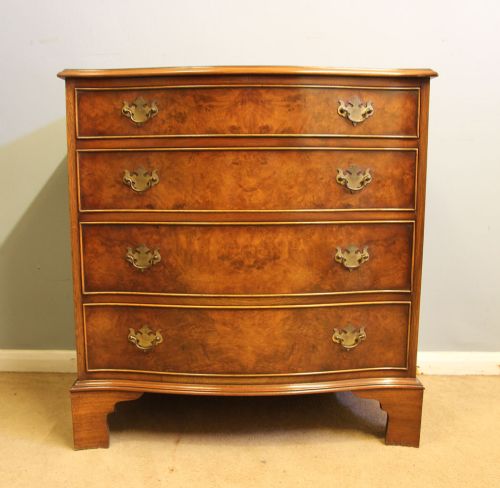
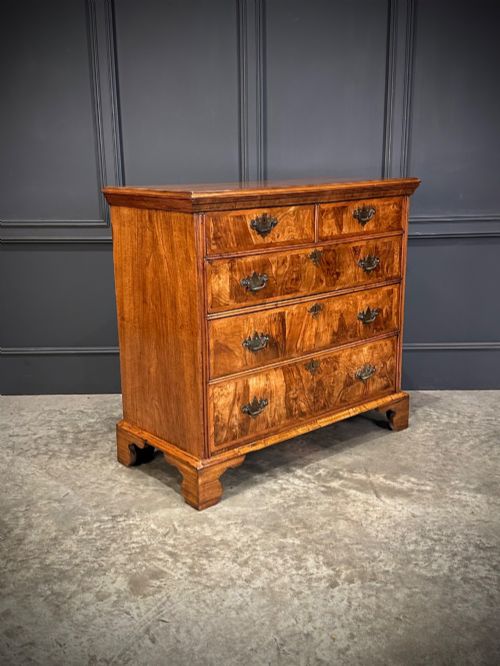
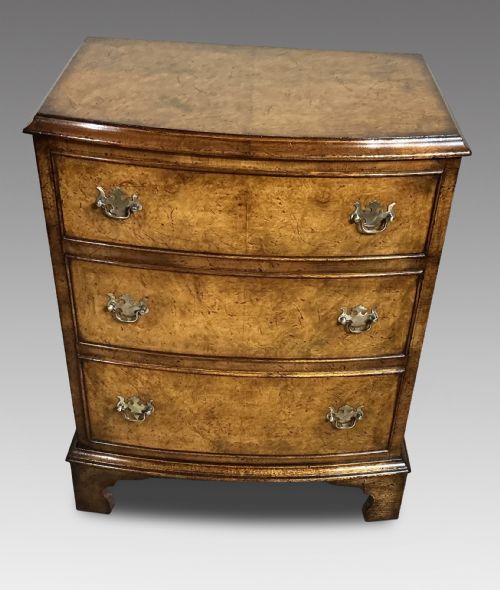
Cabinet makers utilised rich burr walnut veneer over solid carcases, creating highly patterned grain figures across the drawer fronts and top surfaces. Crossbanding and stringing often frame these figured panels to accentuate the geometry of the piece.
Brass hardware, including swing handles and escutcheons, provides functional contrast to the dark timber tones. Drawer linings and interior structures frequently rely on oak for durability.
Vintage Walnut Bachelor Chest Retail Price Guide 2026
Typical asking prices for vintage walnut bachelor chest among the pieces listed under this phrase on Sellingantiques today, from the lower quarter to the upper quarter. They describe what is for sale here now, not the wider market.
Even the smallest bedside chest often conceals neat oak drawer linings built to outlast generations of midnight reading.
Distinguishing quality
The finesse of the veneer selection sets the finer examples apart, particularly where burr walnut grain matches symmetrically across multiple drawers. Superior execution shows in the crispness of the serpentine curves and the tight integration of crossbanded borders.
Proportion and period integrity also govern value, as revivals executed with traditional joinery methods compare favourably against simpler twentieth-century interpretations. The handling of secondary timbers inside the drawers reveals the underlying standard of workshop production.
The Vintage Walnut Bachelor Chest Glossary
- Burr walnut
- A prized veneer taken from the growth excrescences of the walnut tree, showing intricate, swirling grain patterns. It requires expert sawing and laying to prevent splitting.
- Serpentine
- A curved shape featuring a convex centre flanked by two concave ends, or vice versa. This undulating outline demands advanced woodworking skill.
- Crossbanding
- A border technique where thin strips of veneer are laid perpendicular to the main grain direction. It frames the primary surface panel.
- Escutcheon
- A protective plate surrounding the keyhole of a drawer or cabinet door. It is typically cast in brass.
- Queen Anne style
- A design movement characterised by cabriole legs, pad feet, and graceful curved lines. Walnut was the predominant primary timber during its development.
Vintage Walnut Bachelor Chest: Frequently Asked Questions
How do I care for walnut veneer?
Walnut veneer requires protection from direct sunlight and excessive humidity to prevent the timber from fading or the glue beneath from lifting. Regular dusting with a soft, dry cloth preserves the finish.
A light application of quality beeswax periodically helps nourish the grain without building up heavy residues.
Are these chests eighteenth century?
Some pieces date to the eighteenth century or the Georgian period, while many others are later revivals from the Edwardian era, 1920s, and 1930s. The revival pieces often emulate the earlier Queen Anne and Georgian aesthetics.
Examining the construction methods, secondary timbers, and internal hardware helps distinguish genuine eighteenth-century examples from later interpretations.
How can I use a bedside chest?
A bedside chest provides a sturdy surface for a lamp and books while offering enclosed drawer storage for nighttime essentials. Their compact proportions make them suitable for flanking a bed without dominating the room.
Pairs of these chests appear frequently in twentieth-century revivals, creating a balanced bedroom arrangement.