


Figured Mahogany Bookcase
A figured mahogany bookcase brings warmth and grand proportion to a room, storing volumes behind glass doors while displaying rich timber grain.
Figured Mahogany Bookcase
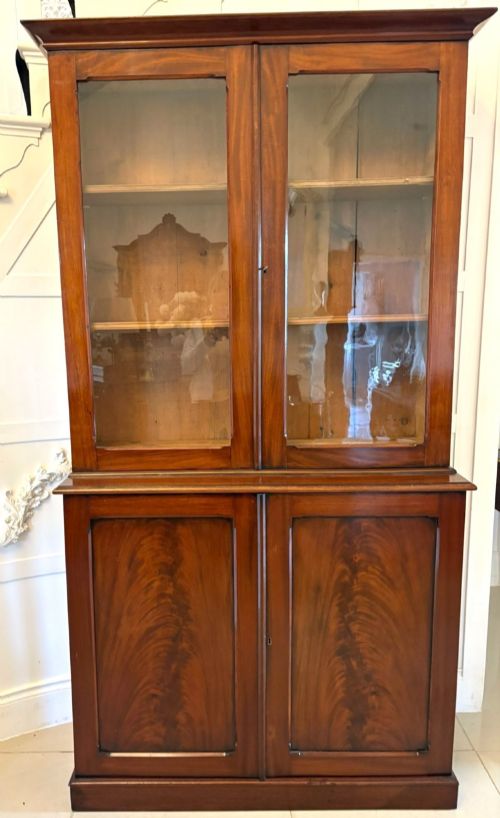
A figured mahogany bookcase is a substantial timber storage piece designed to hold libraries and display bound volumes. The selection on this page centres on sturdy upright forms originating across the Georgian, Regency, and Victorian eras.
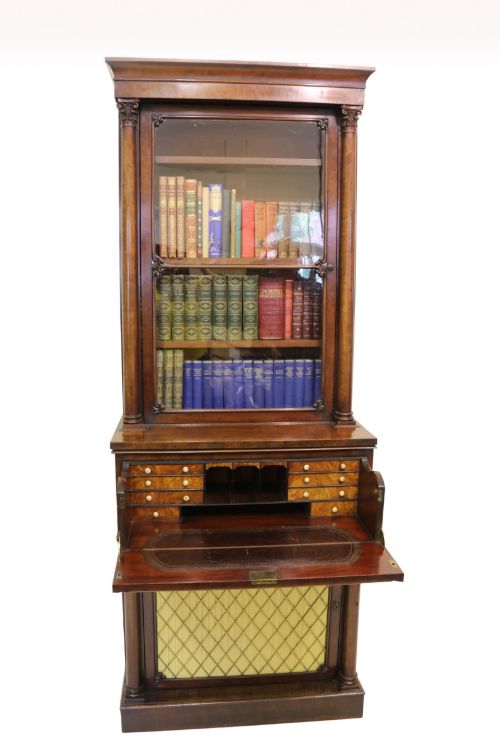
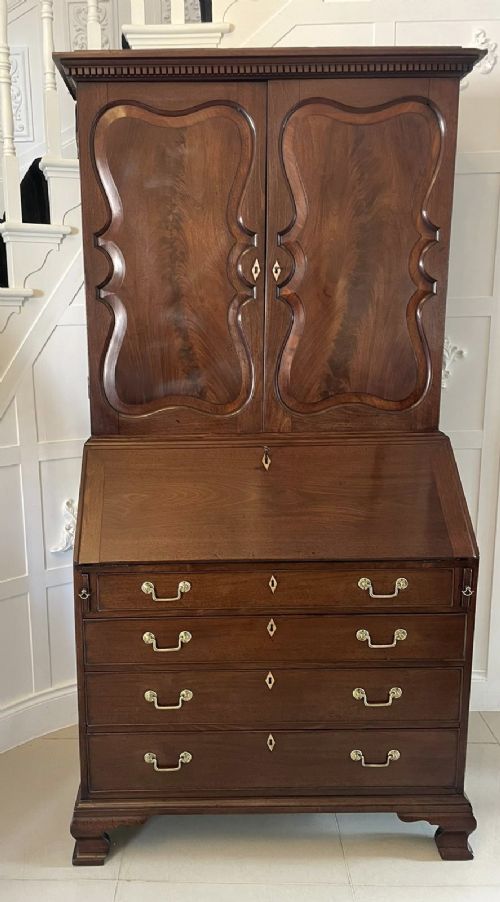
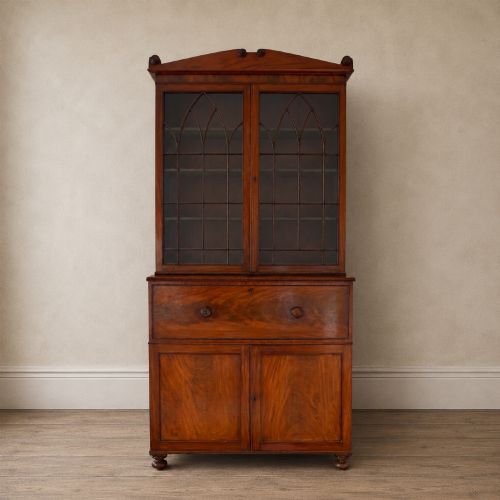
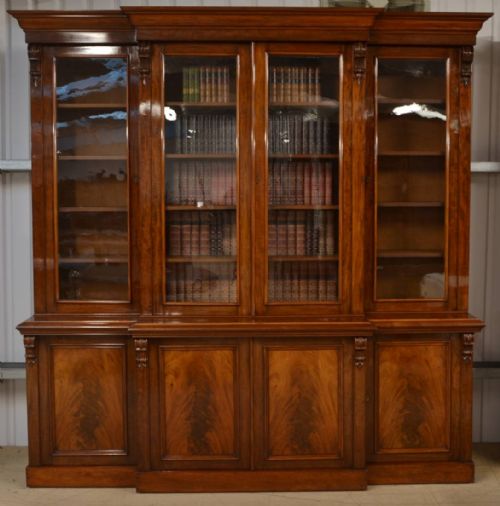
Most examples appear as secretaire bookcases, bureau bookcases, or breakfront library cabinets fitted with glazed doors and internal drawers. These practical variations combine writing surfaces with generous shelving to suit domestic studies and formal rooms alike.
How they were made
Cabinet makers utilised solid mahogany and flame mahogany veneer applied to primary structures to create striking movement across the front panels. Timber selection dictated the visual depth, while brass hardware and leather inserts completed the finer details.
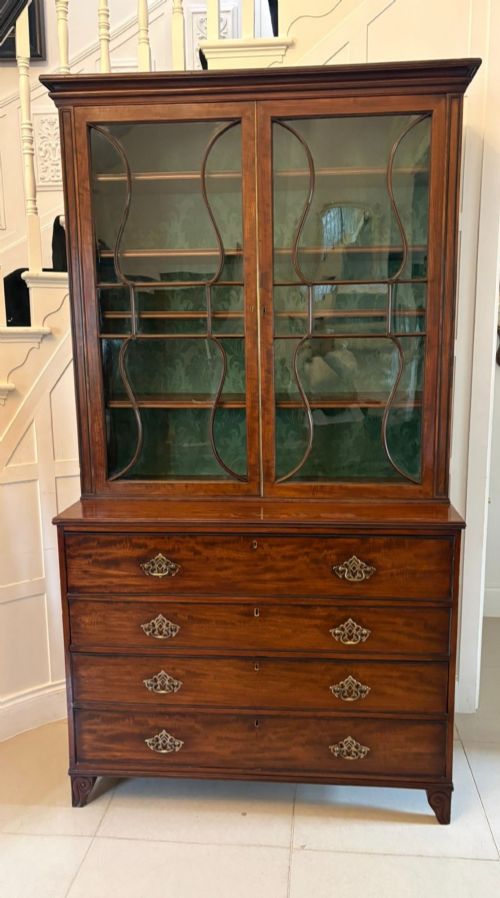
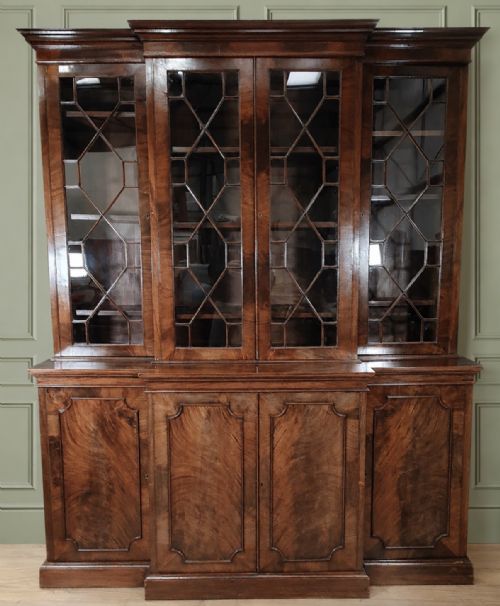
Glazing bars divided the upper glass doors into geometric panes, protecting the books stored within. Internal fitted drawers and pigeonholes required precise joinery to integrate smoothly into secretaire pull-down compartments.
Many secretaire drawers include hidden compartments designed to guard private correspondence from curious houseguests.
What varies in quality
The intensity and match of the veneer grain pattern distinguish standard utilitarian furniture from exceptional cabinet work. Breakfront proportions and finely detailed glazing bars indicate the level of ambition held by the original maker.
Interior complexity plays a role in how a piece is judged, particularly the presence of fitted secretaire drawers with secret compartments. The integration of brass fittings and ormolu mounts further elevates the character of the timber.
Gillows of Lancaster
The Figured Mahogany Bookcase Glossary
- Figured mahogany
- Timber exhibiting a decorative, rippled grain pattern, often enhanced by flame veneer techniques. This wood forms the visual centrepiece of these large storage items.
- Secretaire bookcase
- A tall cabinet incorporating a pull-down writing drawer fitted with small compartments and pigeonholes. It merges a desk with traditional bookshelf storage.
- Breakfront
- A cabinet design where the central section projects forward from the flanking outer wings. This architectural arrangement adds depth and presence to large library furniture.
- Glazing doors
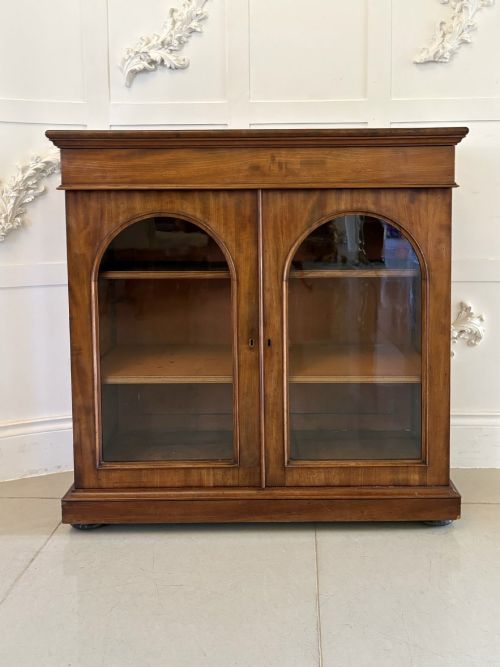
- Framed glass panels fitted to the upper section of a cabinet to protect books from dust. These doors often feature timber bars dividing the glass into smaller panes.
- Bureau bookcase
- A combination furniture piece featuring a slanted desk flap opening above lower drawers, surmounted by a bookshelf cabinet. It serves both writing and storage functions.
Figured Mahogany Bookcase: Frequently Asked Questions
What is a secretaire bookcase?
A secretaire bookcase contains a dedicated writing drawer that drops open to reveal small drawers and pigeonholes. This dual function allowed owners to write letters without needing a separate desk.
Above this section, glazed doors protect the library shelves from dust while displaying the book bindings.
How do I date a mahogany bookcase?
Dating relies on observing the overall architectural style, construction methods, and hardware choices. Georgian and Regency pieces often show lighter proportions and specific bracket feet, while Victorian examples tend to be heavier.
Timber grain and veneer thickness also offer clues to the period of manufacture.
Where should I place a breakfront bookcase?
Breakfront bookcases require a large wall with sufficient clearance to accommodate their grand proportions and projecting centre sections. Placing them away from direct sunlight protects the mahogany timber grain and veneer from fading.
Rooms with stable humidity levels help preserve the antique joinery and glass panels.
What is flame mahogany?
Flame mahogany is a decorative veneer sliced from timber where the branch meets the trunk, producing a distinctive fire-like ripple pattern. Cabinet makers reserved this figured wood for prominent drawer fronts and cabinet doors.
It catches the light differently depending on the viewing angle, adding depth to the piece.