







Figure in Landscape Watercolour
A figure in landscape watercolour captures the quiet interaction between people and their surroundings, offering a glimpse into rural, coastal, and urban scenes from past centuries.
Figure in Landscape Watercolour
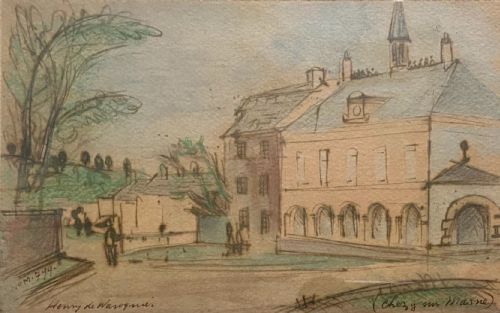
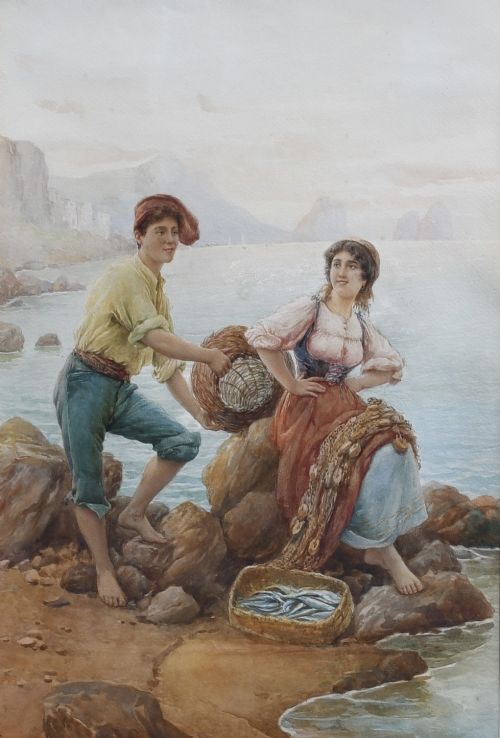
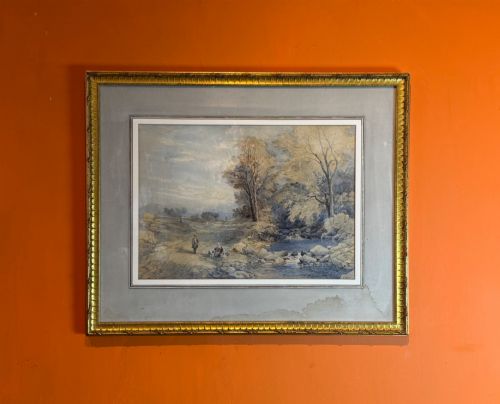
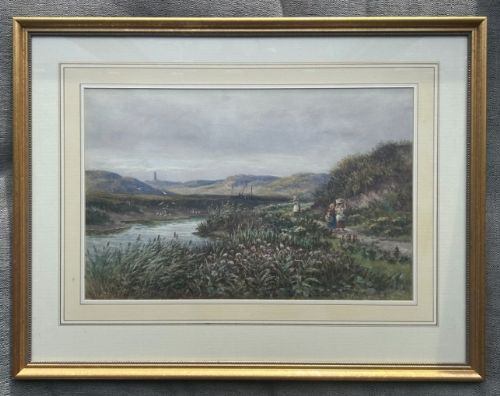
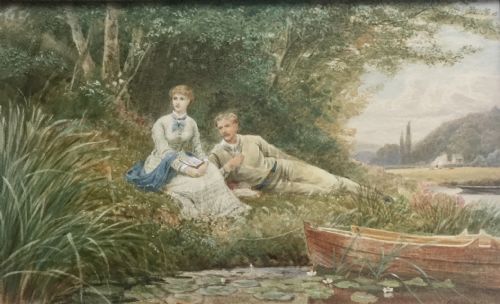
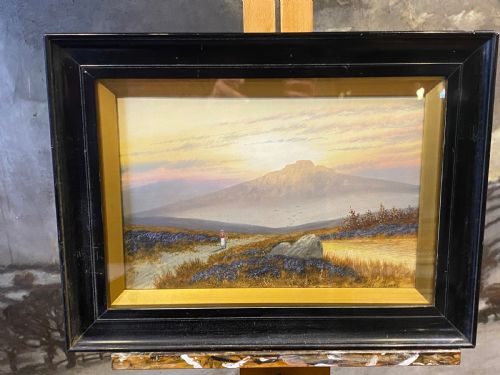
A figure in landscape watercolour typically depicts human subjects integrated into natural or architectural scenery, ranging from rural English riverbanks and country lanes to coastal views and continental vistas. These works encompass various traditions, including the 19th Century British School, Romanticism, and Victorian Realism, alongside regional variations such as the Norwich School.
The pieces on this page span several eras, with the majority originating from the 19th century and the Victorian period, though examples stretch from the 18th century into the mid-20th century. Buyers frequently encounter waterpaintings featuring travellers, farm workers, or fishermen placed carefully within expansive topographical settings.
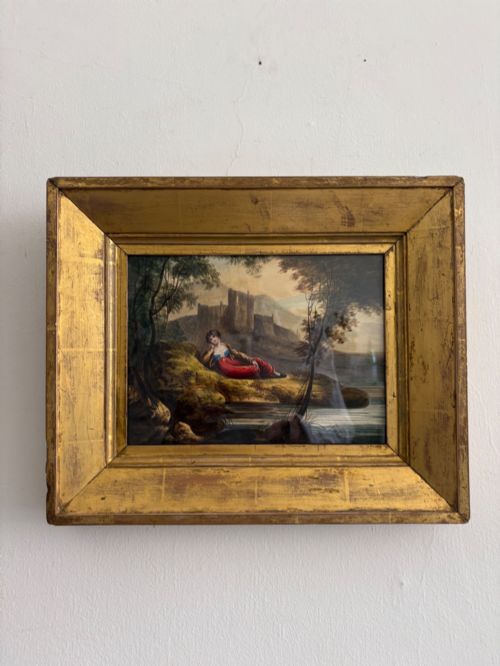
Compositions vary from detailed plein-air studies to imaginative pastoral scenes executed on paper, often preserved within period frames of gilt wood or glass. Whether attributed to named masters or emerging from anonymous schools, each work relies on the interplay between the human element and the surrounding environment.
How They Were Made
Artists applied watercolour pigment and ink onto paper, often utilising monochrome grisaille or vibrant washes to establish tone and atmosphere before detailing the figures. Many works incorporate mixed media elements such as gouache to build opacity and highlight specific areas of the composition.
Supports traditionally consisted of high-grade paper housed behind glass within timber frames, frequently enhanced with gold leaf or gilt wood moulding. These protective mountings helped preserve the delicate water-soluble pigments from moisture and light damage over generations.
Several wandering donkeys and stray dogs share the landscape with human travellers, proving that historic walking companions were just as stubborn as modern ones.
What Varies in Quality
Draftsmanship in the human figures separates routine topographical records from masterworks, as proficient artists capture posture and movement with minimal brushstrokes while lesser hands produce stiff or disproportionate forms. The integration of the subject into the wider landscape requires a balanced composition where neither the scenery nor the figures overpower the other.
Pigment preservation and paper stability dictate the long-term integrity of the piece, with superior works retaining their original tonal depth and avoiding excessive fading or acid burn from historic mounts. The quality of the surrounding framing, particularly original gilt wood settings, adds physical context and confirms the era of presentation.
Henry de Waroquier·Carlo Ferranti·Robert Thorne Waite·J Laporte·Colin H Greenwood·Will Anderson·Thomas Lound·Harold Swanwick·Henry Charles Fox·Ebenezer Wake Cook·Francis William Topham·Carleton Grant·Markey Robinson·H P Ditmas·George Sykes·Claude Cardon·Bernard Foster·Garnet Ruskin Wolseley·Thomas Creswick·Copley Fielding·David Cox Jnr·John Inigo Richards·Arthur Netherwood·H Bennett·T L Rowbotham
The Figure in Landscape Watercolour Glossary
- Grisaille
- A painting executed entirely in shades of grey or neutral monochrome. This technique was frequently employed by early artists to establish tonal values before applying transparent colour washes.
- Gouache
- An opaque watercolour paint mixed with a white pigment filler to create heavier, denser passages of colour. It is often used alongside standard watercolour to add highlights to figures and clouds.
- Provenance
- The documented history of ownership associated with an artwork. A clear lineage helps verify the authenticity and exhibition history of 19th-century watercolours.
- Wash
- A thin, fluid layer of transparent watercolour pigment applied across the paper to create skies, water, or distant terrain. Mastery of the wash determines the atmospheric depth of the landscape.
Figure in Landscape Watercolour: Frequently Asked Questions
How should I display a historic watercolour?
Keep watercolours away from direct sunlight and high humidity to prevent the pigments from fading and the paper from degrading. Proper framing behind UV-protective glass ensures the artwork remains stable on your wall.
Position the piece in a stable environment away from radiators or damp exterior walls. Professional conservation framing preserves the integrity of both the paper and any historic gilt wood surrounds.
What subjects typically appear in these landscapes?
Common subjects include rural labourers, farm animals, travellers on country lanes, and fishermen near rivers or coastal bays. These figures provide a sense of scale and daily life within topographical views.
Artists frequently drew inspiration from English countryside scenes, Welsh mountains, and continental vistas. The inclusion of human activity transformed static scenery into narrative storytelling.
How do I identify the period of a watercolour?
Examine the paper type, framing style, and overall palette to determine the likely era of production. Historic works often feature watermark evidence, period inscriptions, or traditional gilt framing characteristic of the Victorian or Georgian eras.
Stylistic conventions also offer clues, as early 19th-century watercolours often rely on restrained palettes before the introduction of more vivid synthetic pigments later in the century. Comparing the piece to known works by contemporaneous schools helps narrow down the decade.
Are these paintings original works?
The listings comprise original hand-painted watercolours on paper rather than modern mass-produced prints. Each piece represents a singular artistic creation executed directly by the hand of the artist.
Brushstroke examination reveals the fluid application of pigment and ink unique to each individual sheet of paper. Signatures, dates, and preparatory pencil lines further confirm their status as unique historical artworks.