




Figural Table Clock
A figural table clock brings sculpture and horology together, housing timekeeping within classical figures, animals, and mythological tableaus.
Figural Table Clock
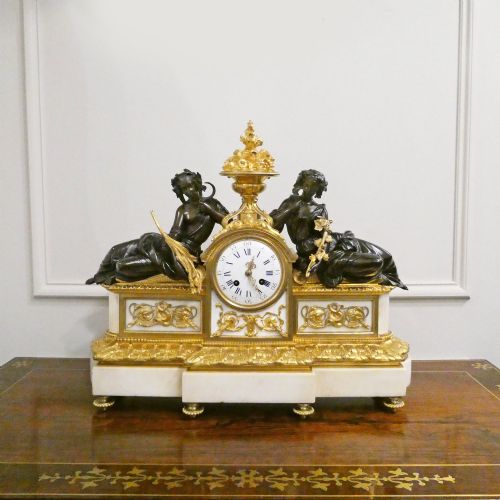
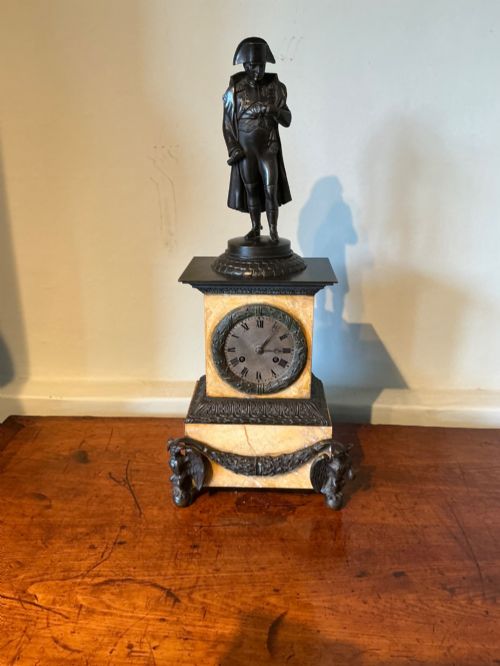
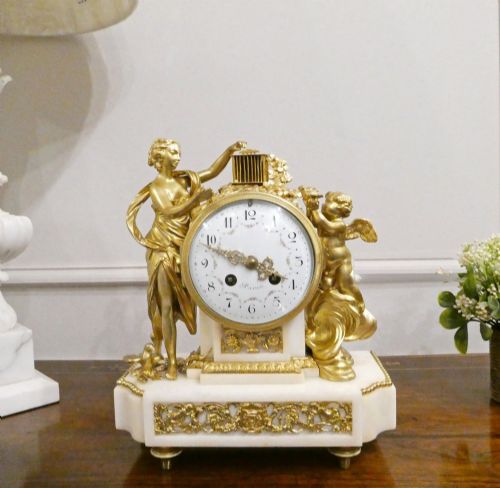
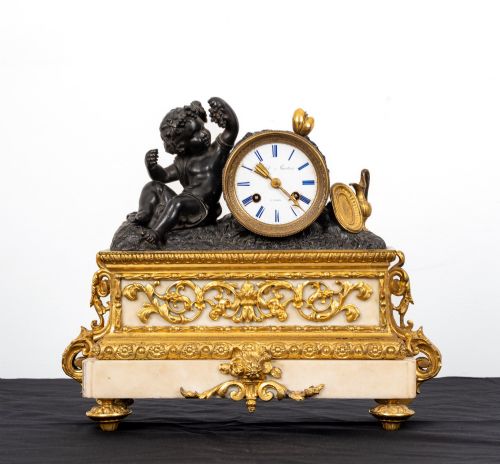
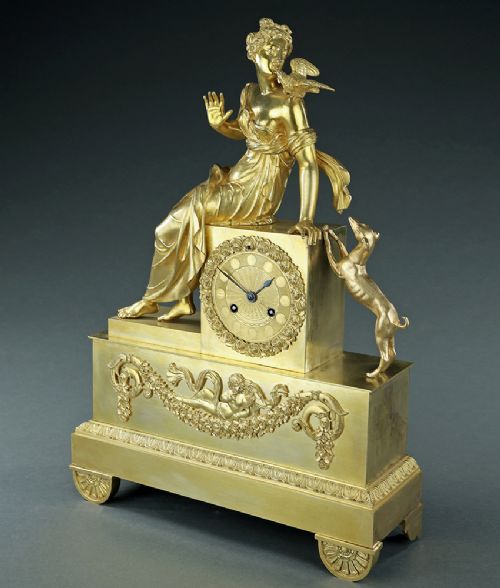
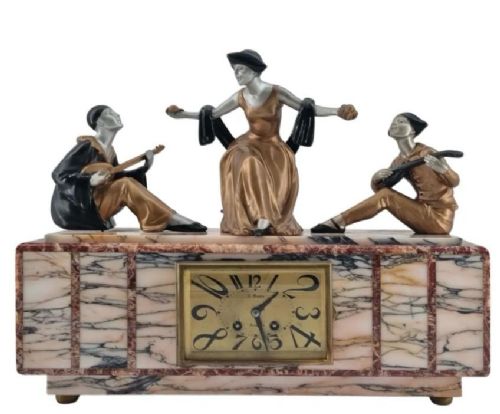
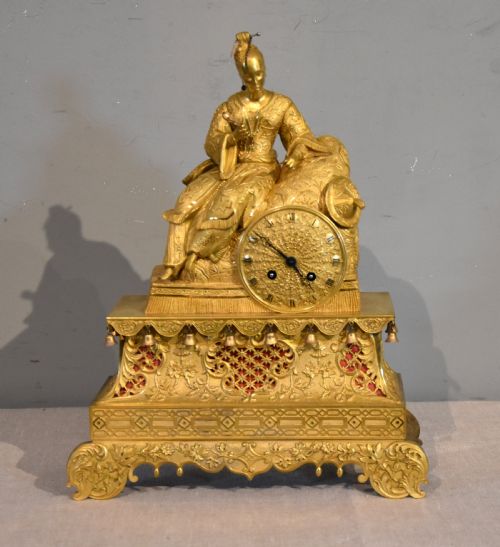
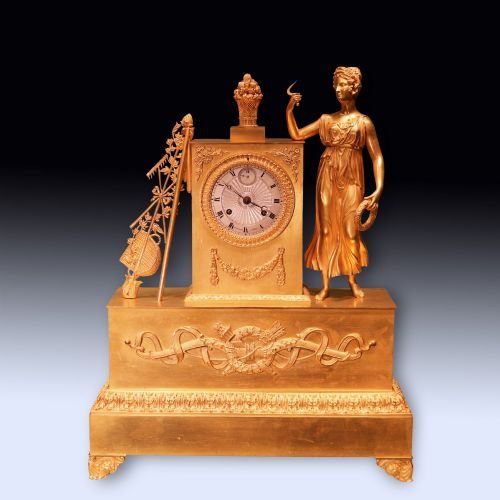
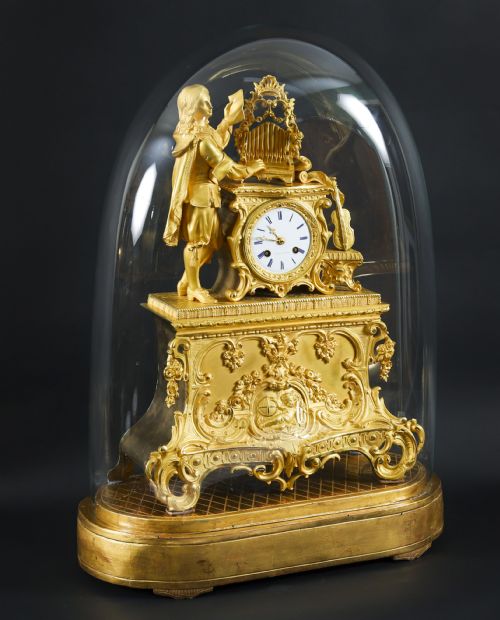
A figural table clock combines a functional timepiece with cast or carved sculptural subjects, most frequently taking the form of mantel clocks originating from nineteenth-century French workshops. These pieces integrate figures of cherubs, maidens, lions, and historical personalities directly into the architectural case design.
The selections span Regency, Victorian, and early periods, utilising styles ranging from French Empire and Rococo Revival to Louis XVI. Buyers encounter everything from marble and ormolu mantel pieces to carved linden wood table clocks and clock sets.
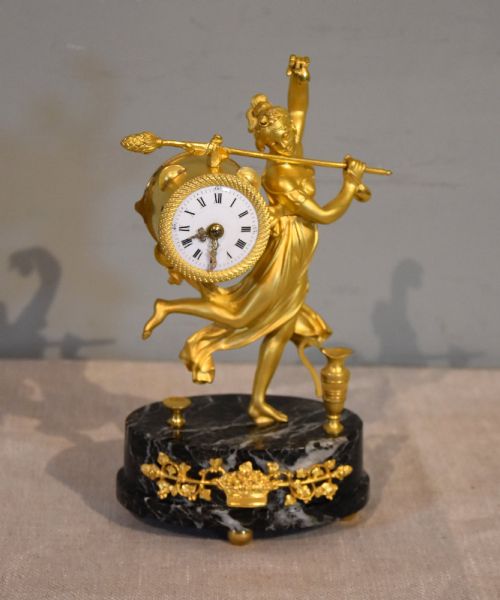
Makers such as Vincenti, Japy Freres, and Victor Paillard are represented among the French and English works. The physical formats vary from miniature gilt bronze table clocks to large, impressive marble-mounted deployments.
Materials and Technique
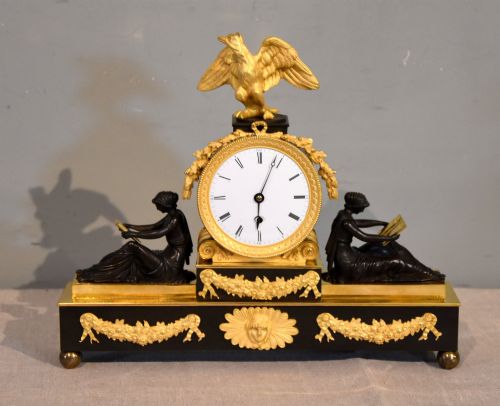
The construction relies heavily on cast bronze, ormolu, and patinated bronze combined with white or green marble bases and hand-painted enamel dials. Metal components undergo careful fire-gilding or patination to achieve contrast between the sculptural figures and the clock housing.
Movements are integrated into the heavy metal cases, occasionally utilising fusee mechanisms in English Regency examples or standard drum movements in French productions. Cabinets frequently incorporate applied glass panels, carved linden wood, and porcelain elements.
Listings feature French Empire, Neoclassical, and Rococo Revival styles executed in gilt bronze, marble, and patinated bronze.
Quality and Distinction
Quality rests in the crispness of the bronze casting and the depth of the ormolu gilding across the figural elements. Finer examples display meticulous chisel work on hair, drapery, and facial expressions rather than soft, mass-produced surfaces.
The harmony between the sculptural subject and the marble or bronze plinth dictates the overall presence of the piece. Superior items feature integrated French movements signed by established makers, matched with clean enamel dials and original hands.
Vincenti·Siffel And Cartier·Baetens London·Sega·Canaillor Of Paris·Japy Freres·Leroy Paris·Bergen And Co·Lemerle Charpentier·Deniere Et Fils·Victor Paillard·Bellenot Paris
The Figural Table Clock Glossary
- Ormolu
- Gilt bronze created by applying a finely ground high-carat gold-mercury amalgam to a bronze object. This technique produces a warm, durable finish characteristic of luxury French clocks.
- Fusee
- A conical pulley used in spring-driven clocks to maintain even power delivery as the mainspring unwinds. It is commonly found in English Regency table clocks.
- Patinated Bronze
- Bronze treated with chemical solutions to alter the surface colour, usually producing dark brown or greenish tones. This finish highlights the sculptural details of figural subjects.
- Enamel Dial
- A metal dial fused with powdered glass melted at high temperatures to create a smooth, white surface. Numerals are painted onto this glossy base.
Figural Table Clock: Frequently Asked Questions
What is a figural table clock?
A figural table clock is a timepiece integrated with a three-dimensional sculpture, depicting human figures, animals, or mythological scenes.
These objects functioned as both domestic timekeepers and decorative mantle centrepieces, particularly during the nineteenth century.
How do I wind a mantel clock?
Winding requires a dedicated key inserted into the winding holes on the enamel dial to tension the mainspring.
Care must be taken not to overwind the movement, as this can damage the internal gearing and springs.
Are these clocks French or English?
The majority of pieces originate from French workshops in Paris and provincial centres, spanning Empire and Louis XVI styles.
A smaller selection comprises English Regency brass and gilt timepieces with distinct fusee movements.
What materials were used?
Cases are constructed primarily from cast bronze, gilt bronze, ormolu, and carved linden wood, often mounted on white or green marble.
Faces feature hand-painted enamel dials, sometimes protected behind curved glass doors within heavy metal housings.