
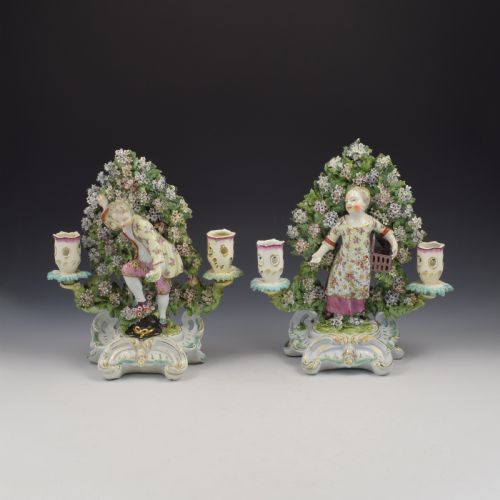
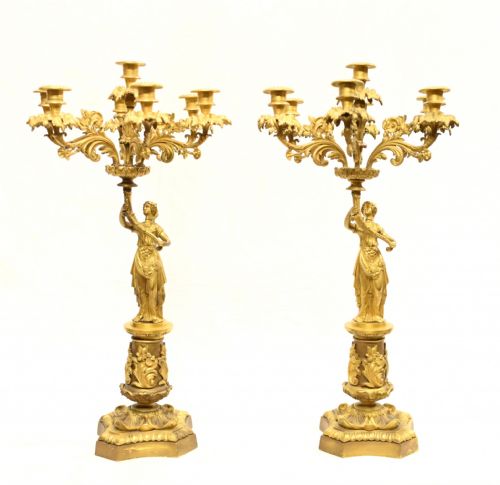
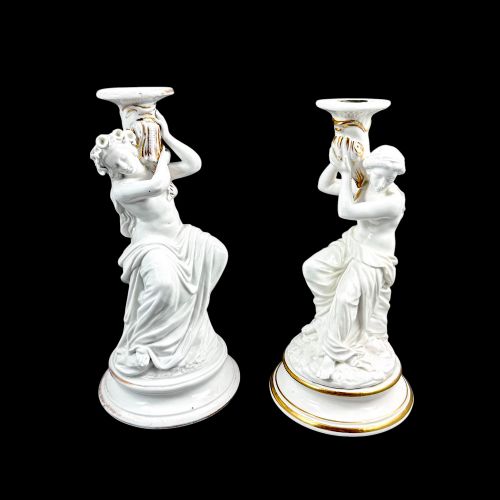


Figural Candleholders Pair
A figural candleholders pair brings sculptural presence and period drama to a mantel, combining utility with human or animal form.
Figural Candleholders Pair
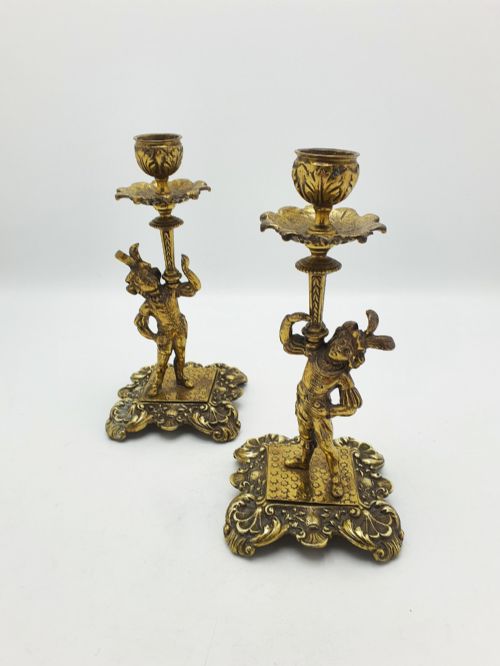
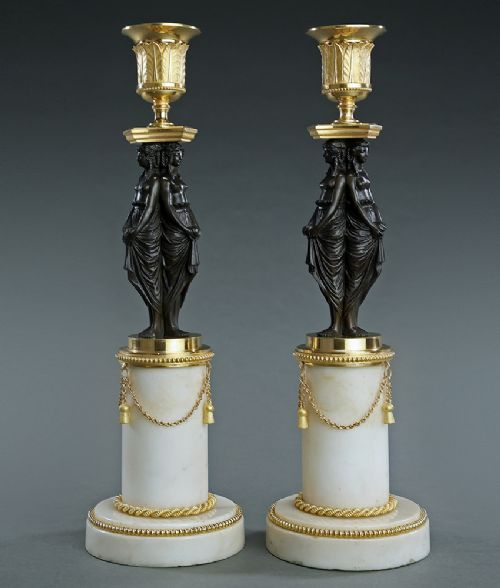
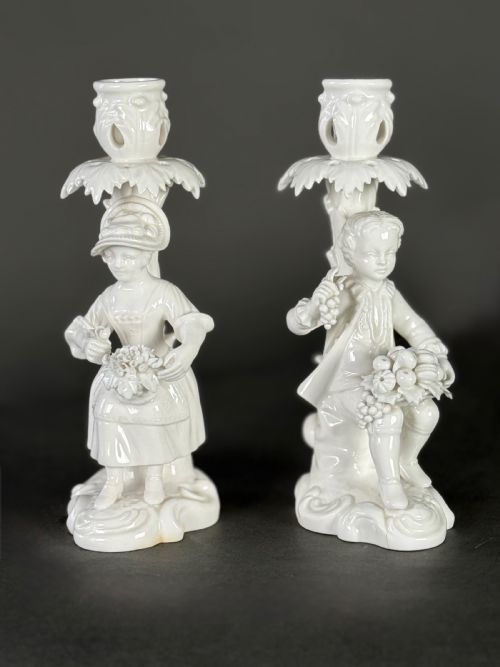
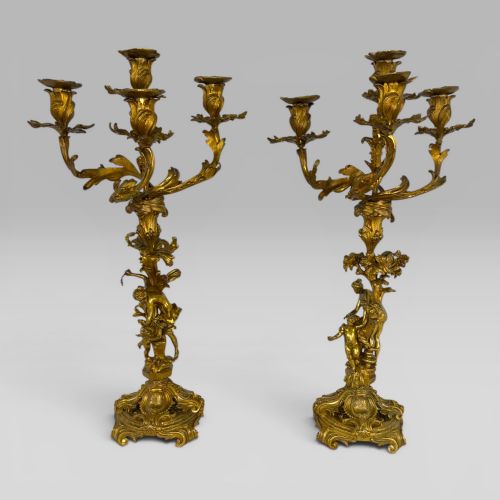
A figural candleholders pair combines functional lighting with sculpted human, animal or mythological subjects. When you search for a figural candleholders pair, you encounter matched sets that range from classical caryatids and cherubs to rococo gardeners and medievalist soldiers.
The pieces on this page span the eighteenth, nineteenth and early twentieth centuries, drawing heavily on Victorian and continental European workshops. You are most likely to meet cast bronze, ormolu and hard paste porcelain examples shaped as figures supporting sconces or branches.
Materials and construction
Metal versions rely on foundational casting techniques in brass, bronze, spelter and ormolu, often finished with gilding or silver plating. Artisans assembled these figures from multiple components to achieve detailed sculptural depth.
Ceramic examples utilise hard paste porcelain, enamel and bocage work, where figures and floral elements are hand-modelled and painted. Marble plinths frequently anchor the heavier bronze and brass compositions for stability.
The listings span multiple periods from the eighteenth to the twentieth century, incorporating porcelain, gilt bronze, marble and brass.
Distinctions in craftsmanship
The refinement of the casting and modelling separates standard production from superior work. Finer examples display crisp facial expressions, well-defined drapery folds and precise chasing on metal surfaces rather than softened details.
Original surface patination and intact gilding or enamel paint determine the integrity of a pair. Superior pieces retain their matching components and balanced proportions without clumsy repairs to the delicate porcelain bocage or arms.
Derby·Sitzendorf·Meissen·Minton·Royal Worcester Hadley
The Figural Candleholders Pair Glossary
- Caryatid
- A sculpted female figure serving as an architectural support or architectural element. These figures often form the main stem of nineteenth-century candlesticks.
- Bocage
- A decorative background of carved or modelled foliage and flowers used in porcelain figures. It creates a bushy, arbour-like setting behind the main subjects.
- Ormolu
- Gilded bronze produced by applying a mercury and gold amalgam to a bronze base and heating it. This technique yields a deep, warm golden finish characteristic of French decorative arts.
- Spelter
- A zinc alloy used as a cheaper alternative to bronze for sculptural castings. It takes fine detail well but is softer and lighter than bronze.
- Hard paste porcelain
- A durable ceramic composition fired at high temperatures using kaolin and petuntse. It forms the body of many nineteenth-century continental figural pieces.
Figural Candleholders Pair: Frequently Asked Questions
How do I clean antique porcelain figures?
Dust gently with a soft brush and avoid soaking ceramic pieces with exposed painted enamel or gilt highlights.
Keep moisture away from any glued joints or historical repairs to prevent deterioration.
Can I use real candles in them?
Standard taper candles fit most historical sconces, provided they sit securely in the drip pan.
Monitor burning candles closely to prevent wax drips from reaching delicate bronze surfaces or porcelain bocage.
How are bronze and brass told apart?
Bronze typically has a deeper, warmer metallic tone and heavier weight, often featuring applied patination or ormolu.
Brass leans toward a brighter yellow hue when polished, though historical examples usually show a darker aged patina.
What is the difference between a candlestick and a candelabra?
Candlesticks hold a single candle on a central shaft, while candelabras branch out to support multiple lights from one base.
Both forms appear frequently in figural designs across the nineteenth century.