




Figural Bronze Candle Stands
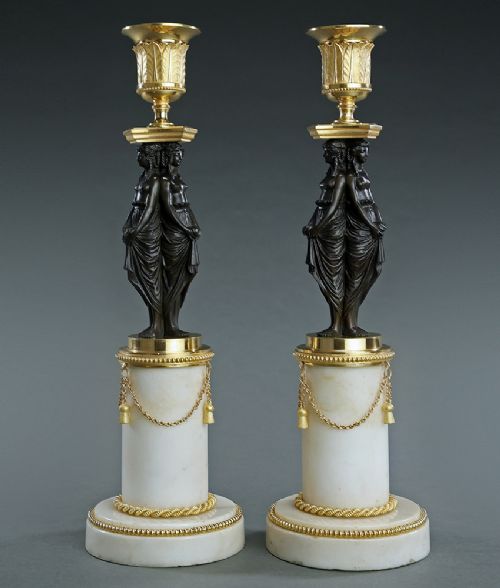
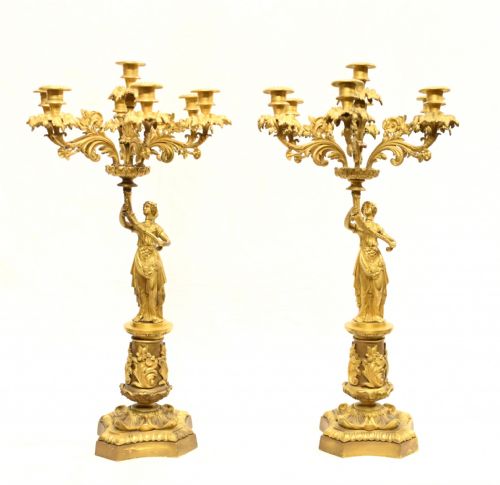
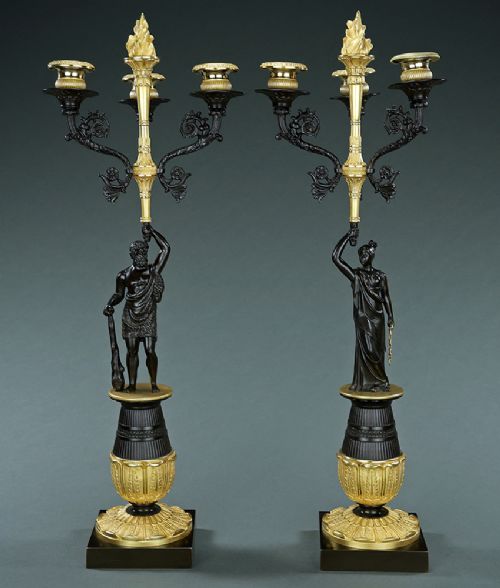
These figural bronze candle stands bring sculptural presence to a room, cast in human and animal forms to hold light high.
Figural Bronze Candle Stands
When you search for figural bronze candle stands, you encounter sculptural works that integrate human figures, mythical subjects, or animals into lighting devices. These pieces range from single candlesticks to multi-branch candelabras and torcheres.
The selections span the nineteenth century, including Regency designs, French Empire works, Louis XVI revival pieces, and Black Forest animal subjects. You are most likely to meet pairs of patinated and ormolu-mounted figures resting on marble or metal bases.
Makers drew on classical mythology, Renaissance soldiers, puttis, and courtly figures to shape the bronze. Each piece combines functional illumination with the sculptural vocabulary of its period.
Materials and construction methods
Foundries utilised traditional lost-wax or sand-casting methods to shape the bronze, spelter, and cast iron into complex figurative forms. Artisans then applied patination, parcel gilding, or ormolu to highlight the details of drapery, muscle, and facial expression.
Many items incorporate contrasting plinths of white or coloured marble beneath the metal figures. Secondary materials such as brass and gilt bronze provide structural strength and decorative contrast across the stems and drip pans.
Figural Bronze Candle Stands Retail Price Guide 2026
Typical asking prices for figural bronze candle stands among the pieces listed under this phrase on Sellingantiques today, from the lower quarter to the upper quarter. They describe what is for sale here now, not the wider market.
Listings feature periods from the Regency era through to the early twentieth century, utilising bronze, spelter, marble, and ormolu.
Distinctions in execution and detail
The integration of the figure with the candle socket reveals the skill of the workshop. Superior models conceal joinery and maintain proportion between the sculptural subject and the functional hardware.
Humphrey Hopper
The Figural Bronze Candle Stands Glossary
- Ormolu
- Gilt bronze produced by applying a mixture of gold and mercury to a bronze base and firing it. This technique creates a rich, durable golden surface.
- Patinated bronze
- Bronze treated with chemical solutions to produce a specific surface colour, typically dark brown or green. It protects the metal and accentuates sculptural contours.
- Caryatid
- A sculpted female figure serving as an architectural support or stem. In lighting, these figures bear the weight of the candle sockets.
- Torchere
- A tall stand or candlestick designed to hold a light source high above the floor or furniture surface. They often feature elaborate figurative bases.
- Spelter
- A zinc alloy used as a less expensive alternative to bronze. It accepts metallic paints and patination to mimic heavier metals.
Figural Bronze Candle Stands: Frequently Asked Questions
How do I clean bronze candle stands safely?
Dust the surface gently with a soft, dry brush to remove particles without disturbing the patina. Avoid commercial metal polishes that strip away historical finishes.
Keep the pieces away from direct moisture and sources of heat to protect the underlying metal and marble bases.
Can I use real candles on antique stands?
Check the diameter of the sockets carefully before inserting modern tapers to ensure a secure fit. Use drip protectors or thin inserts if the candle sits loosely in the antique cup.
Monitor burning candles closely to prevent wax from spilling onto the bronze or parcel gilding.
How do I identify Regency period pieces?
Regency stands often feature classical motifs inspired by Greek and Roman art, combined with rich ormolu and dark patinated bronze. Look for clean architectural lines and precise casting quality typical of early nineteenth-century workshops.
Proportions tend to be balanced and restrained, reflecting the neoclassical taste of the era.
Where should I place these stands in a room?
Position them on sturdy mantelpieces, sideboards, or console tables where their sculptural weight can anchor the display. Ensure they sit on level surfaces away from heavy foot traffic.
Pair symmetrical designs to frame a mirror or artwork for a traditional decorative arrangement.