

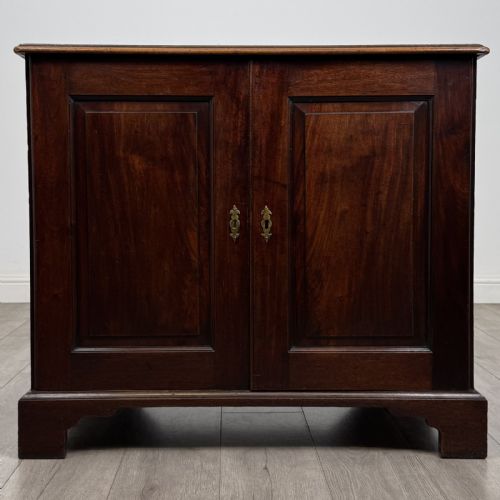
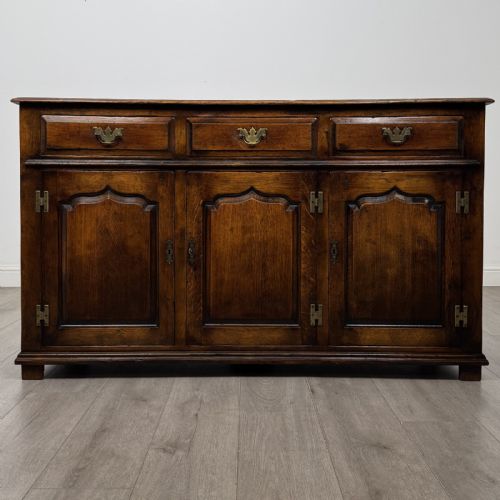
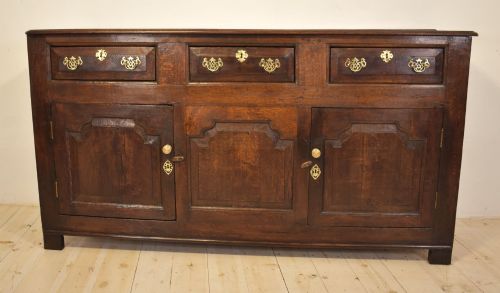
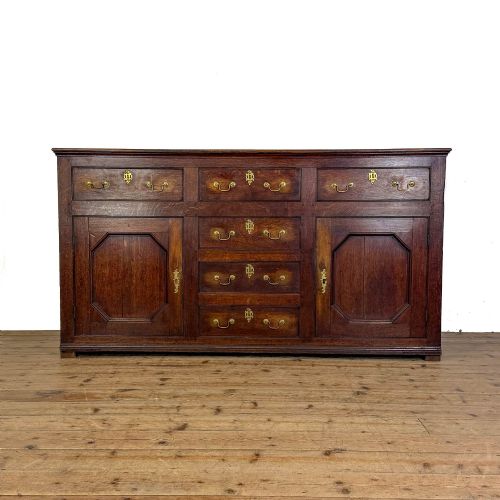
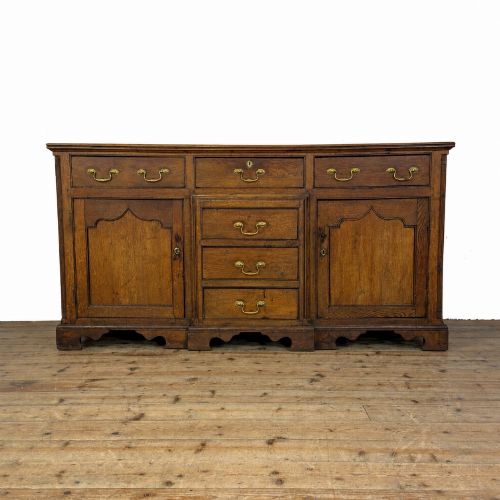


Fielded Panel Sideboard
A fielded panel sideboard offers robust storage and honest grain, bringing centuries of domestic history straight into a modern dining room.
Fielded Panel Sideboard
A fielded panel sideboard stands as a heavy, functional item designed for storing household provisions and displaying crockery. These pieces originate primarily from the eighteenth and nineteenth centuries, spanning Georgian and Victorian country traditions.
The exact forms seen here include sturdy dresser bases and cupboard dressers rather than formal neoclassical sideboards. Oak dominates the selection, accompanied by occasional pine constructions suited to provincial domestic spaces.
Buyers seeking a fielded panel sideboard encounter robust timbers shaped by regional vernacular joinery. Each example reflects the practical storage needs of historical kitchens and dining halls.
How they were made
Craftsmen built these items using solid oak and pine planks joined with traditional pegged mortise and tenon framing. The defining panels feature bevelled edges that sit within grooved framework, allowing the timber to expand and contract naturally.
Hardware consists of forged iron hinges and brass pulls, securing heavy doors and drawer fronts. Surfaces finished with hand planing show tool marks rather than mechanical perfection.
Fielded Panel Sideboard Retail Price Guide 2026
Typical asking prices for fielded panel sideboard among the pieces listed under this phrase on Sellingantiques today, from the lower quarter to the upper quarter. They describe what is for sale here now, not the wider market.
Many old dresser bases still bear the faint ink stains and knife marks left by generations of busy cooks.
What varies in quality
Quality rests upon the choice of timber and the crispness of the panel bevelling. Superior examples display dense, mature oak grain with minimal replacement timber across the top boards and drawer runners.
Proportion and structural integrity distinguish finer country pieces from utilitarian utility items. The depth of colour achieved through centuries of wax polishing creates the visual warmth that collectors prize.
The Fielded Panel Sideboard Glossary
- Fielded panel
- A central wood panel with bevelled edges thinning towards the margins so it fits securely into a surrounding groove. This traditional technique prevents splitting as the wood moves.
- Dresser base
- A low cabinet featuring drawers and cupboards beneath a solid top surface, historically used for food preparation and storage. It forms the primary form found in this category.
- Mortise and tenon
- A joint wherein a pegged projection fits tightly into a matching cavity to lock two pieces of timber at a right angle. It provides lasting strength without modern adhesives.
- Vernacular furniture
- Domestic pieces made by local regional joiners for everyday use rather than high urban workshops. These items often incorporate local materials like oak and pine.
Fielded Panel Sideboard: Frequently Asked Questions
What is a fielded panel sideboard used for?
These pieces provide substantial storage for dining linen, cutlery and heavy tableware within drawers and lower cupboards. The broad top surface also serves well for serving food or displaying ceramics.
Historically, they sat in kitchens and dining rooms as the main workhorse of domestic organisation. Today, they function equally well in modern hallways and living spaces.
How do I date an antique oak dresser base?
Dating relies upon examining the construction methods, tool marks and timber characteristics visible inside the drawers and backboards. Hand-sawn boards and pegged joints usually indicate eighteenth or early nineteenth century origins.
Secondary woods, such as pine used for drawer linings, help narrow down the period of regional manufacture. Surface patina develops over generations and offers further clues to age.
Are these pieces made of solid wood?
Every listed item relies entirely upon solid timbers like oak and pine rather than modern manufactured veneers or composite boards. This solid construction ensures the piece survives heavy daily use.
Solid construction also allows the wood to age gracefully and develop a deep lustre through regular polishing. Minor movement in the boards simply confirms the natural origin of the material.
How do I care for antique oak furniture?
Protect the timber by applying natural beeswax periodically and avoiding placement near direct heat sources or strong sunlight. Maintaining a stable room temperature prevents the old wood from drying out or splitting.
Clean surfaces gently with a dry or barely damp cloth rather than modern chemical sprays. This preserves the historical polish and protects the warm colour.