


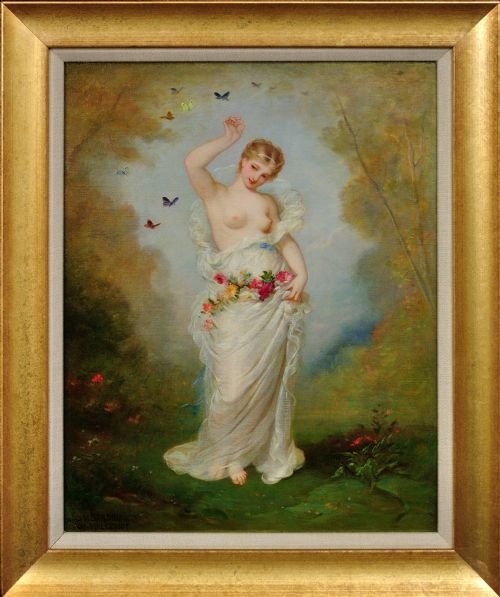


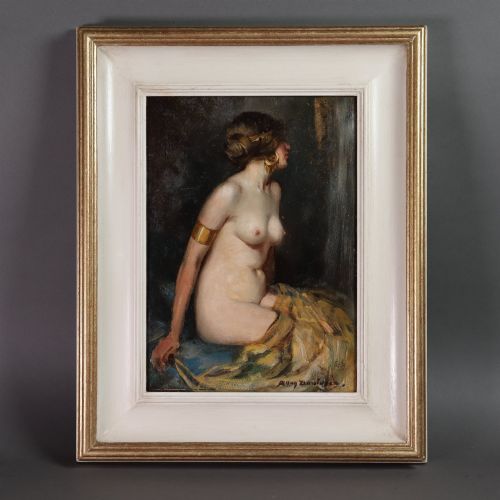


Female Nude Oil Painting
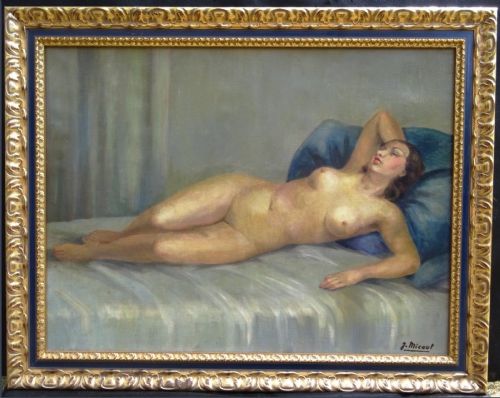
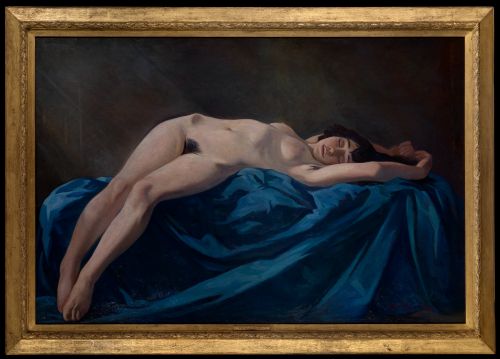
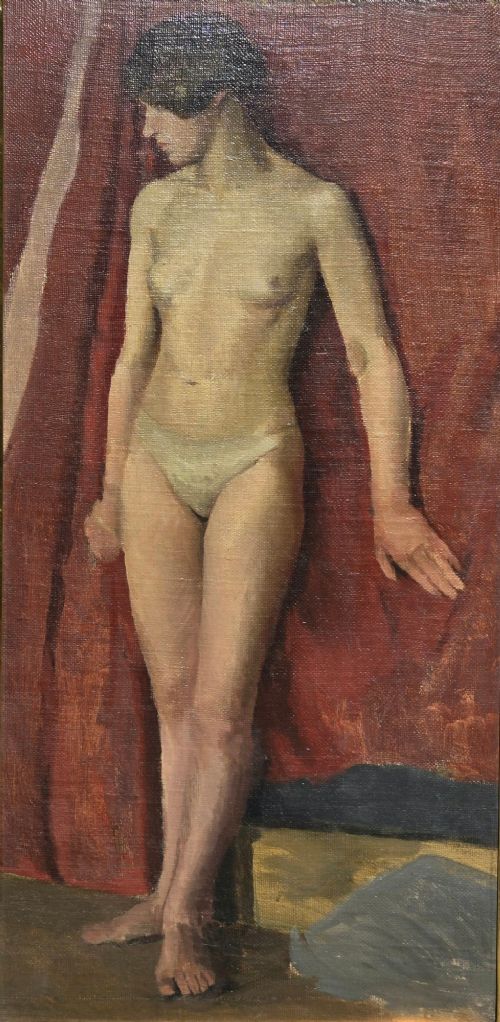
A female nude oil painting captures the human form through pigment, spanning academic studies to modernist expressions.
Female Nude Oil Painting
A female nude oil painting encompasses canvas, board, and paper works ranging from the nineteenth century through the mid-twentieth century. Buyers encounter French academic canvases, Edwardian studies, and post-impressionist interpretations.
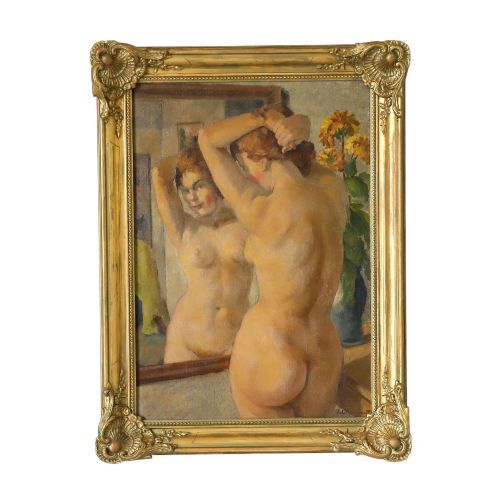
The selections on this page feature regional British and continental European works, including French Art Deco pieces and mid-century Cornish examples. Forms vary from seated and reclining figures to intimate interior scenes and sunbathing studies.
Makers span named academic and modernist artists alongside regional schools and untitled works. The common thread is the application of oil paint to canvas, wood, or paper supports, often housed in gilt wood frames.
Materials and technique
Artists apply oil paint to traditional supports including stretched canvas, wooden board, and paper. These mediums allow for blending, layering, and varied texture across the surface of the work.
Framing typically involves gilt wood frames that complement the period of the painting. Canvases are occasionally laid onto board for structural support.
Cats, mirrors, and riverside sunlight make unexpected appearances as companions to the resting figures across these mid-century canvases.
Distinctions in quality
Compositional balance and handling of light separate works across the range. Mastery of tone, particularly in chiaroscuro and impressionist treatments, defines the strongest examples.
The integration of the subject within its setting, whether an interior space or a landscape, demonstrates the technical skill of the painter.
Eric Robertson·Philippe de Rougemont·Raymond Moritz·Tony Giles·André Charles Voillemot·Henri Vincent-Anglade·Gaetan Dumas·Allan Douglas Davidson·Fernand Jean Barbier·William Edward Frost·Peter Jackson·Jean Hippolyte Marchand·Pinchus Krémègne·Yetta Kane·Raymond Arthur Roadnight·Igor Talwinski·August Rieper·René Caty·Louis Georges Bouché·Walter Goodin·Olive Bagshaw
The Female Nude Oil Painting Glossary
- Academic style
- A traditional method of painting following strict rules taught by official art academies, often featuring mythological or historical themes. This approach emphasises precise drawing and smooth finishes.
- Chiaroscuro
- An artistic technique using strong contrasts between light and dark to give a three-dimensional volume to figures. This method creates dramatic tension within the composition.
- Post-Impressionism
- A French art movement that developed from impressionism, extending its boundaries while retaining its use of vivid colours. Artists applied thick paint and distinct brushstrokes.
- Gilt wood frame
- A wooden picture frame coated with a thin layer of gold leaf or gold paint. These frames often reflect the decorative style of the painting's period.
Female Nude Oil Painting: Frequently Asked Questions
What periods do these paintings cover?
The works span from the nineteenth century through the Edwardian era, the 1920s, 1930s, and into the mid-twentieth century. Styles range from French academic to mid-century expressionism.
Specific decades represented include the 1910s, 1950s, and 1960s, reflecting diverse European and British artistic movements.
How should I display an oil painting?
Display paintings away from direct sunlight and excessive humidity to protect the oil paint and canvas. Proper wall placement ensures the work remains stable over time.
Matching the frame to your interior space helps integrate the piece, while maintaining stable room temperatures preserves the canvas and gilt wood frame.
Are all pieces signed by the artist?
Many works bear signatures or inscriptions from the creator, while others originate from recognised schools or remain untitled. Attribution often relies on period documentation or stylistic analysis.
Signed works provide a direct link to the maker, whereas unsigned academic studies and school pieces focus purely on the subject and technique.
What supports were used for these works?
Artists utilised traditional canvas stretched over wooden frames, wooden boards, and heavy paper. Some canvases are laid onto board for added durability.
The choice of support often relates to the period and the artist's preferred method, from intimate paper sketches to large canvas compositions.