


Feather Banded Chest of Drawers
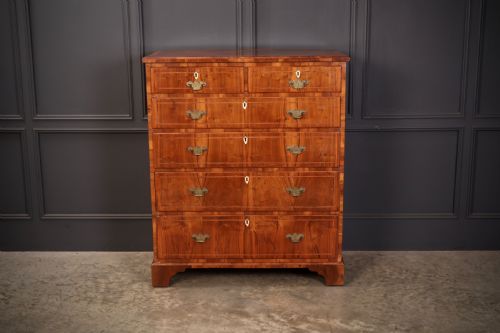
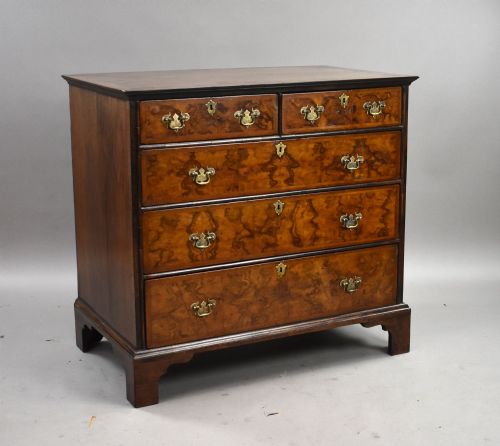
A feather banded chest of drawers brings the rich grain and crisp linear borders of walnut furniture into a room.
Feather Banded Chest of Drawers
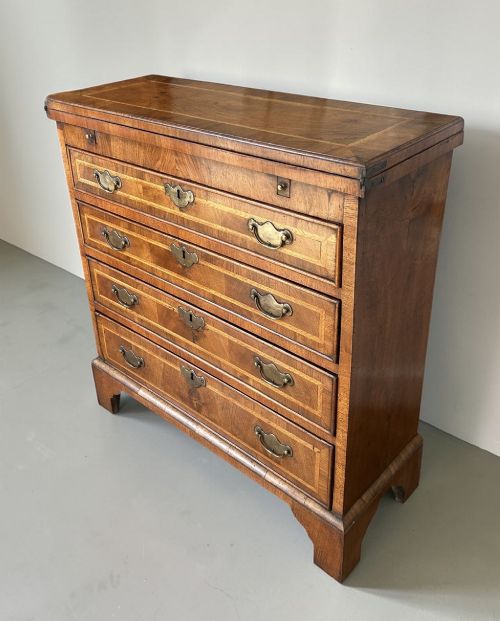
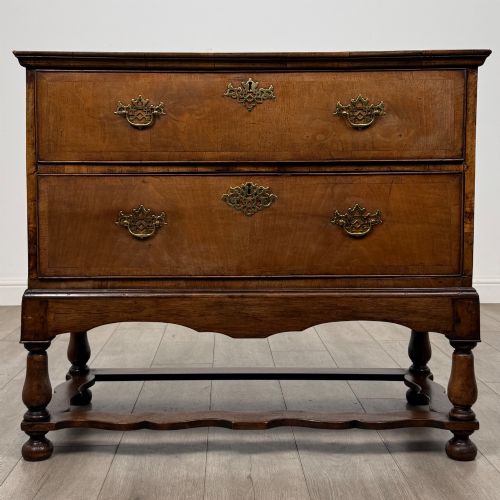
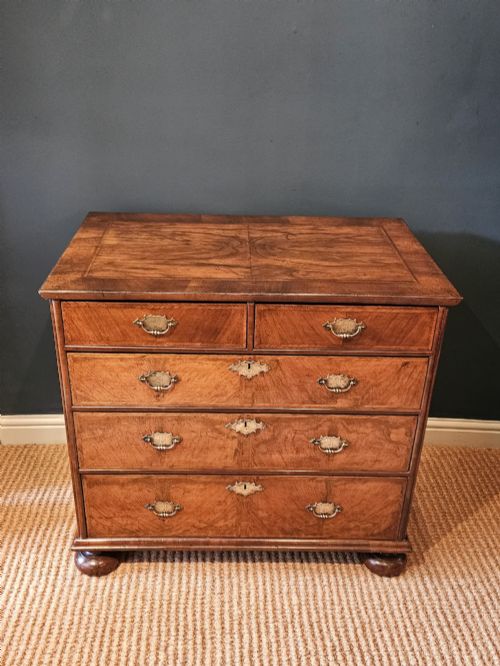
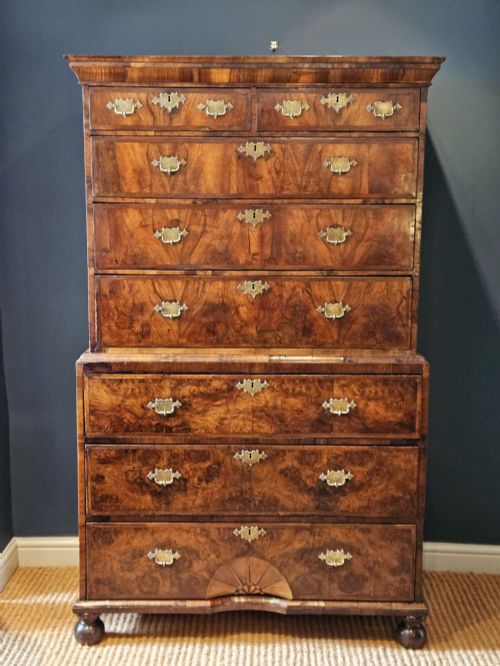
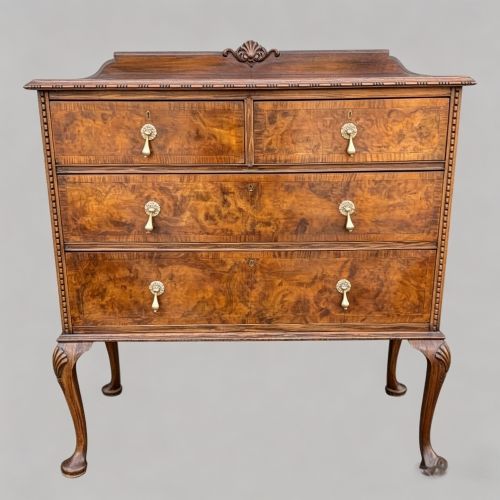
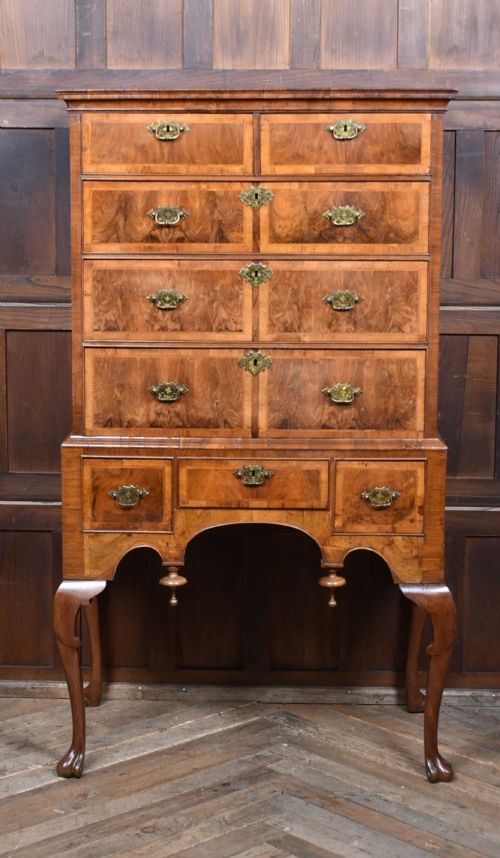
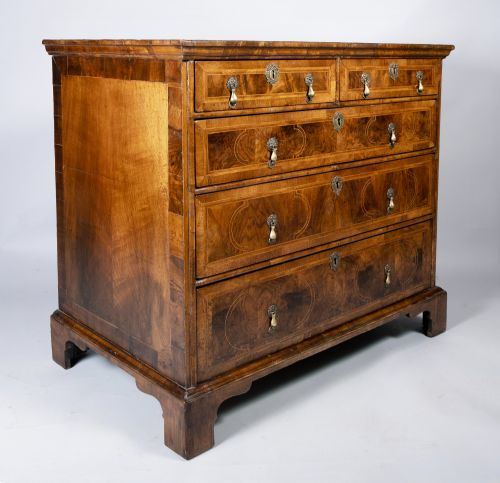
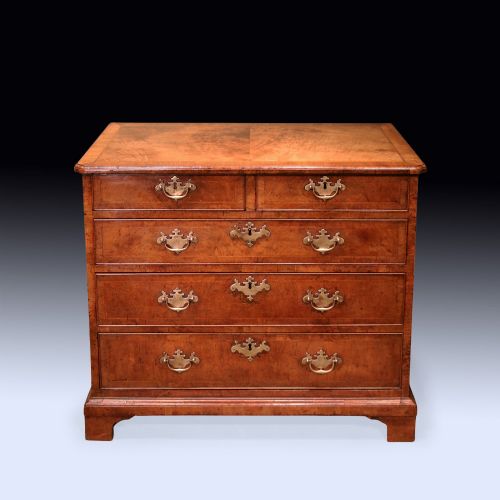
A feather banded chest of drawers is a piece of storage furniture defined by its decorative wood banding framing the drawer fronts. When you search for a feather banded chest of drawers, you find examples primarily spanning the early eighteenth century, featuring styles from the Queen Anne, George I, and George II periods. Walnut and burr walnut dominate the forms, appearing alongside related pieces such as chests on stand, tallboys, and bureaux.
The pieces on this page lean heavily towards the walnut era of the 1700s, alongside later revivals from the early twentieth century. You will encounter standard chest formats alongside taller configurations like tallboys and cabinets elevated on stands. The craftsmanship reflects the cabinet-making standards of Georgian England and its subsequent revivals.
Assessing quality and character
Quality in these pieces rests upon the precision of the veneer work and the choice of timber figure. Finer examples display symmetrical burr walnut panels matched with meticulously cut feather banding that remains intact around every drawer edge.
The integrity of the secondary timbers, the retention of original brass hardware, and the crispness of the moulded cornices and feet separate standard examples from the most accomplished pieces. Proportion and scale also dictate distinction, particularly in smaller chests and specialised forms like desks on stands.
Some early walnut pieces include dished sunbursts carved directly into the wood.
The Feather Banded Chest of Drawers Glossary
- Feather banding
- A decorative inlay technique where small strips of veneer are cut at an angle and arranged in a V-shape to resemble a feather or herringbone pattern. This detail frames drawer fronts and top panels on period case furniture.
- Burr walnut
- Timber taken from a walnut tree growth, yielding swirling, highly figured grain patterns prized for drawer fronts and tabletops. It provides rich visual texture on eighteenth-century pieces.
- Chest on stand
- A tall storage form comprising an upper chest section raised upon a separate base with legs, frequently seen in early walnut furniture. This layout lightens the visual weight of tall case pieces.
- Tallboy
- A tall chest of drawers made in two sections, stacking a smaller chest on top of a larger one. These pieces maximise vertical storage whilst displaying continuous grain across the front.
Feather Banded Chest of Drawers: Frequently Asked Questions
How do I date a walnut chest?
Dating relies on examining construction methods, secondary timbers like oak or pine, and stylistic markers such as bracket feet or cabriole legs.
Changes in hardware design and veneer thickness also help place a piece within the Queen Anne or Georgian eras.
What is feather banding?
Feather banding is a decorative border made from tiny strips of veneer cut diagonally and fitted together to form a V-shape.
Cabinet makers used this technique to outline drawer fronts and panels on walnut furniture.
Are these chests made of solid walnut?
Most period examples utilise walnut veneers applied over solid secondary woods such as oak or pine for stability.
Solid walnut pieces do occur, though veneer allowed makers to display highly figured burr patterns.
How should I care for antique walnut?
Keep walnut furniture away from direct sunlight and steady sources of heat to prevent the delicate veneers from drying out.
Apply a traditional beeswax polish sparingly to maintain the natural sheen of the wood.