


Faux Grain Pine Drawers
Faux grain pine drawers are painted softwood pieces mimicking finer timbers, offering rich historic character and practical storage for the home.
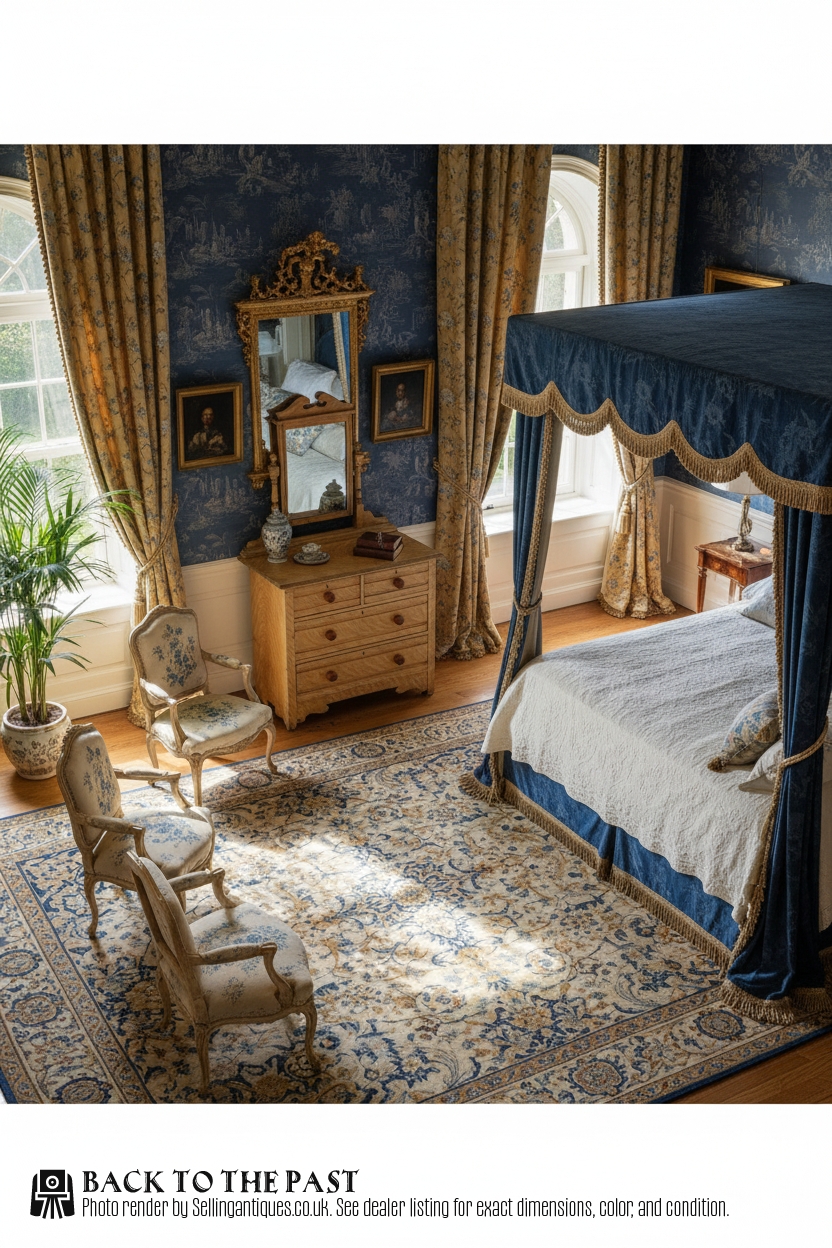
Faux Grain Pine Drawers
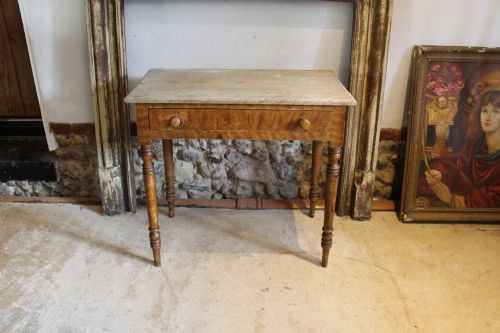
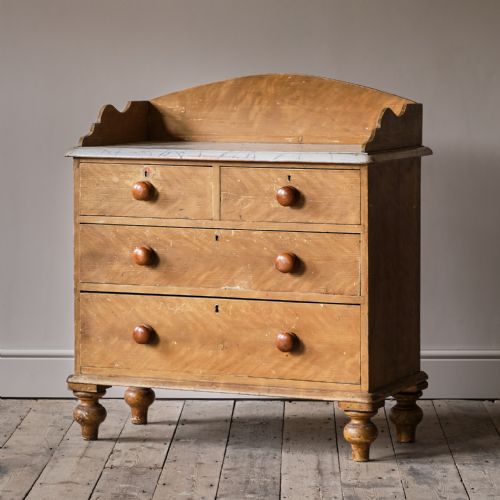
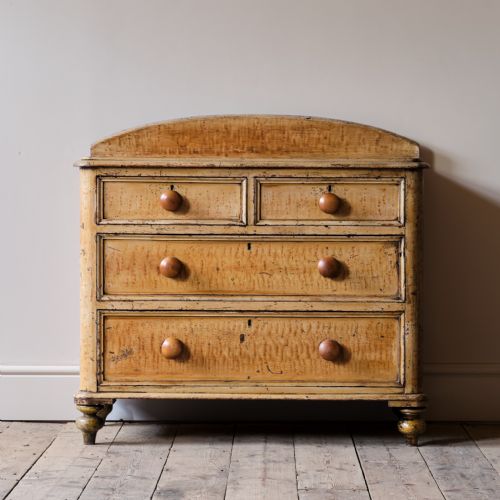
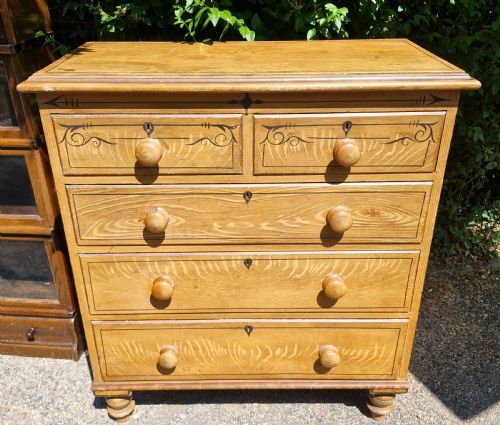
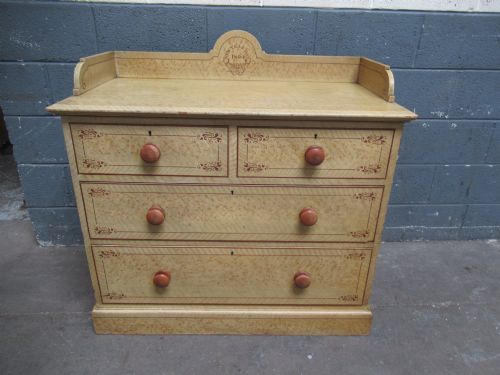
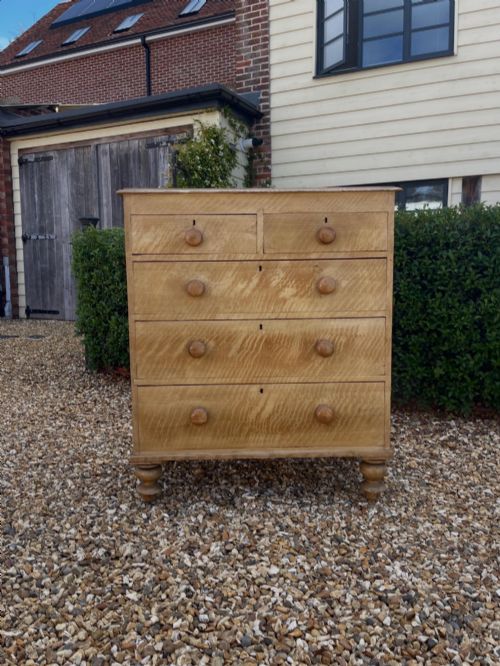
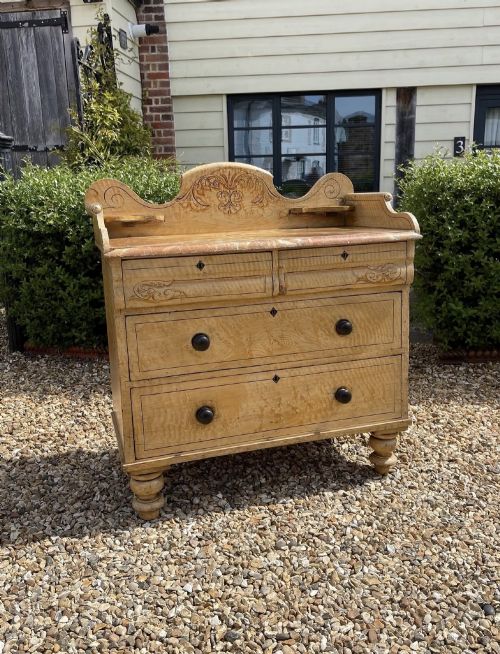
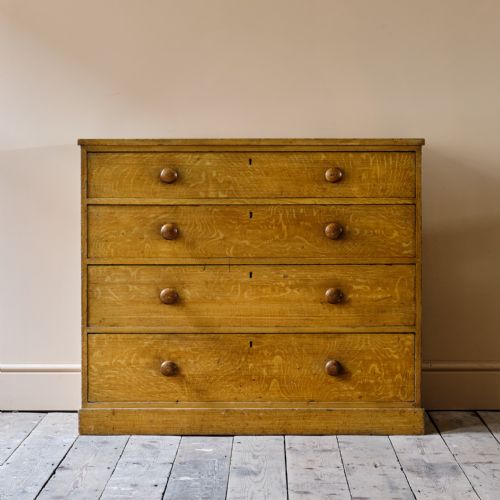
Faux grain pine drawers encompass chests, side tables, dressing chests, and miniature storage pieces primarily originating from the Victorian era. These items present softwood carcases finished with simulated painted wood surfaces, replicating expensive hardwoods for domestic interiors.
Buyers are most likely to encounter nineteenth-century chests of drawers finished in scumble glaze or folk art paint. These pieces range from substantial country house furniture down to small miniature chests, all retaining their original painted finishes.

How they were made
Craftsmen built the carcases using pine and softwood, preparing the timber surfaces before applying decorative treatments. Paint and scumble glaze were layered and manipulated using combs, feathers, or brushes to imitate the natural grain patterns of oak, mahogany, or exotic timbers.
Hardware such as brass handles and ceramic knobs were fitted to the drawer fronts, while some examples incorporated glass or specialised painted surfaces like faux marble tops.
Some Victorian craftsmen even painted faux marble on top of faux grain pine, proving that nineteenth-century domestic ambition knew no bounds.
What varies in quality
The skill of the graining execution separates standard items from exceptional examples. Finer pieces demonstrate careful hand manipulation of the scumble glaze to achieve convincing depth and movement that closely imitates hardwood timber.
The integrity of the original paint surface dictates the standing of a piece. Examples retaining undisturbed historic paintwork without heavy modern intervention command greater appreciation among collectors.
The Faux Grain Pine Drawers Glossary
- Scumble glaze
- A translucent tinted medium applied over a pale ground and manipulated with tools to create decorative simulated wood grain patterns. This technique formed the basis of most Victorian faux finish furniture.
- Faux bois
- French for false wood, describing paintwork specifically designed to imitate the grain and knots of natural timber. Artisans used this method to transform humble pine into expensive hardwood aesthetics.
- Scumbled pine
- Softwood treated with a translucent glaze layer to produce decorative grain effects. It appears frequently on nineteenth-century country house and folk art furniture.
- Wellington chest
- A tall, narrow chest of drawers secured by a hinged locking side stile that fastens with a key. This form occasionally appears finished in country house scumble paint.
- Mule chest
- A storage chest featuring one or more functional drawers built into the base beneath a hinged lid compartment. These practical items were often decorated with painted grain finishes.
Faux Grain Pine Drawers: Frequently Asked Questions
What is scumble paint?
Scumble paint involves a translucent glaze brushed over a lighter base colour to create decorative grain effects. Artisans worked the wet glaze using combs or brushes to mimic expensive timbers.
This finish protected the underlying softwood while delivering the fashionable appearance of hardwood furniture in nineteenth-century homes.
How old are these chests?
The available pieces date from the nineteenth century, with specific examples recorded from the eighteen-eighties and eighteen-nineties. Victorian country and folk art traditions sustained this decorative painting style throughout the period.
Construction details, timber shrinkage, and the composition of the paint layers help establish this nineteenth-century timeline.
Are the paint finishes original?
Many listings specify original paint or original scumble glaze applied during the nineteenth century. Examining the surface wear and integration of the paint with the underlying pine helps confirm authenticity.
Original surfaces display natural ageing and patination accumulated through decades of domestic use.
What woods were used underneath?
Pine and general softwood served as the primary construction materials for the carcases and drawer structures. These accessible timbers provided a stable, pale base suitable for decorative grain painting.
Makers selected straight-grained softwood boards to build durable chests before applying the simulated mahogany or oak finishes.