



Farmyard Scene Painting
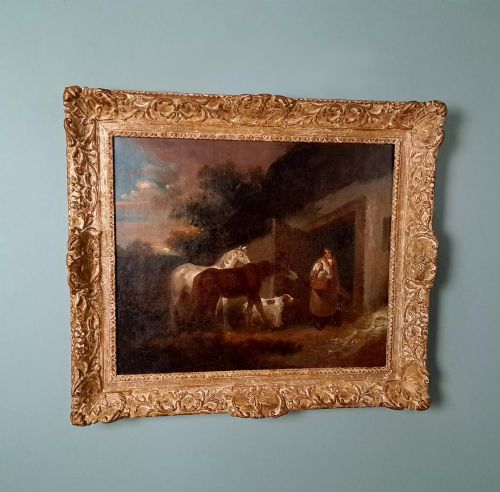
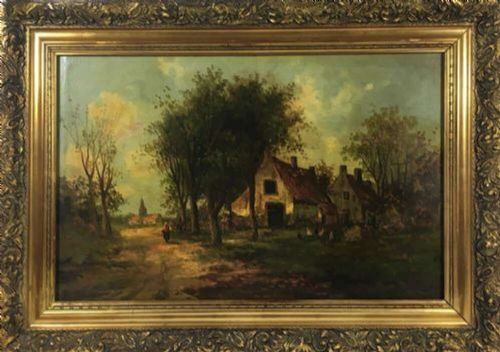
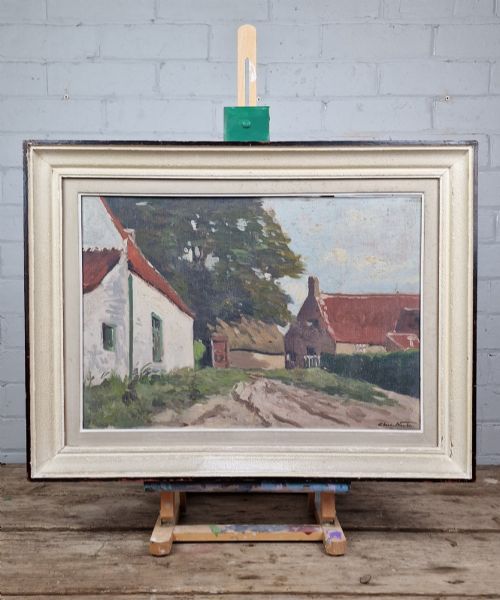
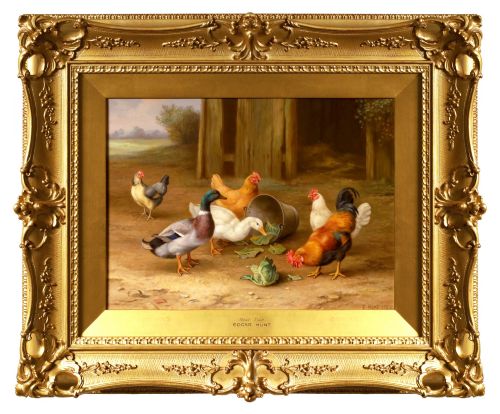
A farmyard scene painting captures the rustic charm and working life of the nineteenth-century countryside through spirited depictions of livestock and rural architecture.
Farmyard Scene Painting
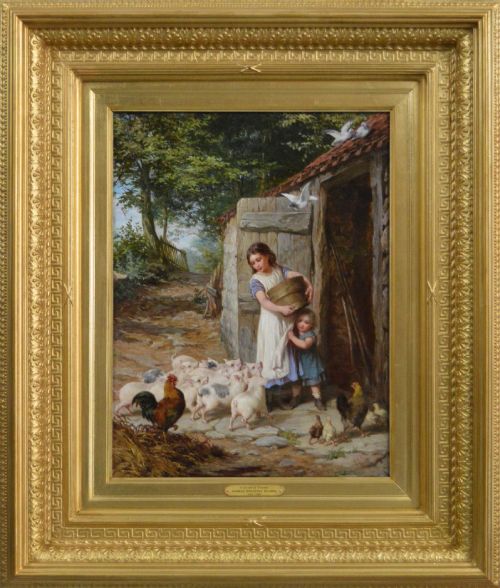
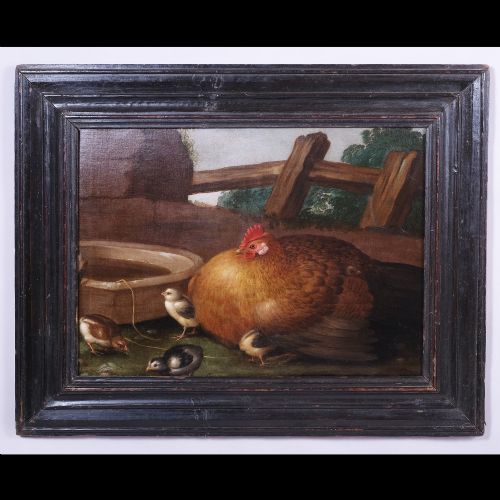
A farmyard scene painting brings the traditional rural economy into focus, showcasing horses, cattle, pigs, and poultry alongside barns, stacks, and labourers. These works span the eighteenth, nineteenth, and early twentieth centuries, reflecting changing attitudes towards pastoral life.
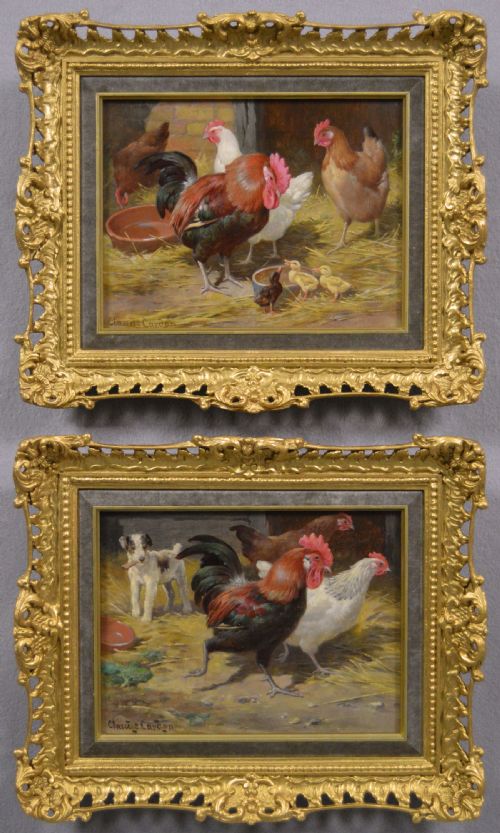
The versions most commonly met on this page are oil paintings on canvas or board, often housed in period giltwood frames. British and European artists of the Victorian era and the early twentieth century dominate the selection, portraying domestic animals with careful anatomical observation.
How They Were Made
Artists built these compositions primarily using oil paint on stretched canvas, wood panels, or occasionally paper for watercolours. Painters applied layers of pigment to capture the play of light across feathers, fur, and weathered timber in farmyard settings.
Finished works were frequently set into moulded gilt wood frames that complemented the warm earth tones and pastoral subjects of the canvases. These materials reflect traditional studio practices of the Victorian and Edwardian periods.
The listings span the eighteenth to the twentieth centuries, featuring oil on canvas, oil on board, and watercolour on paper.
What Varies in Quality
Quality rests upon the artist's command of anatomy, light, and narrative composition within the farmyard. Superior examples display convincing textures in animal coats and plumage, alongside a balanced integration of figures and architecture.
Lesser works often rely on formulaic repetition and stiff rendering of livestock without engaging the atmosphere of the working farm. The distinction lies in the vitality of the brushwork and the observation of natural behaviour in the animals.
William Joseph Shayer Senior·Charles Houben·George Augustus Holmes·Edgar Hunt·Claude Cardon·Herbert Royle·John Frederick Herring Jnr·Percival Glenfern·John Linnell·Helena Maguire·Pierre Emmanuel Dielmans·Julius Caesar Ibbetson·Arthur Charles Dodd·Robert Russell MacNee·Owen Bowen·B. Kaufmann·Joseph Kirkpatrick·John R. K. Duff·Edward Killingworth Johnson·John Percy Cooke·Arthur Walker Redgate·Ernest Higgins Rigg·Georgina Lara·George Morland·Thomas Blinks
The Farmyard Scene Painting Glossary
- Oil on canvas
- Pigments bound in a drying oil applied to a woven fabric support. This combination allowed artists to blend tones smoothly and build rich surface textures.
- Giltwood
- Wood carved and coated with gold leaf or metallic powder. It provides a reflective, ornate border that enhances the warmth of traditional paintings.
- Genre painting
- The pictorial representation of scenes from everyday life. In this context, it focuses on daily agricultural labour and farm animals.
- Post-Impressionism
- An art movement extending beyond Impressionism that retained vivid colours and thick application of paint. It emphasises symbolic content and expressive brushwork.
- Barbizon School
- A nineteenth-century French movement towards realism in landscape painting. Painters of this circle turned away from classical formulas to observe rural nature directly.
Farmyard Scene Painting: Frequently Asked Questions
What subjects appear in these paintings?
These works typically feature farmyard animals such as horses, pigs, cattle, cockerels, and hens gathered around barns, stable doors, and cornfields. Human figures including farmers, labourers, and children occasionally tend to the animals.
The compositions emphasise the daily rhythms of rural life, capturing resting shires, feeding poultry, and quiet moments in the farmyard during the nineteenth and early twentieth centuries.
How should I display an oil painting?
Hang the artwork away from direct sunlight and sudden fluctuations in temperature or moisture to protect the canvas and the wooden frame. Proper placement preserves the stability of the oil paint and the giltwood.
Ensure the wall can support the weight of the framed canvas and use appropriate fixings designed for traditional art pieces.
How can I tell the period of a work?
Examine the clothing of any figures, the style of the framing, and the specific painting techniques employed by the artist. Victorian works often show meticulous realism in animal subjects, while later pieces adopt looser impressionistic brushwork.
Signatures, artist dates, and exhibition labels on the reverse of the canvas or panel offer further historical clues.
What is the difference between oil and watercolour?
Oil paintings utilise pigment suspended in drying oil on canvas or wood, allowing for rich textures and deep colour layering. Watercolours employ water-soluble pigments on paper, producing a lighter and more translucent finish.
Oils are generally more robust and traditionally housed in heavy gilt frames, whereas watercolours require glass protection to prevent environmental damage.