

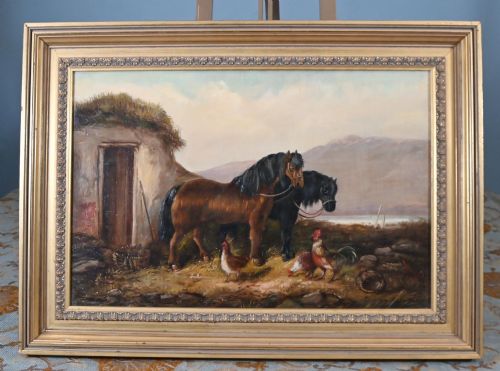
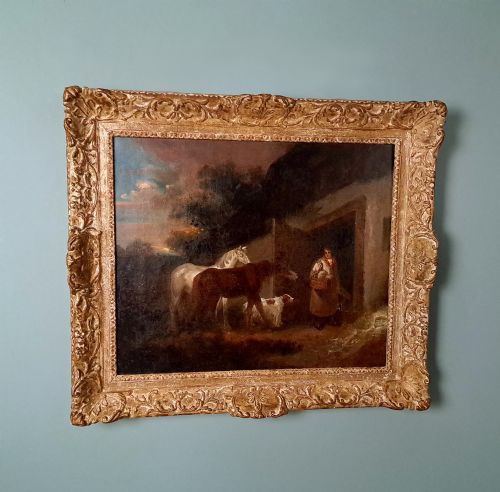
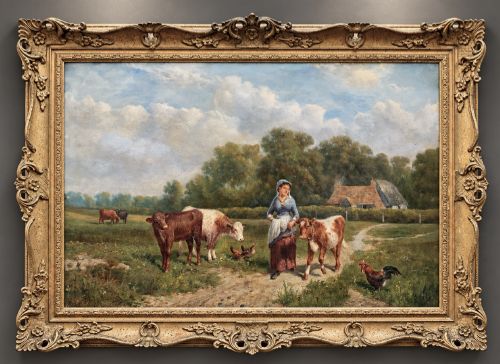
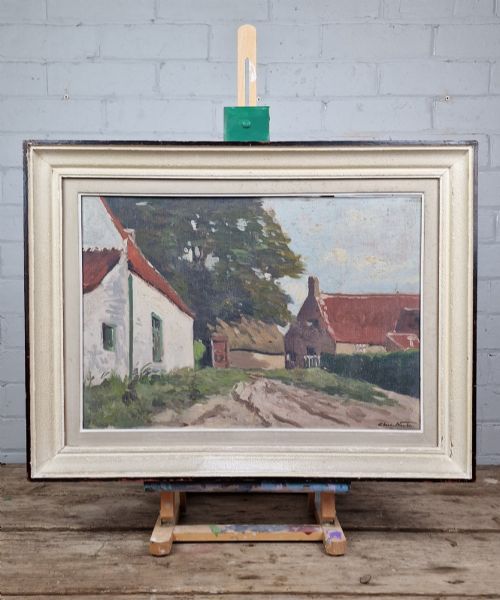
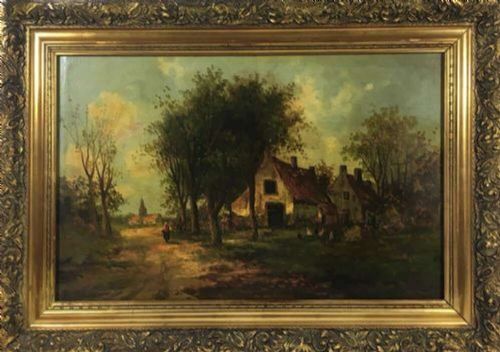
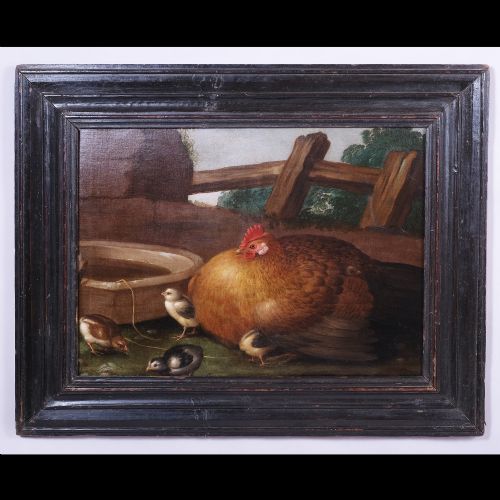

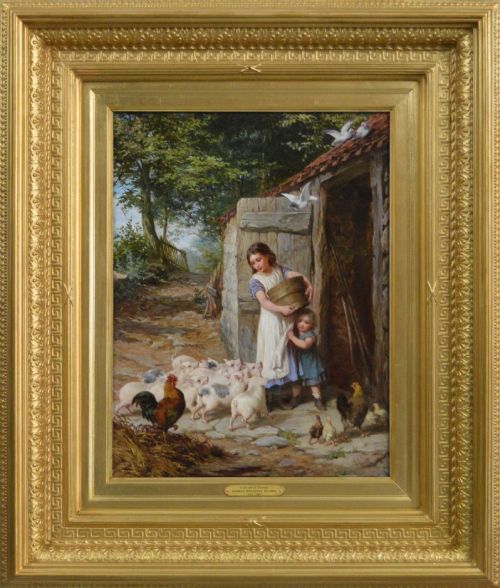
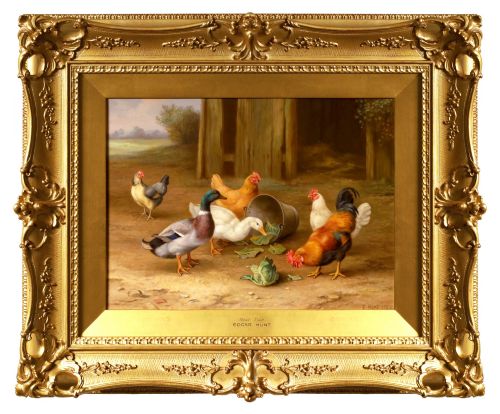


Farmyard Oil Painting
A farmyard oil painting brings the structured calm of nineteenth-century agricultural life onto canvas through layered pigments.
Farmyard Oil Painting
A farmyard oil painting depicts traditional agricultural life, often featuring shire horses, working cattle, and poultry like cockerels and hens gathered around barns and rustic cottages. These works span from the eighteenth century through the Victorian period into the early decades of the twentieth century, reflecting shifting tastes in pastoral representation.
The compositions vary from expansive landscapes with labourers at rest to intimate genre studies focusing closely on farm animals and feeding scenes. Common focal points include ducks near ponds, pigs resting in straw, and horses hitched near timber gates.
British and continental European artists dominate this subject matter, working within realist, pastoral, and impressionist traditions to record daily rural rhythms. The pieces on this page lean heavily into nineteenth-century British realism and the Barbizon School influence.
How They Were Made
Artists built these images using oil paint applied primarily to stretched canvas or wooden board, occasionally utilising panel supports for smaller compositions. Brushwork ranged from tight, highly detailed academic rendering down to looser, impressionistic strokes that captured changing outdoor light.
Pigments were worked in successive layers, starting with an underpainting to establish shadow and form before building up opaque highlights and rich glazes. Many surviving examples retain their original giltwood or decorative frames, which often incorporate gold leaf detailing.
Farmyard Oil Painting Retail Price Guide 2026
Typical asking prices for farmyard oil painting among the pieces listed under this phrase on Sellingantiques today, from the lower quarter to the upper quarter. They describe what is for sale here now, not the wider market.
Countless canvas chickens await their feed across these pastoral scenes, faithfully guarded by generations of patient farmyard dogs.
What Varies in Quality
The strength of a farmyard oil painting rests on the anatomical accuracy of the animals and the handling of atmospheric light across the yard. Stronger examples display confident draughtsmanship in difficult subjects like shire horses and poultry, whereas weaker pieces rely on stiff repetition and muddy tonality.
Compositional balance separates standard decorative works from accomplished fine art. Master hands positioned figures, livestock, and architecture to guide the eye naturally through the farm space, maintaining depth and textural contrast in the straw, timber, and foliage.
William Joseph Shayer Senior·Charles Houben·George Augustus Holmes·Edgar Hunt·Claude Cardon·Herbert Royle·John Frederick Herring Jnr·Frederick W Jackson·Julius Caesar Ibbetson·Arthur Charles Dodd·Robert Russell MacNee·Owen Bowen·Arthur Walker Redgate·Jack R Mould·Ernest Higgins Rigg·Georgina Lara·Thomas Blinks·Donald H Floyd·John William Buxton Knight·Anna Dixon·Amédée Degreef·Edwin Frederick Holt·Alfred H Vickers·Edmund Bristow·Isidore Verheyden
The Farmyard Oil Painting Glossary
- Oil on Canvas
- Pigment mixed with drying oil applied to a woven fabric support stretched across a wooden frame. This remains the most common medium found across these pastoral works.
- Oil on Board
- Pigment applied directly to a rigid wooden or composite board rather than stretched fabric. This support frequently appears in smaller studies and plein-air works.
- Barbizon School
- A nineteenth-century French movement focused on naturalistic landscape painting away from academic convention. Artists in this circle heavily influenced rural genre scenes.
- Giltwood
- Carved wood treated with gold leaf or gold paint to form decorative picture frames. These frames often match the period of the painting they enclose.
- Genre Painting
- Art that depicts aspects of everyday life by portraying ordinary people engaged in common activities. Farmyard scenes frequently fall into this descriptive category.
Farmyard Oil Painting: Frequently Asked Questions
How do I identify the period of a farmyard oil painting?
Examine the canvas preparation, stretcher construction, and framing materials alongside the stylistic conventions of the brushwork. Nineteenth-century works typically employ hand-woven linen and distinct primed grounds that differ from later twentieth-century boards.
Subject dress, agricultural equipment, and artist signatures also help narrow the date. Cross-referencing recorded exhibition dates for known painters provides a secure chronological anchor.
Where were these paintings originally displayed?
These works hung primarily in domestic drawing rooms, country houses, and rural parlours across Britain and Europe. Owners valued them as reflections of prosperous agrarian life and rural tranquility.
Landowners and urban collectors alike purchased pastoral scenes to bring a sense of the English countryside indoors. They served as traditional decorative centerpieces above mantelpieces or within panelled dining spaces.
How should I care for an oil painting on canvas?
Keep paintings away from direct sunlight, high humidity, and rapid temperature fluctuations that cause canvas slackening and paint cracking. Gentle dusting with a soft, dry brush preserves the surface without disturbing the pigment.
Avoid using water, chemical cleaners, or rough cloths on the paint layer. Professional conservation is recommended for cleaning accumulated surface grime or repairing old varnish.
What distinguishes British Impressionism from Victorian Realism in these scenes?
Victorian realism prioritises precise detail, clear narrative action, and accurate animal anatomy with smooth brush transitions. Every feather on a cockerel or harness buckle on a shire horse receives careful attention.
British impressionism focuses instead on atmospheric effects, broken brushstrokes, and the play of natural light across a muck heap or pasture. The overall mood and tonal harmony take precedence over microscopic surface description.