


Farm Landscape Oil Painting
These nineteenth and twentieth-century rural scenes capture working countryside life through traditional farm landscape oil painting.
Farm Landscape Oil Painting
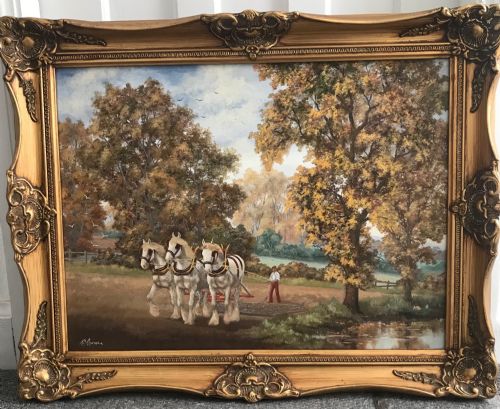
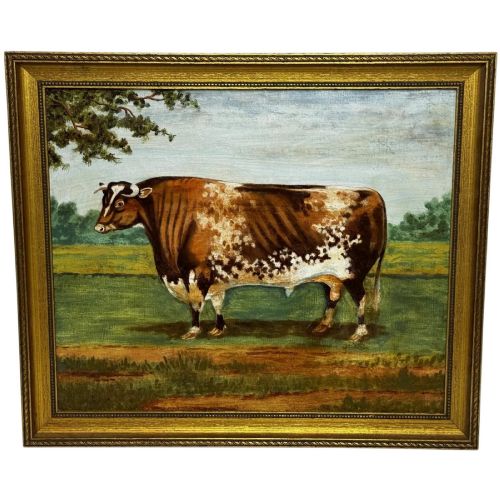
When browsing a farm landscape oil painting, buyers encounter pastoral scenes depicting agricultural life, livestock, and rural farmsteads. These works span the Victorian era through the mid-twentieth century, featuring British, French, and Belgian regional views.
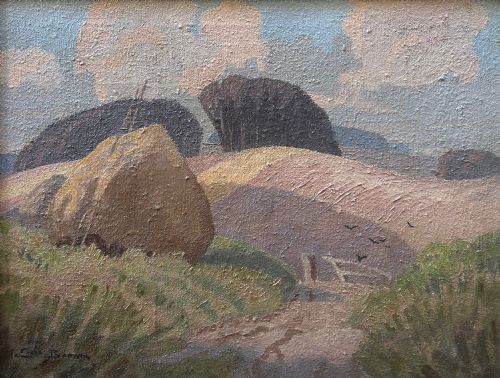
The most common examples on this page include nineteenth-century English farmyard views with shire horses and cattle, alongside early twentieth-century Yorkshire Dales and Wharfedale valley landscapes.
Compositions frequently incorporate working horses, sheep flocks, poultry, and agricultural labourers resting near rustic cottages or barns.
How They Were Made
Artists painted primarily with oil paint on stretched canvas or wooden panels, building up rich textures through layered application. Many surviving works retain their original giltwood or ebonised frames.
Pigments were applied using traditional brushwork techniques ranging from precise nineteenth-century realism to looser impressionistic strokes seen in later periods.
Listings feature works spanning the nineteenth century through the 1950s, executed in oil on canvas, panel, and board.
What Varies in Quality
Quality rests upon the artist's anatomical accuracy in rendering farm animals and horses, alongside the atmospheric depth of the surrounding countryside. Works by established named painters command greater attention than anonymous school pieces.
The handling of natural light across fields and farm buildings distinguishes finer canvases from simpler decorative works.
John Frederick Herring Jnr·Herbert Royle·Owen Bowen·Henry Birtles·Franz van Severdonck
The Farm Landscape Oil Painting Glossary
- Canvas
- A heavy woven fabric stretched across a wooden frame to serve as a painting surface. It provides the primary support for most nineteenth-century works.
- Giltwood
- Wood carved and covered with a thin layer of gold leaf or gilt. It forms the decorative border for many period frames.
- Panel
- A flat piece of wood used as a rigid painting support instead of canvas. Panels were frequently utilised for smaller nineteenth and twentieth-century rural studies.
- Pastoral
- A genre of art depicting rural life, shepherds, and agricultural scenes in an idealized or naturalistic manner. These compositions celebrate quiet country existence.
- Impressionism
- A style of painting emphasising loose brushstrokes and the shifting qualities of natural light. Scottish and British variants appear across twentieth-century rural works.
Farm Landscape Oil Painting: Frequently Asked Questions
How do I date a farm painting?
Dating relies on costume details of depicted figures, agricultural equipment styles, and framing materials. Signatures and exhibition labels on the reverse also help establish the chronology.
Comparative study of known artist working periods narrows down creation dates when documentary evidence is absent.
Where should I hang these artworks?
These pastoral works suit dining rooms, libraries, or traditional living spaces with adequate natural light. Avoid placing them in rooms with high humidity or direct sunlight.
Pairing them with period furniture enhances the traditional aesthetic of rural landscapes.
What subjects are most common?
Common subjects include shire horses ploughing fields, herds of cattle resting near streams, and sheep grazing in Yorkshire valleys. Farmhouses and harvest scenes also appear frequently.
Human figures typically depict agricultural labourers, shepherds, or women tending to livestock and poultry.
Are frames usually original to the art?
Some pieces retain their period giltwood or ebonised frames, while others have been reframed later to suit contemporary tastes. Surviving original frames often show matching patina and wear.
Checking corner joints and backing boards helps determine whether a frame belongs to the same era as the canvas.