




Wharfedale Oil Painting
A wharfedale oil painting captures the distinct light and rural character of the Yorkshire Dales, offering buyers a direct connection to historic northern landscapes.
Wharfedale Oil Painting
A wharfedale oil painting typically portrays the rivers, valleys, and rural scenes of the Yorkshire Dales through regional British art. These works span from the nineteenth century into the twentieth century, capturing seasonal shifts from winter snows to summer haymaking.
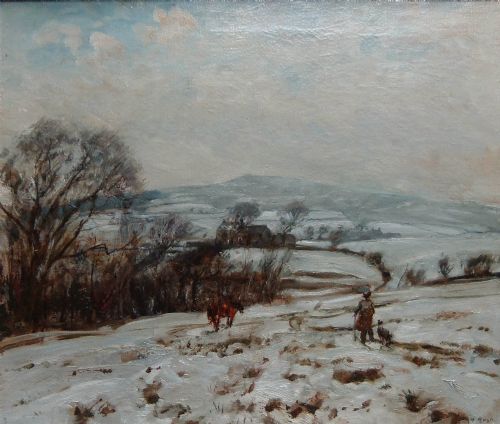
The most common subjects on this page are pastoral landscapes, farmsteads, and river views set around specific local landmarks like Bolton Abbey and Beamsley Beacon. Painters focused closely on changing weather, agricultural labour, and the quiet rhythm of rural life in the valley.
How They Were Made
Artists applied oil paint directly onto stretched canvas, wood panels, or occasionally board to build up texture and depth. These mediums allowed painters to capture the atmospheric grey skies, golden evening light, and earthy tones characteristic of the region.
Many works retain their original gilt wood frames, which complement the traditional painting techniques of the period. The combination of durable oil paint on canvas or wood ensured these regional landscapes survived in stable condition over the decades.
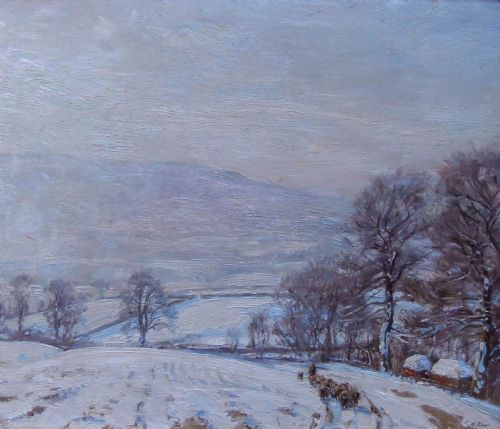
Several artists braved harsh Dales winters outdoors to capture sheep huddled in the snow.
What Varies in Quality
Quality in these regional works rests on the artist's ability to handle atmospheric light and seasonal mood rather than sheer scale. Stronger examples demonstrate confident brushwork that brings movement to water, foliage, and winter skies.
The depth of composition and the specific location depicted also influence the character of the piece. Well-rendered depictions of local labour and recognizable Dales topography stand apart from more generalized topographical studies.
Owen Bowen·Herbert Royle·William Manners·Reginald Grange Brundrit·William Greaves·Ernest Moore
The Wharfedale Oil Painting Glossary
- British Impressionism
- A style of painting that focuses on light, loose brushwork, and everyday scenes. Many regional artists adopted these techniques to capture shifting weather in the Dales.
- Oil paint
- A slow-drying paint made with pigments suspended in a drying oil, typically linseed oil. This medium allows for rich colour blending and textured application on canvas or wood.
- Gilt wood
- Wood coated with a thin layer of gold leaf or metallic paint. Frames made this way were standard for finishing fine art paintings of the Victorian and Edwardian periods.
- Pastoral
- Relating to the countryside and rural life, particularly the farming of sheep and cattle. This genre forms the core subject matter for landscape art set in the valley.
Wharfedale Oil Painting: Frequently Asked Questions
Where were these scenes painted?
These paintings focus exclusively on Wharfedale and the surrounding Yorkshire Dales. Specific locations include Bolton Abbey, Burnsall, Barden Bridge, and Beamsley Beacon.
Painted motifs often feature local rivers, woodland, hay meadows, and stone farmsteads native to this specific part of Yorkshire.
How should I frame and display them?
Many works are set within their original wooden or gilt frames, which suit the historical context of the art. Keeping them away from direct sunlight protects the oil pigments and the underlying canvas or wood panel.
Standard picture hanging methods suffice, provided the wall space remains free from dampness and extreme temperature shifts.
Are these works signed by the artists?
Several examples feature visible artist signatures, while others are recognised through established attributions and recorded exhibition titles. Signed pieces often provide clearer documentation of the painter's working period.
Archive records show that regional painters frequently signed their board and canvas studies after completing them on location in the Dales.