
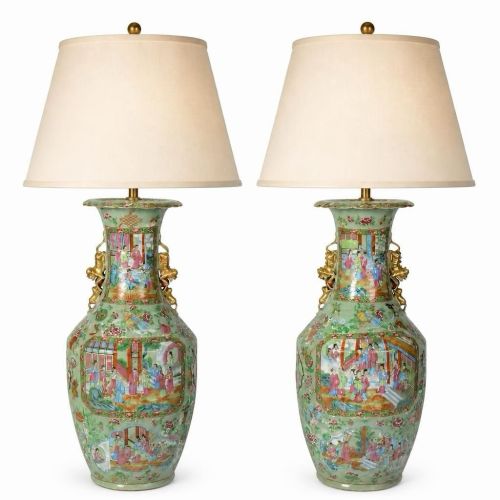


Famille Rose Lamp Pair
These famille rose lamp pair selections bring together hand-painted Cantonese porcelain and matched lighting bases for balanced room illumination.
Famille Rose Lamp Pair
A famille rose lamp pair consists of two matching ceramic bases wired for electricity, typically converted from nineteenth-century Chinese export vases, ginger jars, or oil lanterns. You will most frequently encounter nineteenth-century Cantonese porcelain and rose medallion vessels transformed into table lamps.
The objects combine historic ceramic production from Qing dynasty trade with functional domestic lighting. Many examples originate as decorative vases before receiving electrical fittings and fabric or silk shades.
Makers and workshops adapted these porcelain bodies to suit Western interiors during the Victorian and later eras. The resulting pairs preserve traditional enamel painting while serving modern lighting needs.
Materials and construction methods
The primary material is white porcelain decorated with overglaze enamels, dominated by the pink rose colour that defines the famille rose palette. Artisans applied these pigments by hand before firing the pieces in kilns.
Many bases incorporate brass or ormolu mounts to secure the ceramic body and support the electrical hardware. Wood components also appear in the structural assembly of the lamp bases.
Workshops paired the porcelain vessels with fabric or silk shades, completing the conversion from decorative jars or vases into functional table lamps.
Listings feature porcelain vessels dated across the nineteenth and early twentieth centuries, combined with brass, ormolu, and silk.
Judging quality and execution
Quality rests upon the crispness and detail of the hand-painted enamel decoration across both vessels. Superior pairs display finely rendered figures, birds, and floral panels with vibrant, well-preserved pigments.
The matching of the pair influences overall desirability, as uniform sizing and symmetrical pattern placement create a more harmonious visual effect. Differences in mounting metalwork, such as chased ormolu versus plain brass, also distinguish finer examples.
Samson
The Famille Rose Lamp Pair Glossary
- Famille Rose
- A palette of Chinese porcelain enamels introduced in the Qing dynasty, distinguished by its opaque pink colour derived from colloidal gold. This group includes rose medallion and Cantonese decorative styles.
- Cantonese
- Pertaining to porcelain decorated in Canton for the export market, often featuring crowded panels of figures, birds, and flowers. These vessels frequently form the basis of antique lamps.
- Rose Medallion
- A specific style of Cantonese export porcelain featuring repeating geometric and figural medallions arranged around a central motif. It forms a common source for converted table lamps.
- Ormolu
- Gilt bronze mounts applied to the base or collar of ceramic objects. These metal fittings add stability and decorative polish to the lamp structure.
- Ginger Jar
- A wide-shouldered ceramic jar originally used for storing spices, later adapted into a popular lamp body shape.
Famille Rose Lamp Pair: Frequently Asked Questions
How do I date a famille rose lamp pair?
Dating relies on examining the ceramic body, the style of the enamel painting, and the associated mounting hardware. Nineteenth-century pieces typically show hand-thrown potting characteristics and characteristic Cantonese export motifs.
Later twentieth-century examples exhibit different baseline porcelain standards and wiring configurations. Comparing the two vessels helps confirm whether the pair was assembled during the period or married together later.
Can I replace the lampshades?
Replacing the lampshades is straightforward provided the fitter size and shade proportions match the scale of the porcelain bases. Selecting neutral silk or fabric shades helps balance the busy enamel decoration of the ceramic bodies.
Ensure the weight of the new shade does not destabilise the mounting hardware or the ceramic neck. Consulting the original shade style can guide the choice of appropriate drop and diameter.
Were these originally made as lamps?
These pieces started life as decorative vases, ginger jars, or oil lanterns rather than lighting fixtures. Workshops converted them into table lamps during the nineteenth or twentieth century to suit contemporary interiors.
This conversion process typically involved drilling the base for a cord and securing brass or ormolu hardware to the top. The original ceramic body remains the primary indicator of the piece's age and origin.
How do I clean the ceramic bases?
Cleaning requires a soft, dry cloth to remove dust from the porcelain surface and enamel details. Avoid using abrasive cleaners or chemical solvents that could damage the overglaze decoration.
Take care around any ormolu or brass mounts to prevent tarnishing agents from touching the ceramic body. Professional rewiring checks should be handled separately from routine surface maintenance.