
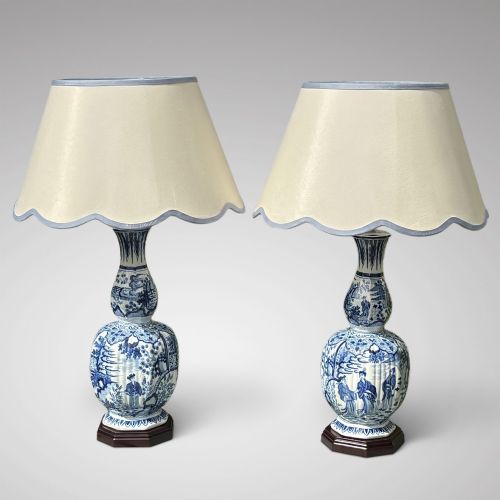


Antique Porcelain Side Lamps
Antique porcelain side lamps bring a warm, decorative glow to a room, pairing hand-painted ceramic bodies with period brass or ormolu mounts.
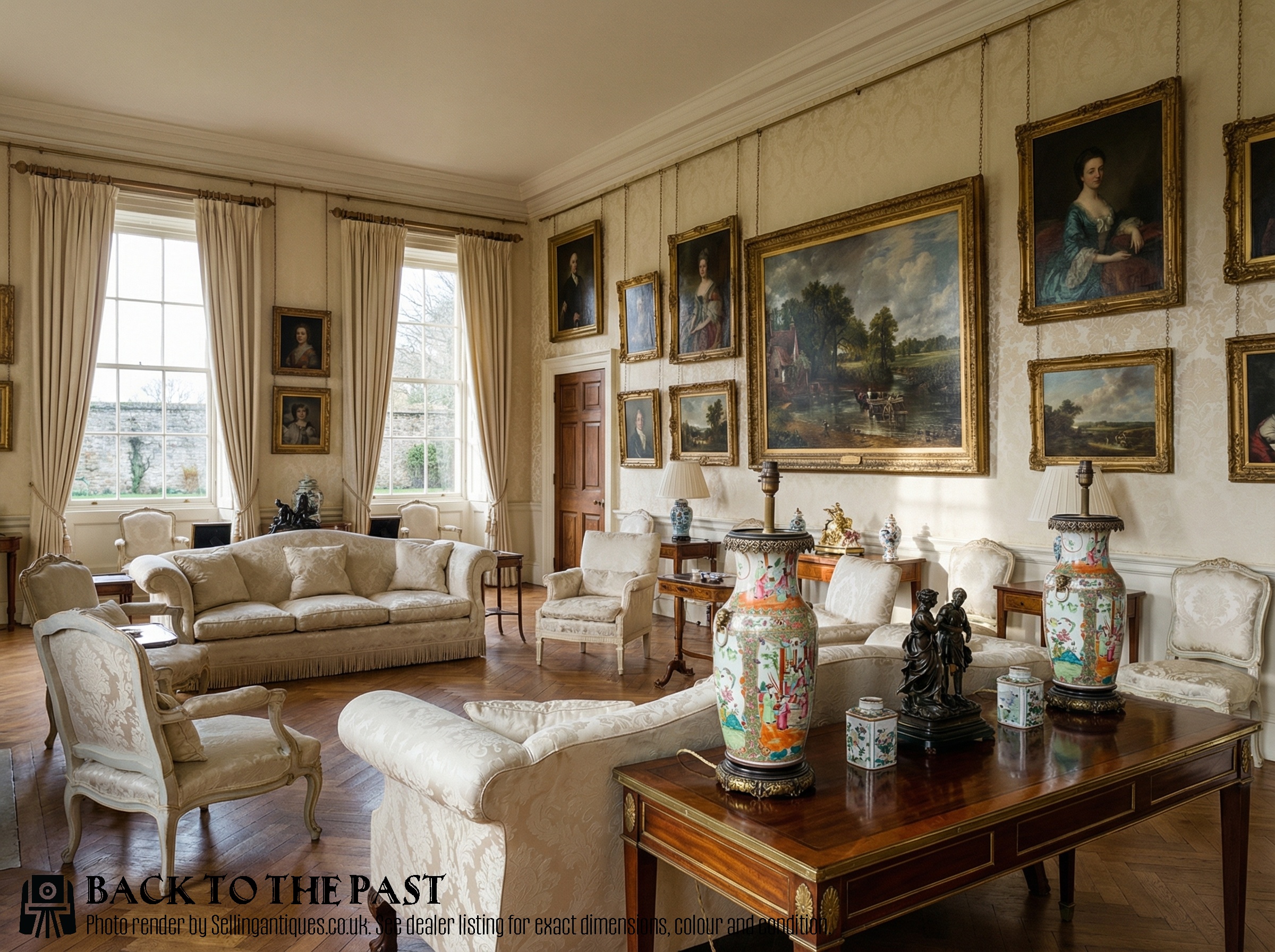
Antique Porcelain Side Lamps
These antique porcelain side lamps take several forms, most frequently appearing as converted vases from Chinese and European kilns mounted for electricity. Buyers exploring antique porcelain side lamps will frequently encounter pairs dating from the nineteenth century alongside eighteenth-century Japanese and Chinese examples.
Stylistic influences stretch across Chinoiserie, French Chateau, and Victorian aesthetics. The nineteenth century yields the bulk of the current options, often featuring famille rose, famille verte, and rose medallion palettes.
Materials and construction
Makers utilised high-fired porcelain and earthenware bodies, frequently embellished with intricate hand-painted enamels or cobalt blue underglaze. These ceramic foundations are paired with structural elements of brass, gilt metal, ormolu, and occasionally marble or wood.
Many items began life as utilitarian or decorative vases before conversion into table lamps. Artisans secured these ceramic vessels with metal mountings, sometimes adding fabric or silk shades to complete the assembly.
Listings feature porcelain, earthenware, brass, gilt metal, ormolu, wood, fabric, and silk across periods spanning the eighteenth, nineteenth, and twentieth centuries.
Evaluating quality and execution
Quality rests heavily on the crispness of the hand-painted detail upon the porcelain body and the weight of the metal mounts. Finer pieces demonstrate precise brushwork in palettes like famille rose or blue and white, coupled with heavy ormolu or cast brass rather than lighter alloys.
The integration of the mountings to the ceramic body dictates the overall stability and finished proportion of the piece. Superior examples maintain the original integrity of the vase while incorporating mountings that complement rather than overwhelm the ceramic.
The Antique Porcelain Side Lamps Glossary
- Ormolu
- A gilt bronze or metal mount cast and chased to embellish furniture and ceramics. It adds a warm, metallic contrast to glazed porcelain bodies.
- Imari
- A style of Japanese porcelain featuring a distinct palette of underglaze blue, iron red, and gilt. These wares were widely exported to Europe.
- Famille Rose
- A palette of opaque enamels dominated by pink, introduced to Chinese ceramics in the eighteenth century. The style appears frequently on nineteenth-century export pieces.
- Paris Porcelain
- High-quality ceramics produced by numerous independent workshops in and around Paris during the eighteenth and nineteenth centuries. These bodies often display rich gilding and hand-painted scenes.
- Satsuma
- A type of earthenware from Japan featuring a crackle-glaze ivory body decorated with polychrome enamels and gold. They are frequently adapted into decorative lighting.
Antique Porcelain Side Lamps: Frequently Asked Questions
How do I clean an antique porcelain lamp?
Dust the porcelain gently with a dry, soft cloth to protect the painted surface and any delicate gilding. Avoid using harsh chemical cleaners on both the ceramic body and the metal mounts.
Take care around older wiring and fabric components, keeping moisture entirely away from electrical parts. Professional advice should be sought if the mounts require deeper restoration.
Are these lamps converted from vases?
Many examples on offer began life as decorative vases before being adapted for interior lighting. This conversion process often involved securing metal mounts and adding electrical fittings.
Such adaptation is standard practice for period ceramics of this scale, preserving the decorative value of the original vessel.
How do I date a porcelain lamp?
Dating relies on the stylistic markers of the ceramic body, the palette utilised, and the characteristics of the metal mounts. Nineteenth-century pieces often display distinct transitional traits from earlier eighteenth-century prototypes.
Examining the base and any visible wear helps confirm the age of both the ceramic vessel and its subsequent metal fittings.
Where should I place a side lamp?
These pieces suit side tables, consoles, or desks where their decorative height and painted surfaces can be appreciated. They provide warm accent lighting rather than heavy illumination.
Ensure the table surface is stable enough to support the combined weight of the ceramic body and its metal mounts.