
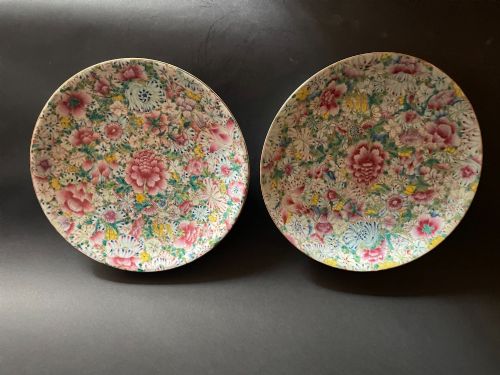
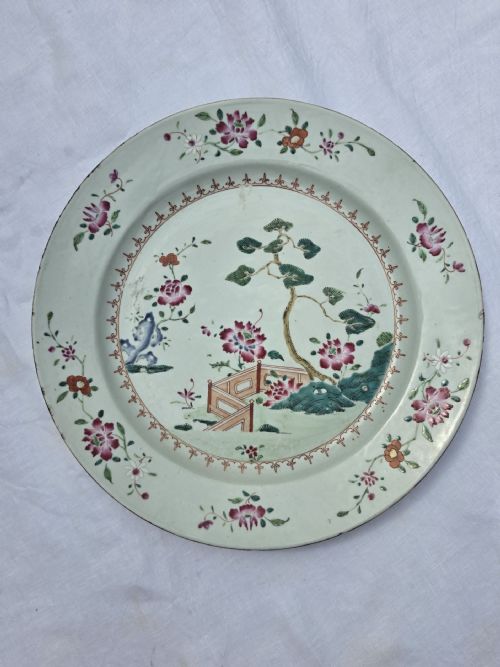


Famille Rose Enamel Dish
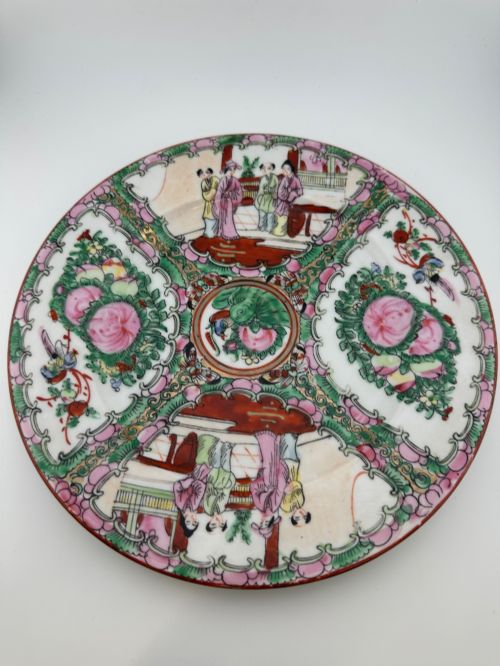
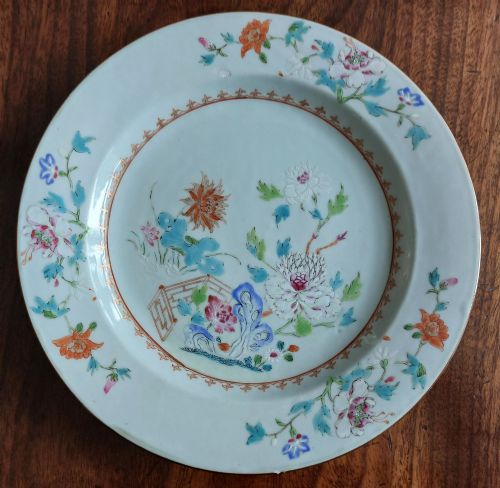
A famille rose enamel dish brings vibrant floral and figural palettes into a room, offering the meticulous hand-painted detail of Qing Dynasty and export porcelain.
Famille Rose Enamel Dish
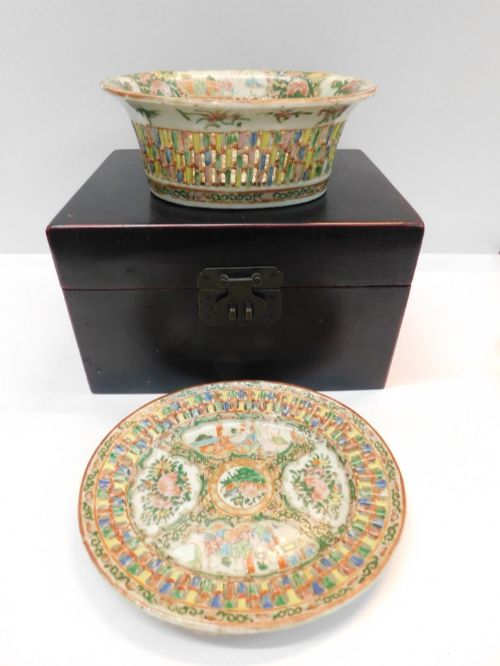
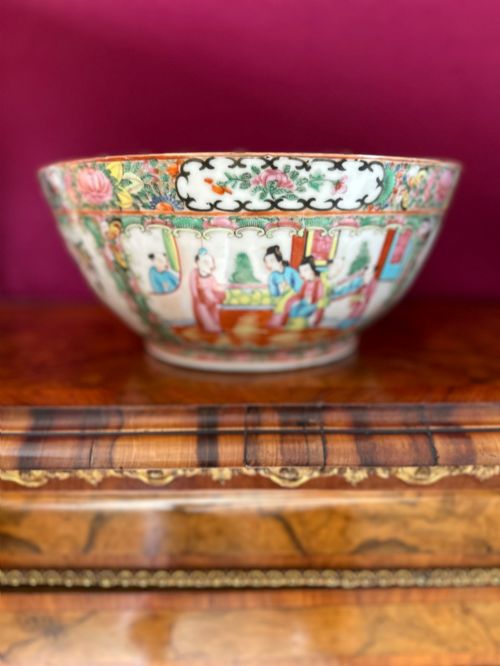
When searching for a famille rose enamel dish, collectors encounter pieces spanning the eighteenth and nineteenth centuries, including Qing Dynasty and Chinese Export wares. The selections on this page encompass decorative plates, chargers, bowls, and specialised forms such as reticulated chestnut baskets and trefoil trays.
The most frequent examples on this page are eighteenth-century Qianlong period plates and nineteenth-century Canton dishes, often featuring hand-painted bird, floral, or mandarin scenes. These items range from simple saucers to large chargers and pedestal dishes, reflecting diverse domestic and export functions.
What varies in quality
The precision and complexity of the hand-painted brushwork separate standard export wares from exceptional pieces. Superior examples display crisp detail in figural mandarin scenes and intricate bird and floral compositions.
The preservation of the overglaze enamels and the crispness of the porcelain body, whether in a lobbed rectangular bowl or a reticulated basket, dictate the standing of an individual item.
The Famille Rose Enamel Dish Glossary
- Famille Rose
- A palette of opaque overglaze enamels dominated by pink or rose colours, introduced during the Qing Dynasty. This scheme allowed for nuanced shading and detailed pictorial designs.
- Canton
- A major production and export centre in Southern China known for vibrant, crowded enamel decoration featuring figures, birds, and flowers. Canton pieces often date to the nineteenth century.
- Qianlong
- The reign period lasting from 1736 to 1795, associated with high technical standards and refined porcelain production. Pieces from this era are heavily sought after by collectors.
- Reticulated
- Having an openwork lattice or net-like pattern formed in the porcelain body. This technique appears on specialised serving pieces such as chestnut baskets and stands.
- Hard-paste porcelain
- A dense, vitrified ceramic material made from petuntse and kaolin, fired at high temperatures. It provides a durable, smooth white base for enamel painting.
Famille Rose Enamel Dish: Frequently Asked Questions
How do I date a famille rose dish?
Dating relies on stylistic markers, reign marks, and the characteristics of the porcelain body and enamel colours. Eighteenth-century Qianlong pieces often show finer detail and distinct palette controls compared to later nineteenth-century Canton wares.
Examining the foot rim and the wear on the overglaze enamels helps confirm the era. Comparing pieces against documented archive items provides further context for specific periods.
Were these dishes meant for dining?
Many items served practical dining or display functions within European and domestic markets as part of extensive export services. Tea bowls, saucers, and larger chargers accommodated various social and culinary rituals.
Over time, decorative bowls and plates transitioned into purely ornamental display pieces due to their delicate enamel surfaces.
How should I display a porcelain dish?
Displaying these items securely involves using specialised wall hangers or stable plate stands designed for heavy porcelain chargers. Keeping pieces away from direct sunlight protects the delicate overglaze enamels from fading.
Placing them in stable environments prevents accidental knocks to fragile elements like reticulated handles or lobbed rims.
What is the difference between famille rose and famille verte?
Famille rose relies on an opaque pink or purple enamel introduced in the eighteenth century, replacing the dominant green tones of the earlier famille verte palette. This addition allowed artists to achieve softer tonal gradations in floral and figural motifs.
Both styles appear on export porcelain, though they represent distinct shifts in Qing Dynasty ceramic decoration.