


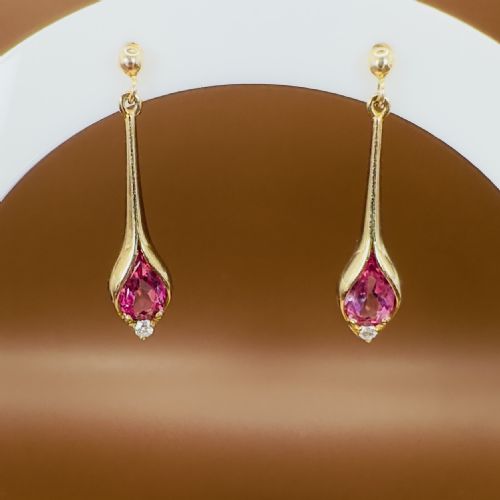
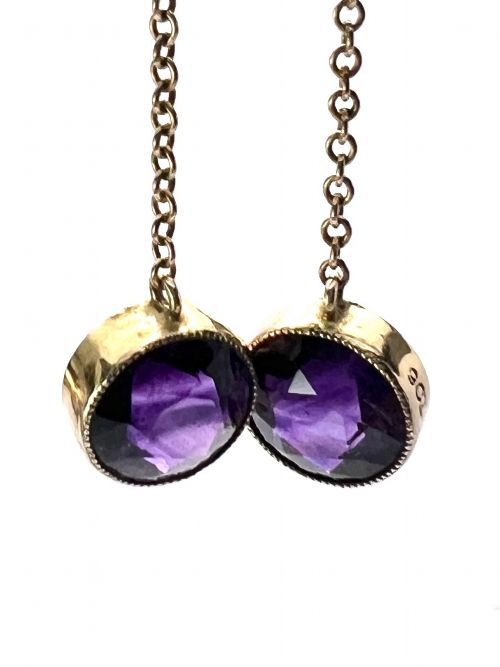


Facetted Gemstone Drop
These facetted gemstone drop pieces are distinctive suspended jewels, prized for their movement and the way cut stones catch the light.
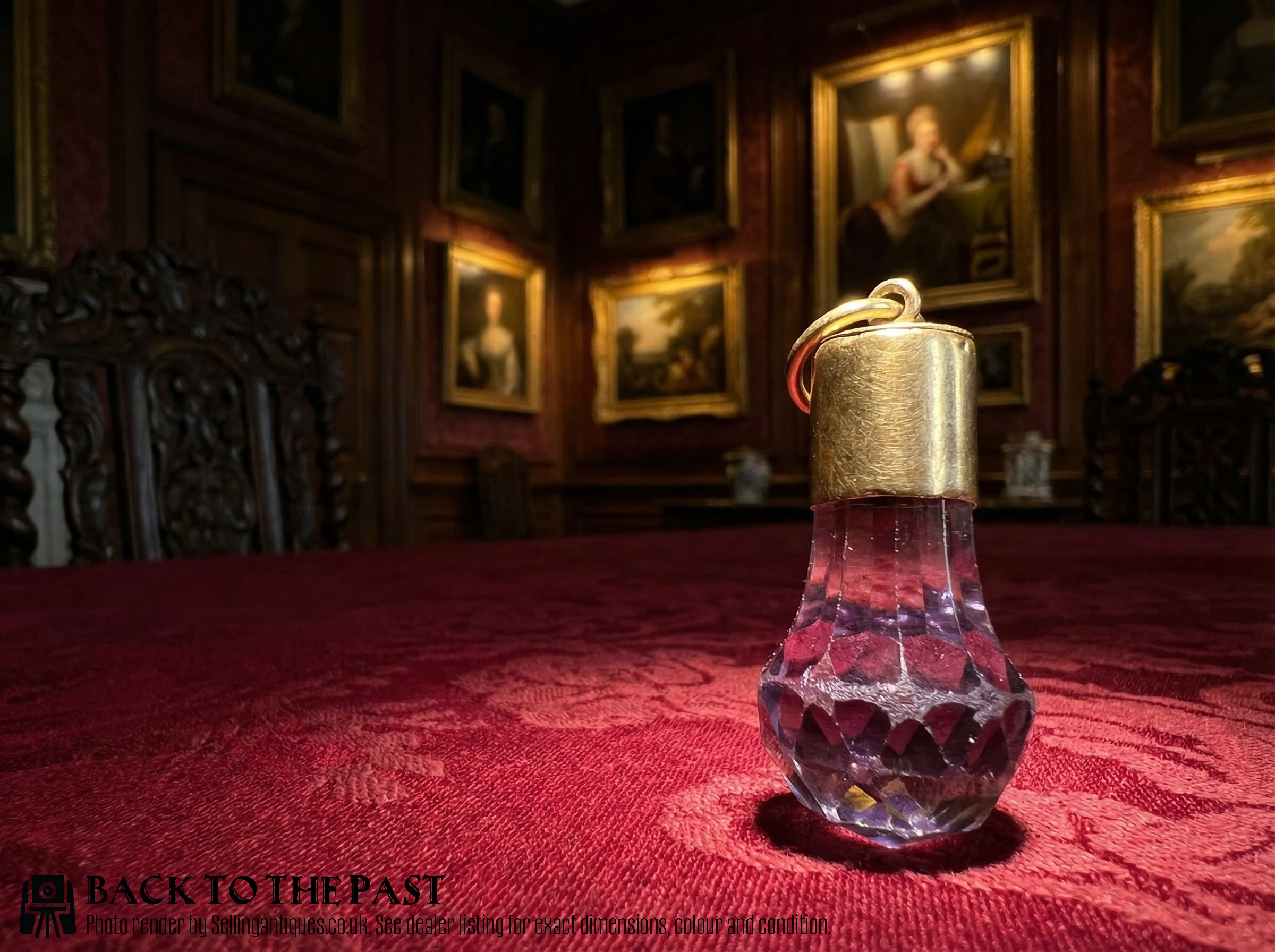
Facetted Gemstone Drop
When you search for facetted gemstone drop, you encounter a selection of earrings, pendants, and necklaces spanning the Victorian, Edwardian, and Art Deco eras alongside mid-century and contemporary designs. These items are defined by a primary stone cut with numerous flat surfaces, allowed to hang freely from a hook, stud, or chain.
The versions you are most likely to meet on this page take the form of earrings and pendant necklaces in gold or silver. Amethyst and citrine dominate the selection, appearing frequently in works from the early twentieth century and the 1950s.
How they were made
Metals such as nine-carat yellow gold, eighteen-carat yellow gold, and silver provide the foundational structure for setting and suspension. Goldsmiths and silversmiths shaped these metals into bezels, hinged lever backs, and chains to hold the stones securely while permitting natural sway.
Gemstones including amethyst, citrine, pink topaz, white topaz, pearl, aquamarine, green chalcedony, and smoky quartz received faceting by hand or machine to enhance optical brilliance. Jewellers combined these cut minerals with pearls and diamonds to create balanced dangling compositions.
Facetted Gemstone Drop Retail Price Guide 2026
Typical asking prices for facetted gemstone drop among the pieces listed under this phrase on Sellingantiques today, from the lower quarter to the upper quarter. They describe what is for sale here now, not the wider market.
What varies in quality
The distinction between ordinary and exceptional examples rests upon the clarity and saturation of the stones, together with the precision of the metalwork. Master jewellers ensured that mountings were structurally robust yet visually light, allowing maximum light passage through each suspended mineral.
Design cohesion also dictates merit, where the proportions of the drop balance harmoniously with its fixture. Finer pieces demonstrate careful matching of stone pairs in earrings and secure, well-integrated settings that withstand regular wear.
The Facetted Gemstone Drop Glossary
- Faceted
- A stone cut with multiple flat polished faces to increase its reflection of light. These geometric surfaces are characteristic of the drops seen in this selection.
- Drop
- A pendant element that hangs below a primary structure such as an earring wire or necklace chain. This component swings independently.
- Lever back
- An earring finding featuring a hinged curved wire that clasps shut behind the ear lobe. This mechanism secures dangling items safely.
- Fob
- A short ornamental pendant attached originally to a pocket watch ribbon. Several items in this style appear repurposed as necklace charms.
- Chalcedony
- A cryptocrystalline variety of silica forming smooth translucent gemstones. Green examples appear within the mid-century selections here.
Facetted Gemstone Drop: Frequently Asked Questions
What periods do these drop pieces come from?
The listings span from the nineteenth century through the Edwardian era, the nineteen-twenties, and into the nineteen-fifties and nineteen-sixties. Each period brings distinct mounting styles and stone preferences to the design.
Victorian and Edwardian examples lean towards delicate gold work and deep purple amethysts, while mid-century pieces often utilise brighter yellow citrines and cleaner geometric lines.
How should I clean my gemstone drop earrings?
Cleaning requires warm soapy water and a soft brush to remove dust from behind the suspended stones. Amethyst and citrine tolerate gentle washing, though pearls require special care to protect their organic lustre.
Avoid harsh chemical dips and ultrasonic cleaners, particularly on items featuring pearls or softer quartz varieties, to preserve the integrity of the metal and stone settings.
Are these necklaces supplied with chains?
Most pendant necklaces listed include their matching chains, often executed in complementary nine-carat gold or silver. The lengths and chain types vary according to the original period of manufacture.
Review the individual description to confirm whether a pendant is attached to an integrated chain or offered independently for your own selection.
How do I identify Edwardian drop jewellery?
Edwardian pieces typically showcase light, airy metalwork in gold or silver, frequently employing millegrain borders around stones. The aesthetic favours delicate garlands and symmetrical arrangements.
Amethysts and seed pearls are common during this era, set in designs that emphasise grace and refined movement rather than heavy mass.
Can I wear these antique drops every day?
Daily wear is possible with sturdy settings, provided you handle items with appropriate care during dressing and storage. Secure findings like hinged lever backs offer added confidence for frequent use.
Consider removing delicate dangling items before strenuous physical activity or sleeping to prevent strain on the suspension points.