
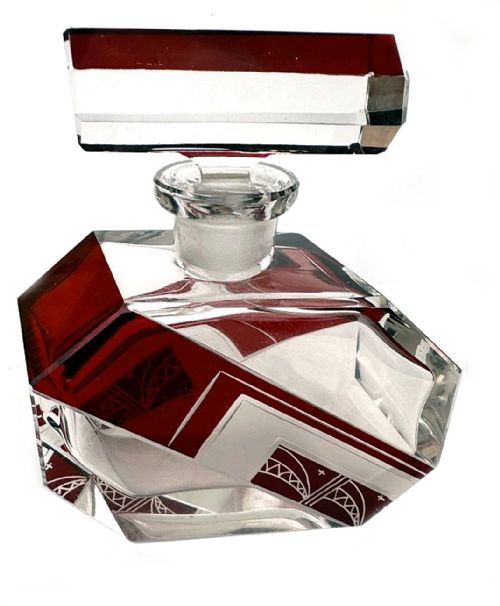


Faceted Crystal Scent Bottle
A faceted crystal scent bottle offers brilliant light play and handy pocket vanity, drawing collectors to crisp geometric cutting and sparkling glass.
Faceted Crystal Scent Bottle
A faceted crystal scent bottle represents a functional piece of vanity equipment designed to hold perfume securely while catching the light on dressing tables or inside handbags. These vessels appear across several periods, stretching from the Victorian era and Edwardian years into the geometric designs of the Art Deco epoch.
The most frequent examples encountered on this page combine clear or blue cut glass with sterling silver collars, mounts, or stoppers. Makers often shaped these items as small perfume decanters or paired vanity sets, reflecting the domestic habits of past centuries.
How they were made
Craftsmen shaped these objects using heavy cut crystal, cut glass, and standard glass, applying wheel-cutting techniques to produce sharp geometric facets that amplify the sparkle of the material. Artisans then fitted many of these vessels with sterling silver collars and engraved glass stoppers to complete the construction.
Certain twentieth-century pieces incorporate coloured glass combined with enamel work, displaying the distinct palette associated with Art Deco production. The integration of silver hallmarks provides clear evidence of assay standards and manufacturing periods.
Materials recorded across current inventory include cut lead crystal, sterling silver, enamel, and coloured glass.
What varies in quality
The distinction between standard examples and superior pieces rests on the crispness of the facet cutting and the depth of the hand-engraving across the crystal surface. Sharp, well-defined angles scatter light cleanly, whereas softer edges indicate less rigorous finishing by the cutter.
The presence of hallmarked sterling silver mounts and intact, matching stoppers elevates the integrity of an item. Pieces featuring specialised maker attributions, such as work by Karl Palda, command closer attention from collectors due to distinct stylistic execution.
Karl Palda
The Faceted Crystal Scent Bottle Glossary
- Faceted crystal
- Glass containing lead oxide that has been cut with flat polished planes to increase brilliance. These geometric surfaces refract light in multiple directions.
- Sterling silver collar
- A band of high-purity silver fitted around the neck of the bottle to secure the stopper. This component often bears assay office hallmarks.
- Engraved glass
- A decorative technique where designs are carved directly into the surface using a rotating wheel. This method adds tactile detail alongside the structural facets.
- Perfume decanter
- A larger variant of a scent bottle shaped like a miniature beverage decanter. These often appear in pairs with fitted stoppers.
Faceted Crystal Scent Bottle: Frequently Asked Questions
How do I clean a vintage scent bottle?
Gently rinse the interior with warm soapy water using a bottle brush if necessary, taking care to protect any silver mounts from harsh liquids. Avoid soaking pieces with enamel work to preserve the coloured decoration.
Dry the exterior thoroughly with a soft cloth to restore the sparkle of the cut crystal facets.
Are these bottles safe for modern perfume?
Most antique and vintage vessels function adequately for holding modern fragrances, provided the ground glass stopper fits tightly enough to prevent evaporation. Ensure the interior is entirely free from residue before adding new scents.
Keep in mind that older stoppers are individually ground to fit their specific necks and cannot be easily swapped.
How can I tell Victorian bottles from Art Deco ones?
Victorian and Edwardian examples typically feature intricate wheel-engraving and heavy sterling silver collars, leaning towards traditional floral or scroll motifs. Art Deco pieces from around nineteen thirty favour clean geometric blue glass and enamel highlights.
Examining the overall silhouette and cutting style usually reveals the manufacturing period.
What is the purpose of the silver collar?
The silver collar reinforces the vulnerable neck of the glass vessel where the stopper inserts and removes repeatedly. It also provides a secure anchor for hinged caps or matching stoppers.
Assay marks stamped upon these silver mounts frequently help date the piece accurately.