



Fabric Well Work Table
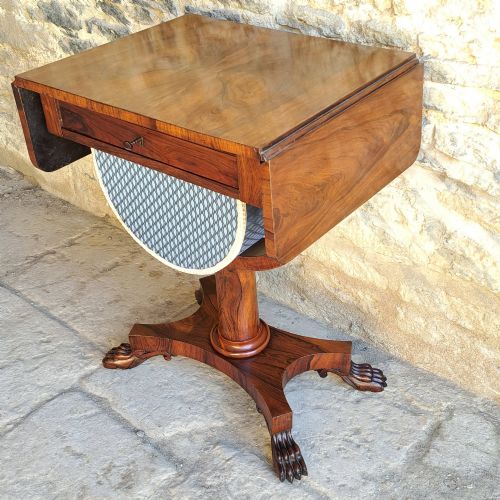
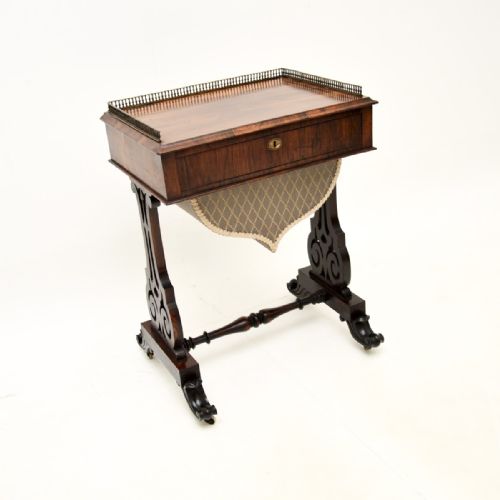
A fabric well work table is a versatile nineteenth-century piece designed for needlework, featuring a suspended textile pouch below the top.
Fabric Well Work Table
A fabric well work table is a specialised piece of nineteenth-century furniture designed to hold sewing materials, wools, and ongoing needlework projects. These tables typically combine a solid timber top with a hanging textile bag or box beneath, keeping domestic crafts tidy and accessible.
Materials and Construction
Cabinet makers utilised dense hardwoods like rosewood, burr walnut, and mahogany to build the frames, often incorporating figured veneers to create striking surface patterns. These timbers provided the structural stability needed for tables that were frequently moved and used daily.
The defining feature - the fabric well - relied on textiles, velvet, and fitted brass hardware to suspend the pouch securely beneath the work surface. Skilled upholsterers gathered and pleated the materials to create a functional yet decorative receptacle for sewing implements.
Assessing Quality and Craftsmanship
The distinction between standard and superior pieces rests on the choice of timber and the intricacy of the cabinet work. Tables featuring highly figured burr walnut veneers or dense rosewood display a greater degree of material luxury than plain mahogany alternatives.
Attention to detail in the secondary elements also separates everyday examples from finer productions. The quality of the turned pedestals, the precision of the joinery, and the selection of the hanging textile lining all indicate the original workshop's standard.
The Fabric Well Work Table Glossary
- Burr walnut
- A prized timber veneer showing swirling, knotty grain patterns harvested from growths on walnut trees. It was frequently utilised on high-end Victorian furniture.
- Drop flap
- A hinged leaf on the side of a table that can be raised to extend the surface area or lowered when space is restricted.
- Rosewood
- A heavy, dense tropical timber with a dark grain and rich colour, characteristic of many Regency and Victorian work tables.
- Work table
- A specialised nineteenth-century table equipped with drawers, compartments, or fabric wells specifically designed to store sewing and needlework.
Fabric Well Work Table: Frequently Asked Questions
What is a fabric well work table?
A fabric well work table is a nineteenth-century occasional table featuring a suspended textile pouch beneath the top. This bag was designed to hold sewing projects, wools, and needlework.
These pieces combine a solid wooden table top with a soft storage compartment, offering both a functional work surface and a tidy receptacle for domestic crafts.
How were these tables used originally?
In nineteenth-century homes, these tables served as dedicated stations for women undertaking needlework, embroidery, and mending. The top provided a surface for sewing boxes or lamps.
When not in use for crafts, their compact proportions allowed them to function as standard side tables or lamp tables in the drawing room.
What woods are commonly found on them?
Makers predominantly used dense hardwoods such as rosewood, walnut, burr walnut, and mahogany. These timbers were chosen for their durability and attractive grain patterns.
Occasional examples also incorporate pollard oak or feature decorative veneers to enhance the visual appeal of the piece.
How do I date a work table?
Dating relies on observing stylistic markers, timber choices, and construction techniques associated with periods like the Regency, William IV, and Victorian eras. Regency tables often feature classical pedestal forms, while later Victorian pieces show bolder proportions and burr walnut veneers.
Secondary woods, turning styles, and the method of fixing the fabric well also help narrow down the decade of manufacture.