

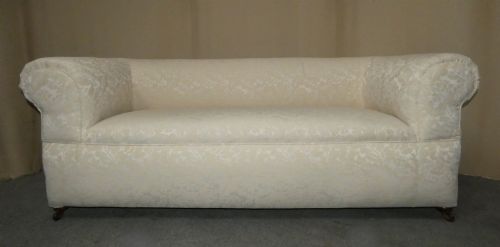
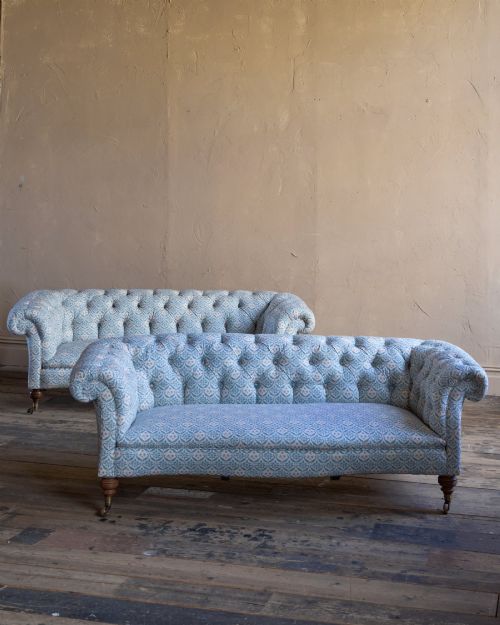
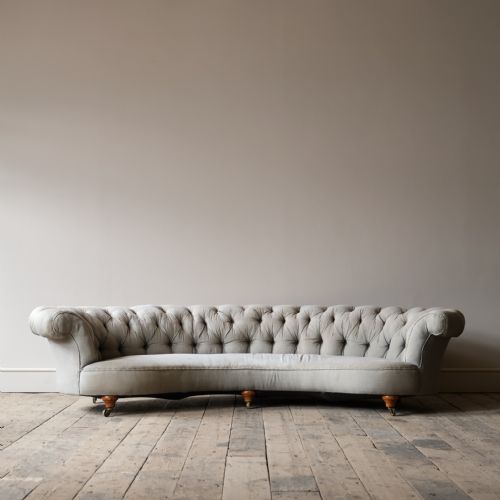
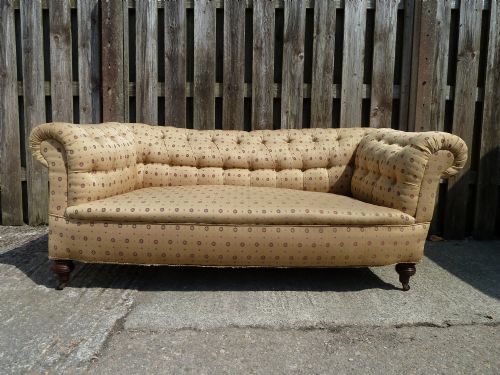


Fabric Chesterfield Settee
A fabric chesterfield settee brings deep buttoned comfort and historic English character to a room, offering enduring style and deep seating.
Fabric Chesterfield Settee
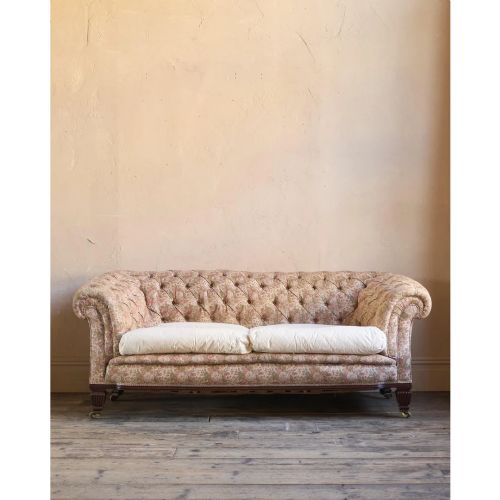
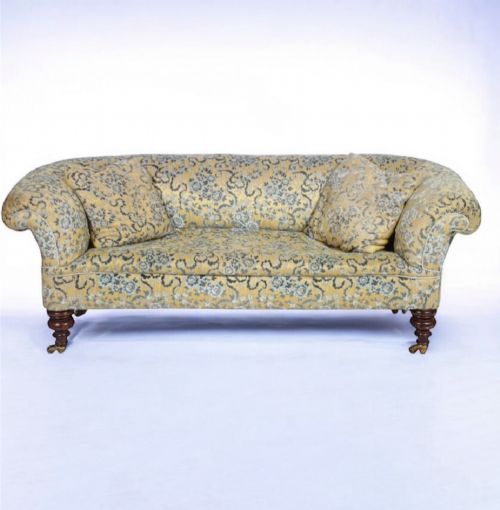
A fabric chesterfield settee is a traditional seating form defined by its low back, rolled arms of equal height, and deep buttoned upholstery. These pieces embody classic English upholstery traditions spanning the nineteenth century and the Edwardian era.
The versions most commonly met here span Victorian and Edwardian periods, frequently demonstrating English country house or Aesthetic Movement sensibilities. Makers such as Howard and Sons and Hampton and Sons produced notable examples during these eras.
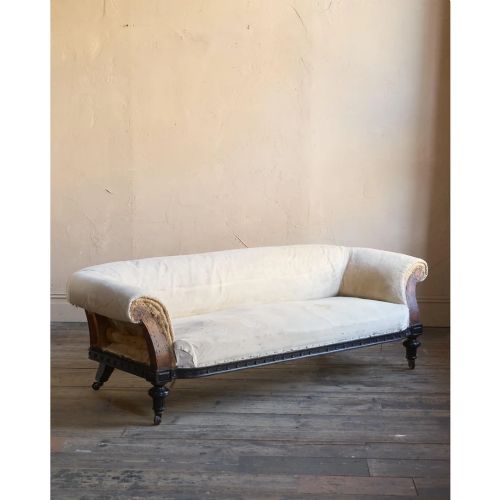
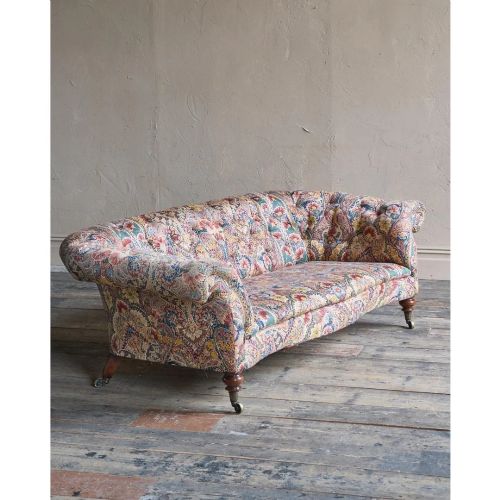
Buyers encounter various configurations, ranging from standard nineteenth century designs to serpentine and crescent shapes. Some examples survive in original upholstery, whilst others are presented for reupholstering.
How they were made
Construction relies upon robust hardwood frames, often utilising mahogany or walnut for structural integrity and exposed components. Traditional joinery underpins the resilient form necessary to support deep buttoning and heavy daily use.
Upholstery involves fabric coverings, including cotton, secured over sprung foundations and stuffed with traditional materials. Brass castors frequently finish the wooden legs, aiding mobility across heavy carpets.
Fabric Chesterfield Settee Retail Price Guide 2026
Typical asking prices for fabric chesterfield settee among the pieces listed under this phrase on Sellingantiques today, from the lower quarter to the upper quarter. They describe what is for sale here now, not the wider market.
Materials documented across the inventory include mahogany, walnut, hardwood, brass, cotton, and various fabric upholstery types.
What varies in quality
Quality separates ordinary production from exceptional workshop output through the grace of the frame's silhouette and the precision of the sprung upholstery. Makers like Howard and Sons achieved superior comfort and line through meticulous internal construction.
The distinction also lies in the timber selection for the frame and legs, alongside the retention of period character in the fabric upholstery. Subtle variations in serpentine or crescent shaping reveal the hand of a master cabinetmaker and upholsterer.
Howard and Sons·Hampton and Sons
The Fabric Chesterfield Settee Glossary
- Serpentine
- A gentle undulating curve along the front edge or back of a piece. This shape requires advanced carpentry skills to execute properly.
- Crescent
- A curved, crescent-moon configuration framing the sitter. It creates an intimate seating arrangement within a large room.
- Buttoning
- Upholstery technique where buttons are pulled deep into the padding to secure the stuffing and create a geometric diamond pattern. This provides both structural support and decorative texture.
- Castor
- Small wheel fitted to the base of furniture legs to ease movement. Brass examples are typical on nineteenth century seating.
Fabric Chesterfield Settee: Frequently Asked Questions
What is a fabric chesterfield settee?
A fabric chesterfield settee is a traditional upholstered sofa featuring rolled arms and a low back with deep buttoning. These pieces date primarily from the nineteenth century and the Edwardian period.
Originating in English workshops, they combine generous proportions with sturdy hardwood frames and sprung seats. They serve as central statement pieces in traditional and eclectic interiors.
How do I date a chesterfield sofa?
Dating relies on examining the timber frame, upholstery techniques, and stylistic markers such as Victorian or Edwardian design traits. Records and maker stamps from firms like Howard and Sons provide precise chronological anchors.
Later Edwardian models often display lighter proportions compared to robust mid nineteenth century examples. Secondary woods and castor designs also offer clues to the exact period of manufacture.
Are these sofas comfortable for daily use?
These settees were engineered for deep, supportive lounging with substantial sprung bases and padded arms. The ergonomic recline and rolled armrests support relaxed seating postures.
Many surviving pieces retain resilient internal webbing and springs that match modern standards of comfort. Their generous depth accommodates various sitting positions easily.
How do I care for antique upholstery?
Care involves regular gentle vacuuming using a low suction brush attachment to remove dust from crevices and button folds. Direct sunlight should be avoided to prevent fabric fading and degradation of natural fibres.
Professional cleaning is recommended for delicate cotton and historic textiles. Maintaining stable indoor humidity protects both the fabric covering and the internal hardwood frame.