


Edwardian Chesterfield Couch
These edwardian chesterfield couch pieces offer deep-buttoned comfort and traditional English character for any sitting room.
Edwardian Chesterfield Couch
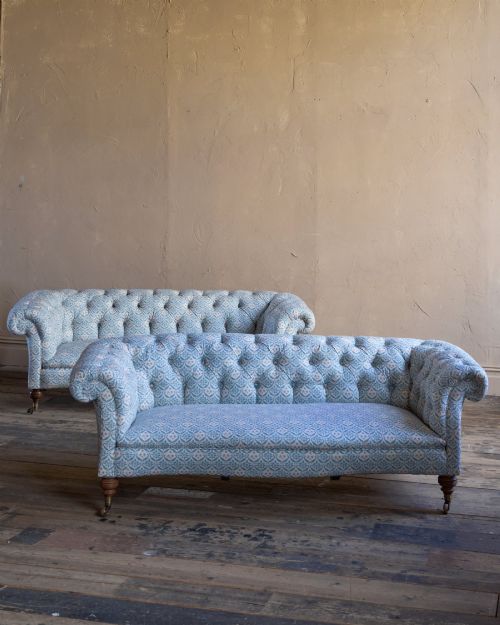
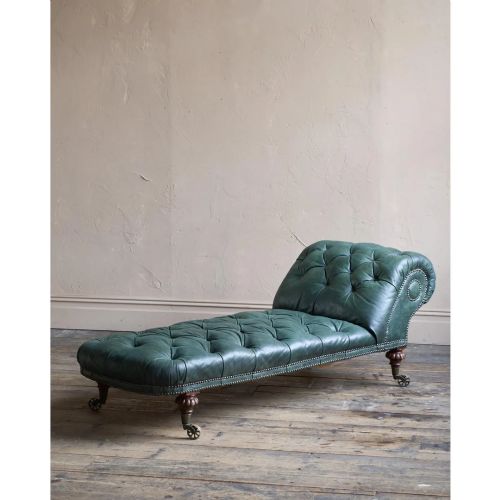
When searching for an edwardian chesterfield couch, a buyer encounters substantial seating pieces originating primarily across the Victorian and Edwardian periods, stretching into the early twentieth century. These low-backed sofas and settees define traditional English style, often appearing with distinct serpentine fronts or as chaise longues.
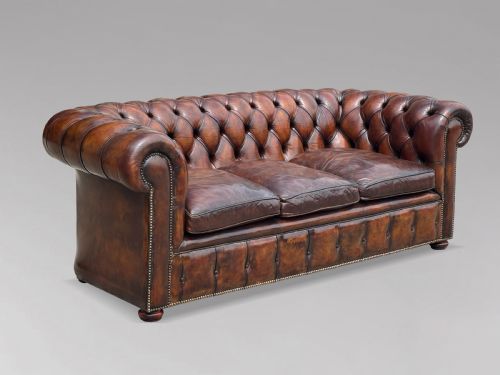
The pieces listed on this page showcase forms upholstered in leather or fabric, resting upon wood, mahogany, hardwood, and timber frames with metal or brass details. Buyers frequently find examples ready for hand dyeing, fully restored in whiskey or brown tones, or offered in raw leather.
While the search names the Edwardian era specifically, the actual inventory spans nineteenth-century Victorian pieces alongside items dated up to nineteen-thirty. This variety gives collectors access to both formal country house seating and relaxed club sofas from successive decades.
How they were made
Construction relies upon robust frames built from hardwood, mahogany, and timber, providing a solid structural core for deep upholstery. Makers incorporated coil springing and horsehair stuffing within the seats and backs to achieve durable support.
Outer coverings utilised leather, fabric, and raw hides, secured by hand with brass tacks and finished with deep buttoning. Many surfaces received hand-dyed treatments in shades of brown, whiskey, or red to create rich patination.
Several sofas wait patiently in raw leather, dreaming of the exact shade of whiskey brown they will eventually wear.
What varies in quality
Quality differences stem from the integrity of the underlying timber frame and the condition of the traditional coil springing and horsehair filling. Pieces retaining their original un-restored upholstery differ fundamentally from those rebuilt for modern use.
The choice of covering material and the depth of the buttoned tufting dictate the visual impact of each sofa. Superior execution shows in the precision of the hand dyeing and the structural stability of the hardwood and mahogany frames.
Howard and Sons·Gillows·Hampton and Sons
The Edwardian Chesterfield Couch Glossary
- Chesterfield
- A traditional upholstered sofa featuring arms and a back of the same height, historically associated with deep button tufting. This form anchors the entire selection on the page.
- Chaise Longue
- An upholstered long chair designed for reclining, combining the qualities of a sofa and a chair. Several nineteenth-century examples appear alongside standard sofas.
- Horsehair Gilled
- A traditional stuffing method using animal hair packed within upholstery to maintain resilient cushioning. This technique provides the firm support characteristic of period seating.
- Serpentine Front
- A furniture front curving inward then outward in a continuous wave line. This contour appears on finer nineteenth-century sofa designs.
- Hand Dyed
- A colouring process applied manually to leather hides to achieve variegated depth and historic tone. Many pieces utilise this technique during restoration.
Edwardian Chesterfield Couch: Frequently Asked Questions
What is an edwardian chesterfield couch?
An edwardian chesterfield couch is a traditional English seating piece characterised by low arms and a matching back, usually finished with deep button tufting.
These sofas utilise sturdy hardwood frames and traditional stuffing materials like horsehair to provide deep, resilient comfort.
How do I identify an edwardian piece?
Identifying the period involves looking at the frame timber, the upholstery technique, and stylistic details associated with early twentieth-century design.
Many pieces combine traditional coil springing with hand-dyed leather finishes typical of the era.
Are these sofas comfortable for daily use?
These sofas provide firm, supportive seating due to traditional coil springing and dense horsehair fillings packed inside the frames.
Over decades of use, the interior stuffing settles to fit the body while maintaining structural integrity.
What materials were used originally?
Original construction relied on solid timber, mahogany, and hardwood frames supporting leather or fabric upholstery.
Metal components and brass details often appear on castors or structural reinforcements within the base.