
Extending Dining Table Leaves
When searching for extending dining table leaves, buyers discover practical seating pieces designed to expand for large gatherings.
Extending Dining Table Leaves
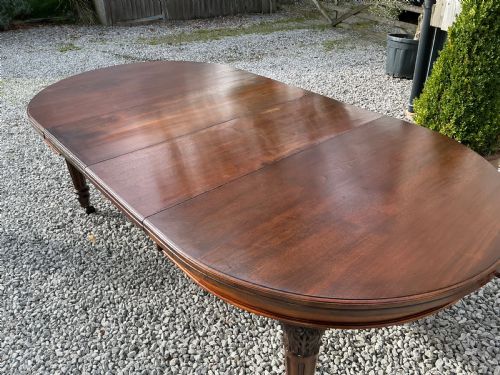
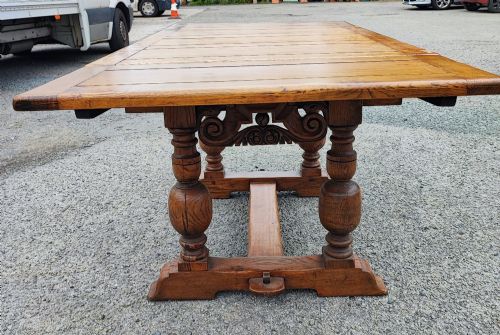
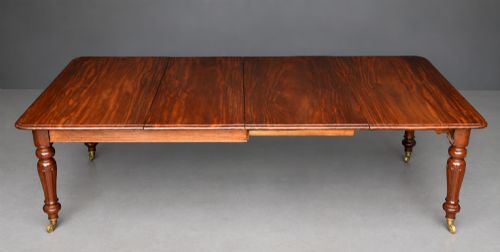
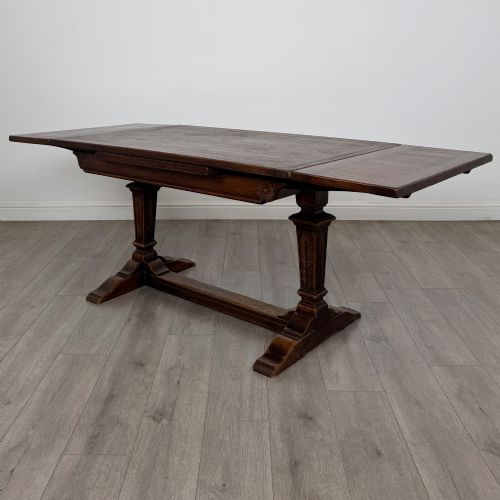
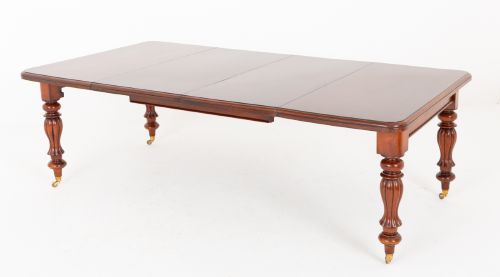
Extending dining table leaves encompass various historical designs created to adapt surface areas for meals.
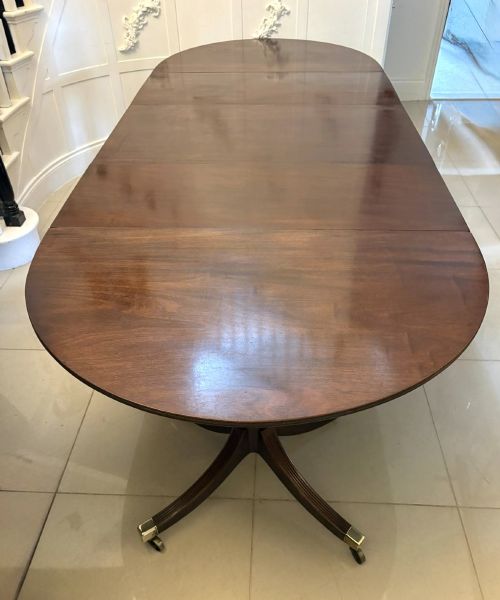
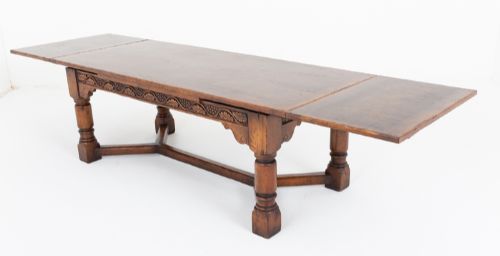
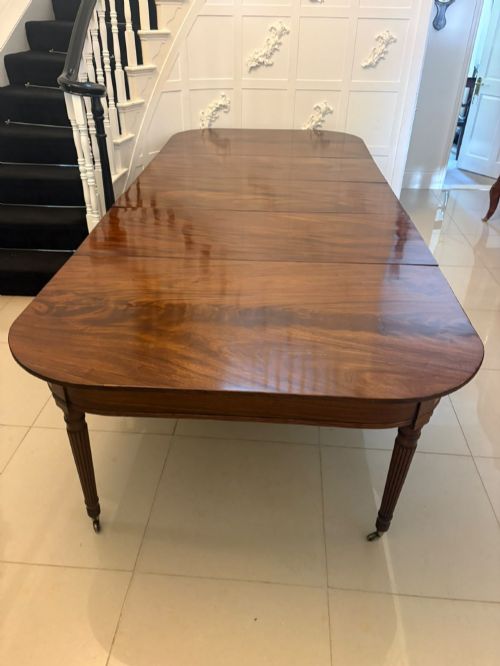
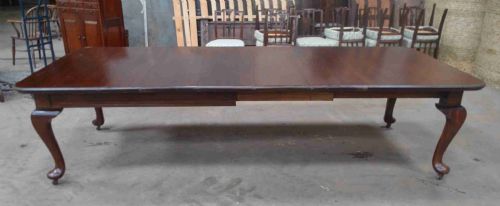
Victorian and Regency examples frequently appear on this page alongside earlier oak pieces.
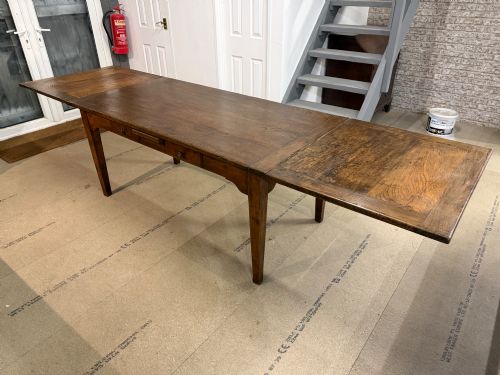
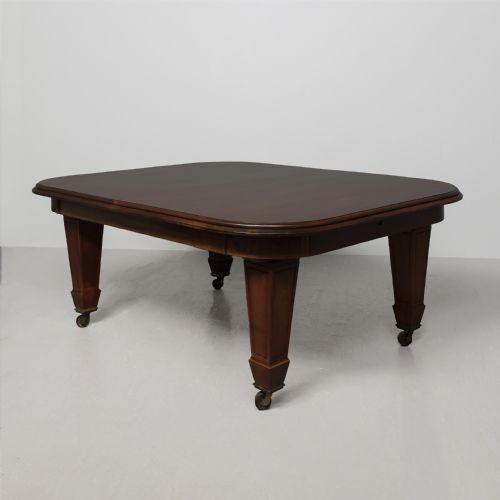
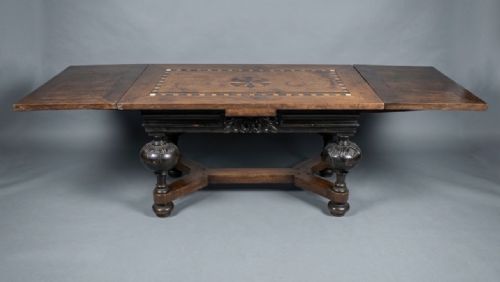
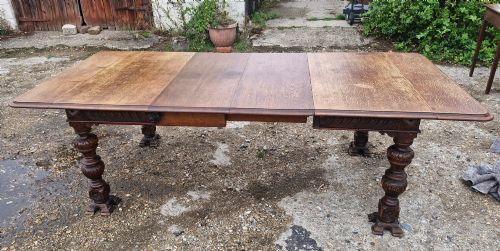
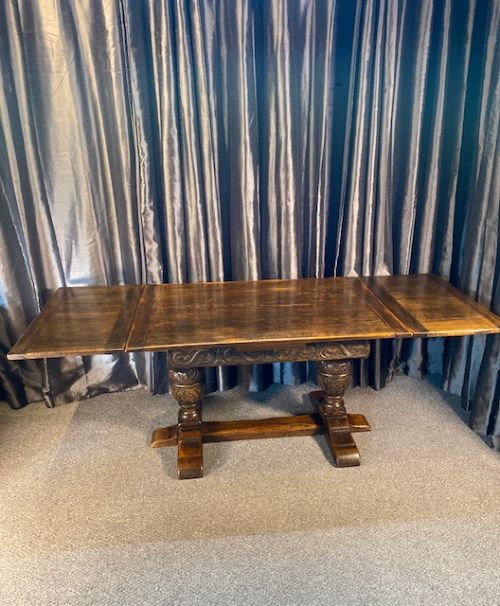
Tables utilise mechanisms such as draw leaves, winding systems, and removable extra sections.
Materials and Construction
Cabinetmakers utilised dense timbers including mahogany, oak, and walnut to construct sturdy frames and leaves.
Metal and brass components often support the winding mechanisms and internal runners of larger extending tables.
Listings feature woods such as mahogany, oak, walnut, and fruitwood spanning the 17th century through the 1930s.
Assessment of Standard
Craftsmanship shows in how smoothly the extension mechanisms operate and how securely the added leaves align with the main surface.
Timber selection and figuration distinguish simpler utility tables from grander banquet pieces.
William and Gibton·Wilkinson and Wilkinson·Selbat·Gillows·Robert Adam
The Extending Dining Table Leaves Glossary
- Draw leaf
- A table design featuring leaves stored beneath the main top that pull out from each end to extend the surface.
- Wind-out
- A mechanical system utilising a crank handle to expand the table frame apart so additional leaves can drop into place.
- D-end
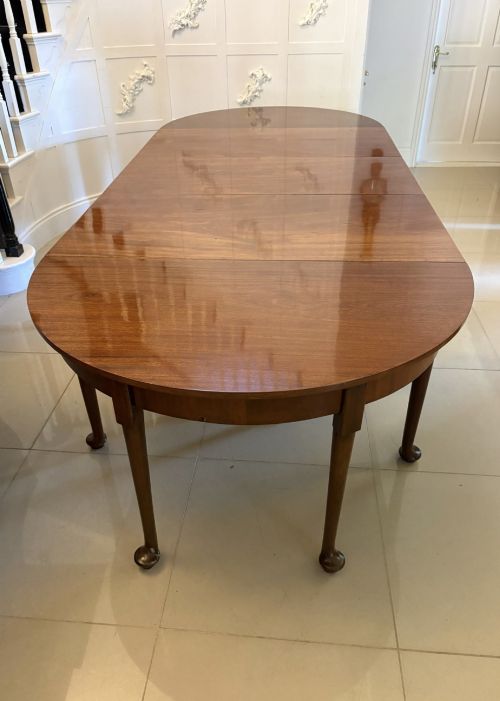
- A table form featuring semicircular ends that separate when extra leaves are inserted into the middle.
- Pedestal
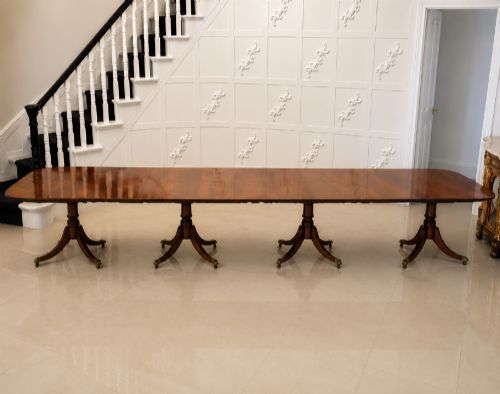
- A central column support resting on legs, commonly seen on larger mahogany dining tables.
Extending Dining Table Leaves: Frequently Asked Questions
How do wind-out tables operate?
Wind-out tables use an internal metal screw mechanism operated by a detachable handle. Turning the handle separates the table halves to accommodate extra leaves.
Once opened to the correct width, the additional panels drop securely into the central gap.
What timber was most common?
Mahogany and oak appear most frequently across the historical periods represented on this page. Walnut and fruitwood also feature in specific regional designs.
Craftsmen selected these hardwoods for their structural strength and ability to withstand daily use.
How many leaves can these tables hold?
The number of leaves varies widely depending on the original purpose and length of the table. Smaller examples typically accept two leaves, while banquet sizes accommodate up to eight.
Extra leaves are often stored separately when not in use to save space.
Are pedestal bases stable?
Twin and single pedestal bases provide robust support for large expanding dining surfaces. Multiple legs distribute weight evenly across the floor.
This construction style allows comfortable legroom around the perimeter of the extended table.