


Extended Pedestal Dining Table
An extended pedestal dining table provides the grand proportions required for hosting large gatherings while maintaining the flexibility of removable leaves.
Extended Pedestal Dining Table
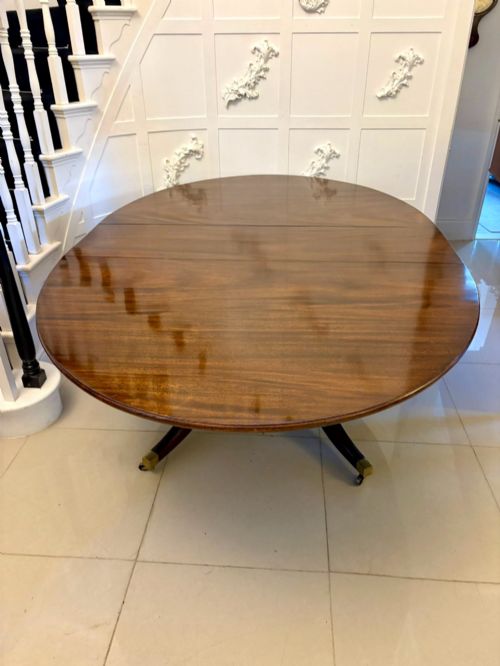
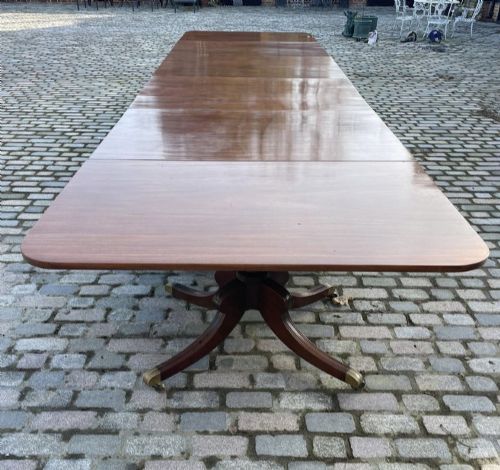
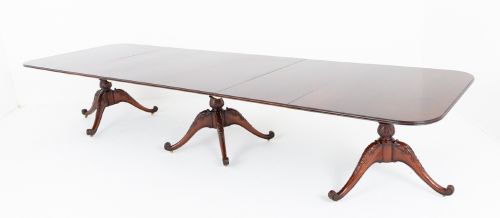
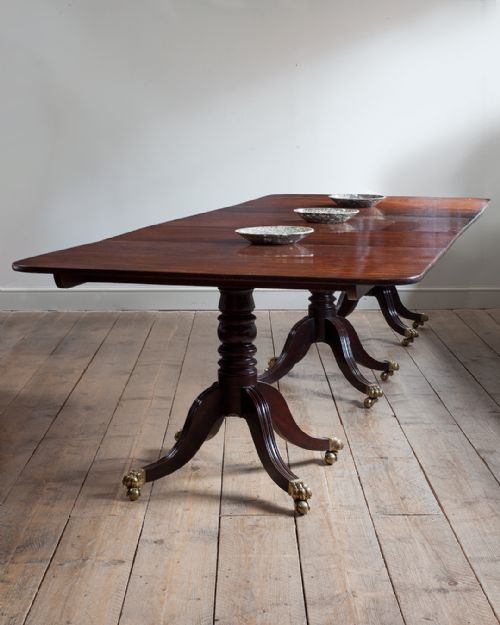
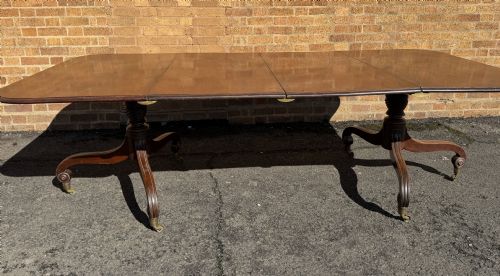
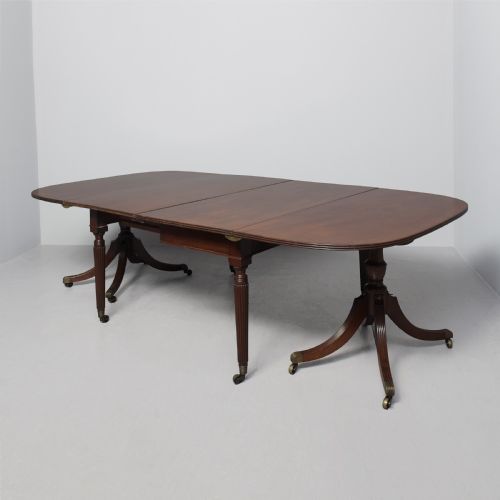
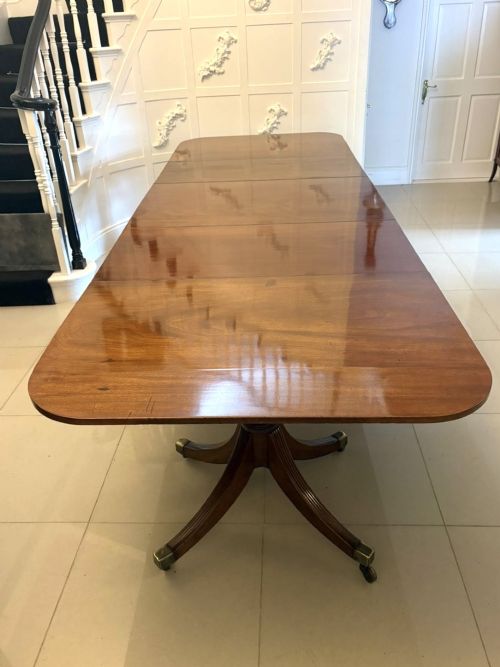
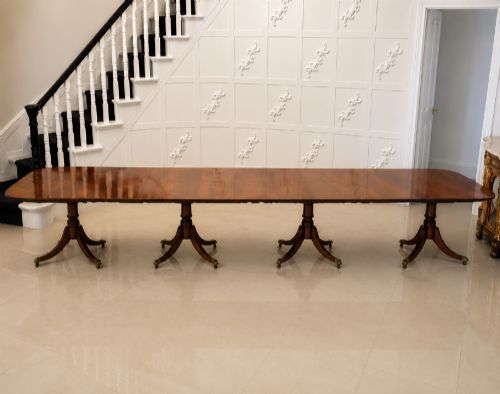
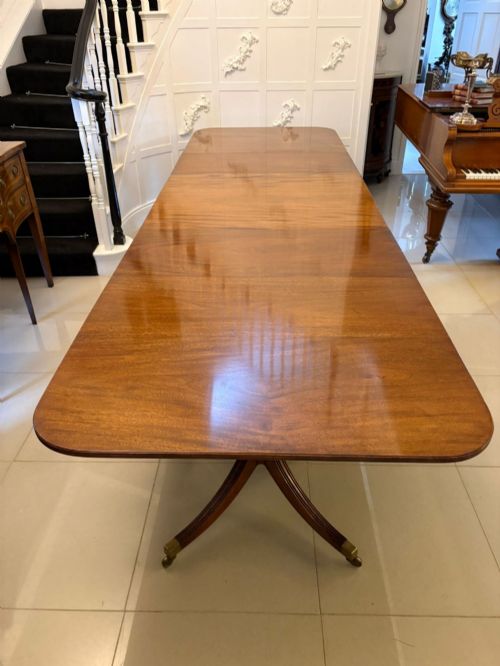
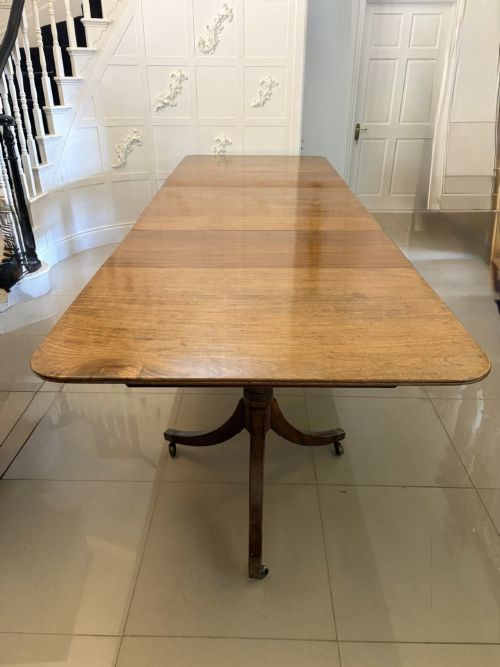
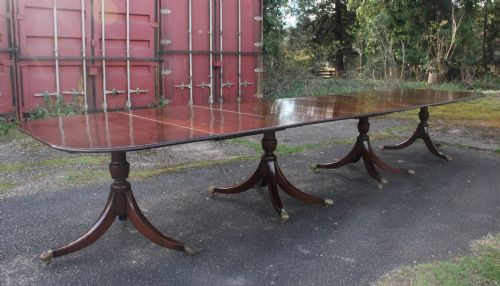
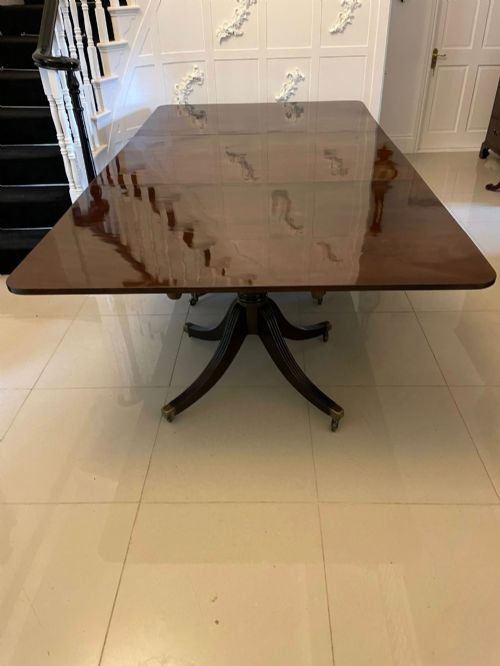
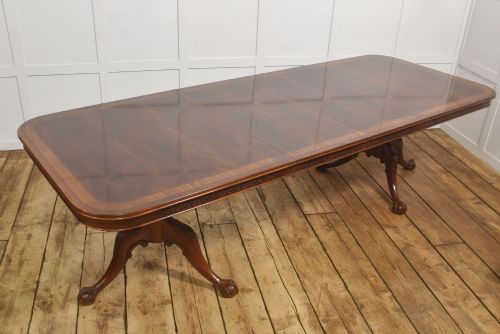
An extended pedestal dining table is a substantial dining furniture piece supported by one or more central columns rather than standard corner legs. These tables appear predominantly in mahogany, constructed in twin, triple, or quadruple pillar formats designed to accommodate multiple guests.
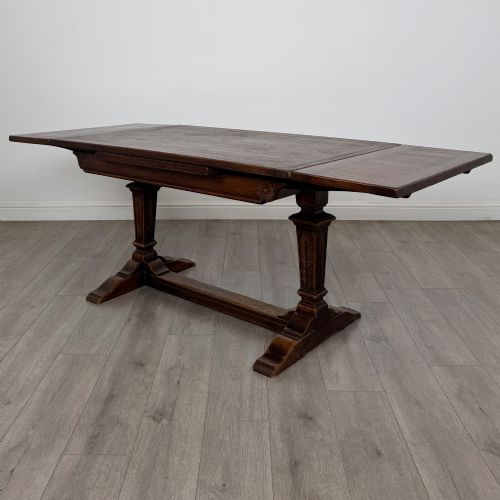
The selections span from original George III and Regency periods through to later revival interpretations made in the early twentieth century. Most examples utilise drop-in leaves or wind-out mechanisms to lengthen the surface area for larger dinners.
How They Were Made
Cabinet makers selected dense figured mahogany for the top surfaces, often supported by turned pedestals that terminate in brass castors and splayed legs. Secondary timbers appeared in framework interiors, while brass mechanisms facilitated the smooth insertion of leaves.
Finishing involved hand-polishing the wood to reveal the grain, sometimes incorporating subtle string inlay or satinwood details. The pillar supports distributed weight evenly across the floor while allowing maximum legroom for seated diners.
The listings feature mahogany predominantly, alongside alternative materials such as oak, rosewood, brass, and gold leaf.
What Varies in Quality
Quality rests in the selection of the timber grain, the stability of the pillar joints, and the precision of the extension mechanism. Superior examples display deeply figured mahogany panels and robust brass fittings that operate smoothly without sagging across extended lengths.
Gillows of Lancaster·Thomas Butler of London·Wylie & Lochead Glasgow·Whytock & Reid
The Extended Pedestal Dining Table Glossary
- Pedestal
- A central column supporting the main weight of the table top. This design allows diners to sit around the perimeter without encountering corner legs.
- Extending leaf
- A removable section of timber inserted into the centre of the table to increase its overall length. These parts store separately when shorter dimensions are required.
- Wind-out mechanism
- A mechanical screw system operated by a handle that expands the table frame smoothly. This device ensures the top separates evenly when adding leaves.
- D end
- A semicircular table end that forms a round perimeter when joined with another section. These shapes are typical of modular dining furniture from the Georgian and Regency eras.
Extended Pedestal Dining Table: Frequently Asked Questions
How do you extend the table?
Many tables utilise a winding handle that turns an internal screw mechanism to pull the sections apart. Additional leaves drop into the central gap before the mechanism locks closed again.
Simpler formats rely on manual separation of the pillars to slide loose boards into place. Metal clips underneath usually secure the leaves firmly to the main top.
How many people can sit at these tables?
Seating capacity depends directly on the number of pedestals and inserted leaves. Twin pillar versions typically seat ten to twelve people comfortably.
Triple and quadruple pillar formats extend the surface to accommodate sixteen, twenty, or even twenty-eight diners for large banquets.
How do you protect the wood surface?
Polished mahogany surfaces require protection from moisture, direct heat, and sharp objects during daily use. Felt pads or heavy linen tablecloths guard the timber against everyday wear.
Regular application of traditional wax helps maintain the lustre of the polish. Direct sunlight should be avoided to prevent uneven fading of the grain.
How do you distinguish original periods from revivals?
Original pieces from the Georgian and Regency eras display period construction methods, hand-cut joinery, and natural ageing in the timber. Secondary woods inside the frame match the expected practices of eighteenth and nineteenth-century workshops.
Revival pieces made in the twentieth century often utilise standardised fixings and cleaner interior cuts while replicating earlier styles. The condition of the brass castors and the patina on the polish also indicate the age of the piece.