

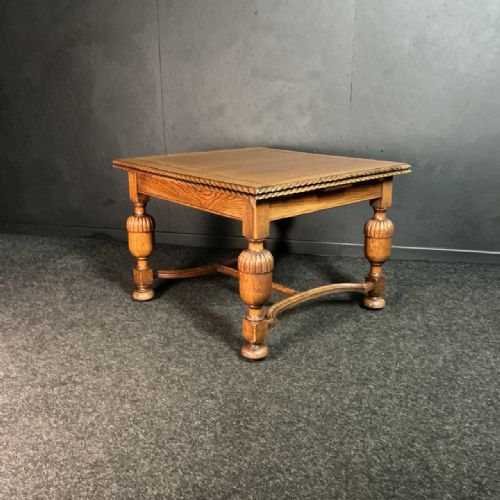
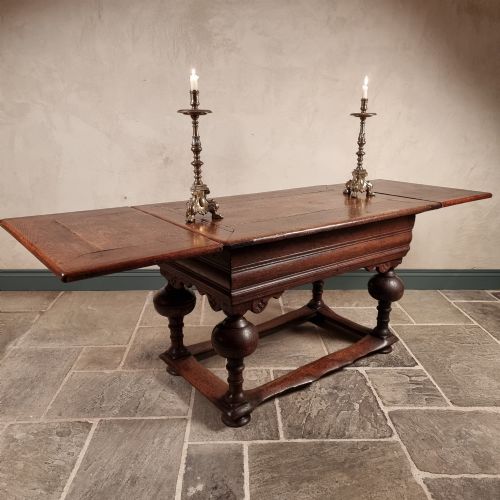
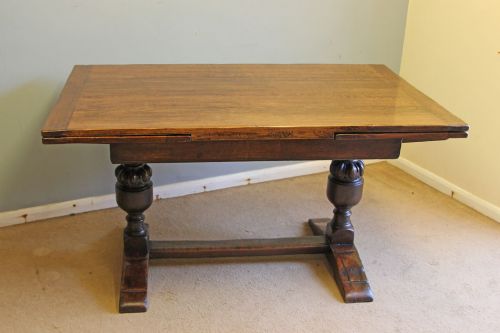


Extendable Oak Refectory Table
An extendable oak refectory table brings long lines and heavy timber into a room, offering adaptable dining space for daily meals and large gatherings.
Extendable Oak Refectory Table
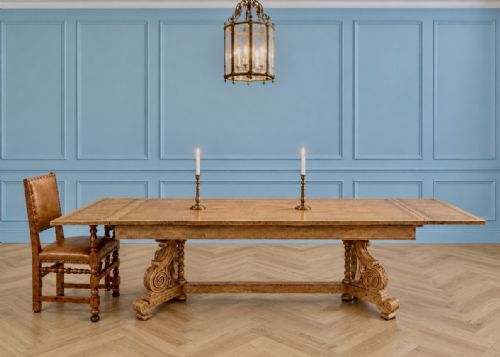
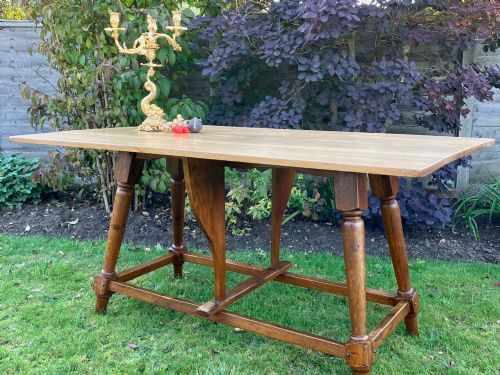
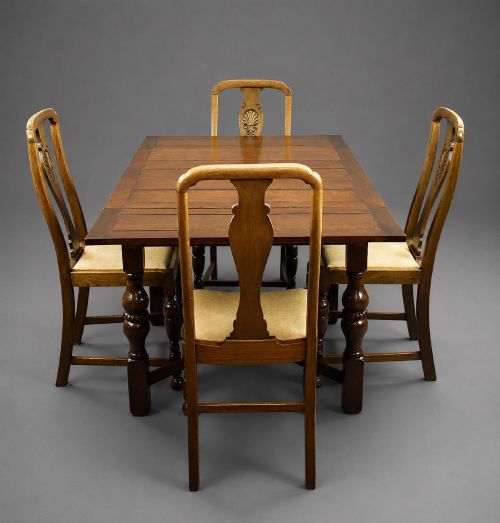
Buyers will most commonly encounter early twentieth-century examples on this page, particularly draw-leaf dining tables and drop-leaf refectory designs made from solid oak. These pieces range from farmhouse kitchen tables to formal dining sets accompanied by chairs, reflecting diverse domestic histories.
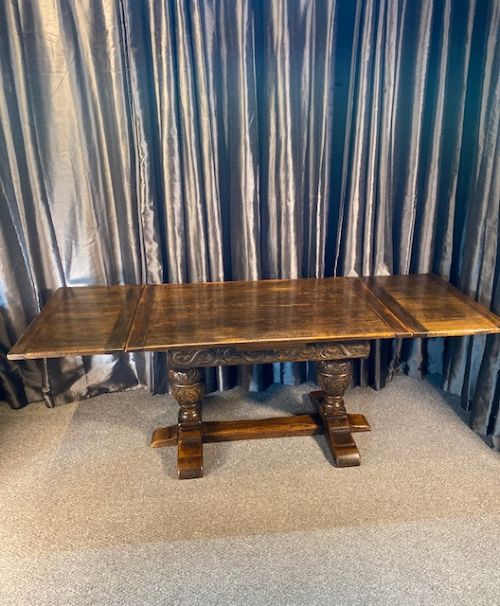
The core function relies on clever mechanisms, whether pull-out draw leaves hidden beneath the main top or drop leaves that raise the side capacity. Such adaptability makes these tables practical for modern dining rooms while maintaining traditional proportions.
How they were made
Makers utilised solid oak for its exceptional density and rich grain, building frames capable of withstanding heavy daily use over generations. Joinery techniques varied from traditional pegged joints on seventeenth-century pieces to more streamlined framing on twentieth-century revivals.
Extending mechanisms were engineered directly into the timber framework, using sliding draw leaves that tuck neatly underneath or hinged drop leaves supported by swing-out wooden arms. Some variations incorporate additional pull-out drawers within the apron for storage.
Extendable Oak Refectory Table Retail Price Guide 2026
Typical asking prices for extendable oak refectory table among the pieces listed under this phrase on Sellingantiques today, from the lower quarter to the upper quarter. They describe what is for sale here now, not the wider market.
Listings feature oak furniture spanning the seventeenth, nineteenth, and twentieth centuries, including Edwardian and Arts and Crafts pieces.
What varies in quality
The standard of timber selection and the precision of the extending mechanism dictate the tier of quality in these tables. Superior pieces display carefully matched oak boards across the top and smooth operation of the leaves without binding or sagging.
Stylistic execution also separates workshop output, ranging from plainly built farmhouse tables to elaborately carved Jacobean Revival frames with turned legs and stretcher bases. The integrity of the original joints determines how well the table handles the stress of daily extension.
Maple and Co
The Extendable Oak Refectory Table Glossary
- Draw-leaf table
- A dining table with two sliding leaves stored underneath the main surface that pull out from each end to extend the length.
- Drop-leaf table
- A table featuring a fixed central section and hinged flaps on the sides that fold down when not in use.
- Jacobean Revival
- A nineteenth and twentieth-century style copying the dark, heavily carved oak furniture of the early seventeenth century.
- Refectory table
- A long, narrow dining table traditionally used in monastic refectories and later adopted for domestic dining.
- Stretcher
- A horizontal wooden bar connecting the legs of a table near the bottom to provide structural rigidity and stability.
Extendable Oak Refectory Table: Frequently Asked Questions
How do draw leaf tables work?
Draw leaf tables operate by sliding two concealed leaves out from beneath the main tabletop. When pulled, these leaves rise to sit flush with the central board, increasing the overall surface area.
This mechanism allows the table to remain compact for everyday use and lengthen quickly when hosting guests.
Are these tables suitable for daily use?
Solid oak construction and sturdy stretcher bases make these tables exceptionally durable for regular family meals. The timber resists heavy wear and ages gracefully with proper care.
Periodic maintenance of the wood surface helps protect the grain from moisture and daily spills.
How can I tell the period?
Dating relies on examining the construction methods, joinery style, and decorative carvings present on the frame. Seventeenth-century examples feature hand-cut joints and distinct patination, while twentieth-century revivals show cleaner machine finishing.
Hardware and extending mechanisms also offer clues to the era of manufacture.
What is a refectory table?
A refectory table is a long, narrow dining table originally designed for communal dining in monasteries and large halls. Their proportions make them well suited for modern dining rooms and kitchens.
Examples often feature substantial legs joined by low stretchers for added support.