

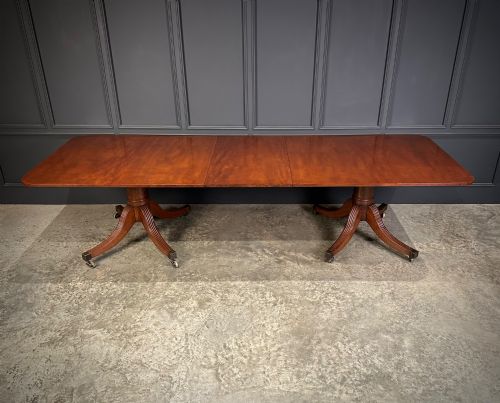
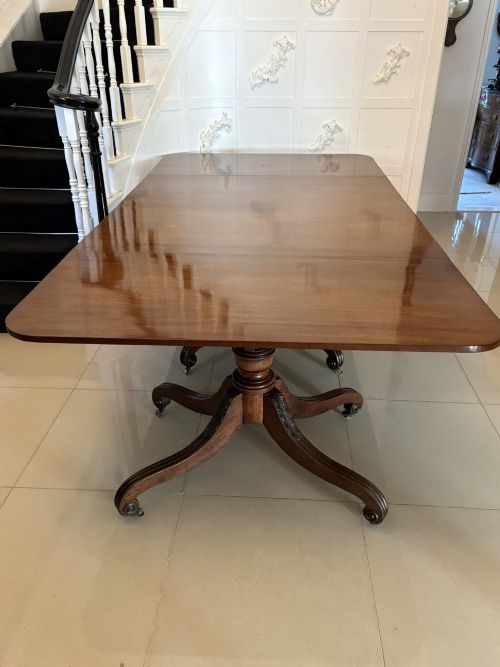
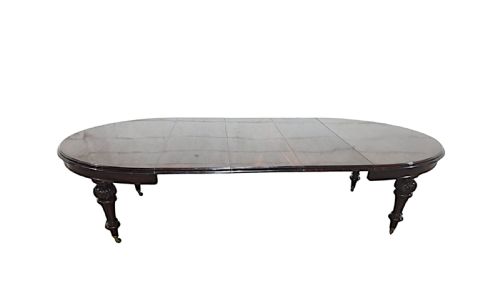
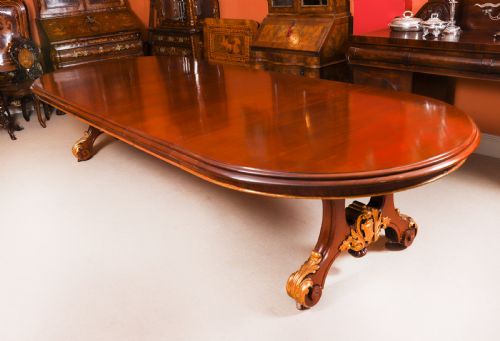



Extendable Mahogany Banquet Table
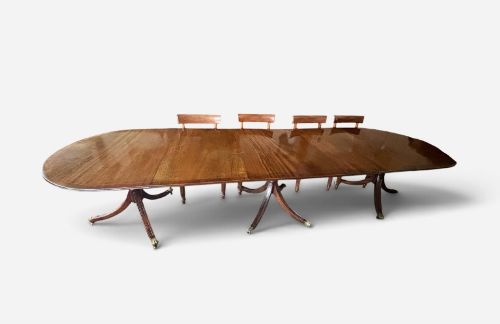
An extendable mahogany banquet table offers a grand stage for hosting, bringing flexible scale and rich timber grain to large dining rooms.
Extendable Mahogany Banquet Table
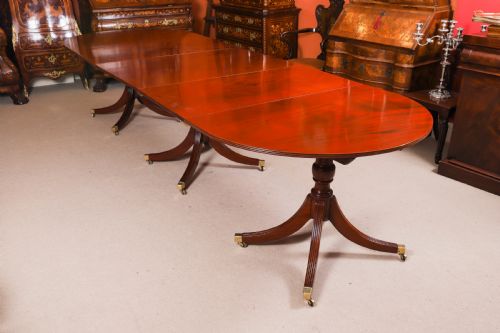
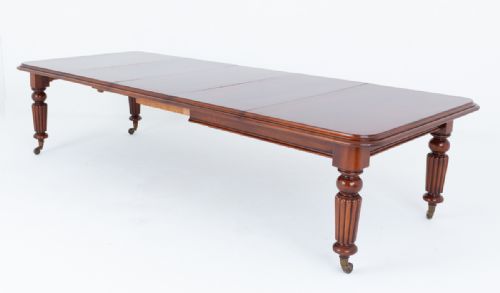
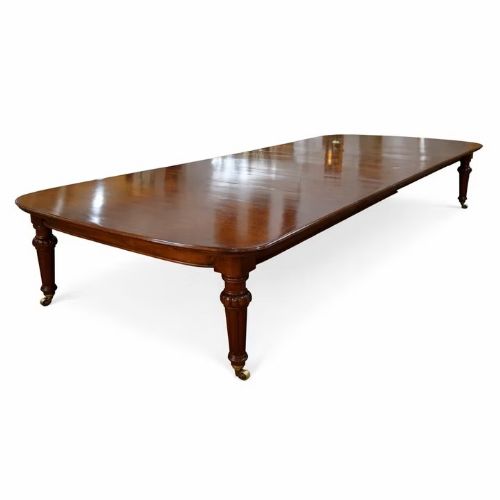
When you search for an extendable mahogany banquet table, you encounter substantial dining furniture designed to expand for large gatherings using removable leaves or internal mechanisms. The pieces appearing here span the Georgian, Regency, William IV and Victorian periods, alongside later revival interpretations.
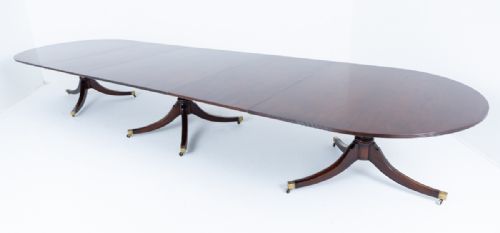
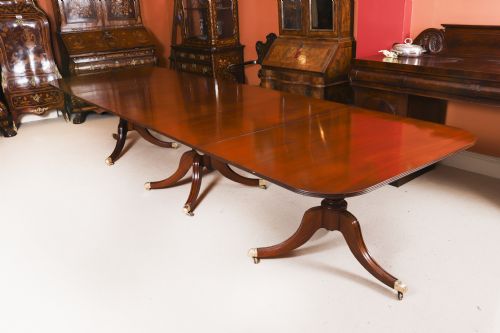
Twin and triple pedestal formats dominate the selection, often accompanied by D-end sections or extra leaves to seat anywhere from ten up to twenty-four guests. Makers such as Gillows and Wylie and Lochead appear among these larger formats, showing the enduring scale expected from formal dining rooms.
Materials and Construction
Cabinet makers utilised solid mahogany, Cuban mahogany and flame mahogany veneers, sometimes enhanced with satinwood inlay, brass fittings and gold leaf detailing. The structural timber provides the necessary heft to support multiple pedestals and heavy leaves without sagging.
Extension is managed through wind-out mechanisms or removable extra leaves supported by pillars and pedestals. Carved claw and ball legs frequently anchor the corners or column bases of Victorian and Georgian examples.
Some banquet tables require an assistant simply to hand you the winding crank when guests arrive.
The Measure of Quality
The distinction between standard examples and the finest works rests on timber selection, such as figured or plum pudding mahogany, and the precision of the pedestal carving. Tables attributed to known workshops or featuring original leaves command attention through superior proportion and integrated joinery.
Mechanisms also set pieces apart, from smooth-operating wind-out screws to stable multi-pillar configurations that maintain level surfaces across extended lengths. The presence of matching extra leaves ensures the grain and colour remain consistent when fully drawn out.
Wylie and Lochead·Whytock and Reid·Gillows
The Extendable Mahogany Banquet Table Glossary
- D-End
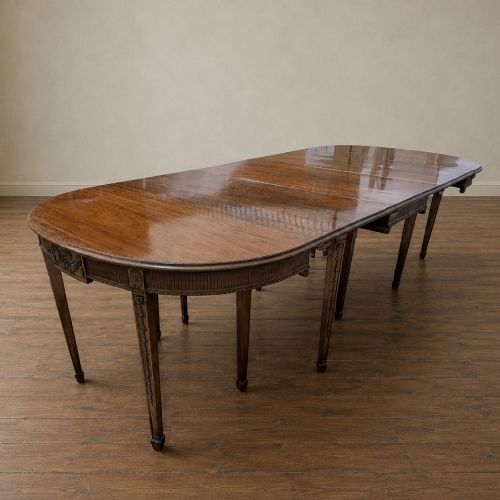
- A table end shaped in the semi-circular form of the letter D, often used in sets that pull apart to insert leaves. These sections form the rounded ends of a banquet arrangement.
- Wind-Out
- A mechanical system operated by a handle that turns an internal screw thread to expand or contract the table frame. This mechanism allows a single person to adjust the length.
- Pedestal
- A central column support, often with multiple legs radiating outward, used instead of standard corner legs. Twin and triple pedestal formats provide better legroom for seated guests.
- Flame Mahogany
- Timber cut from the fork of the mahogany tree to create a distinctive flickering, flame-like grain pattern. Cabinet makers reserved this highly decorative veneer for prominent table tops.
- Extra Leaf
- A removable section of timber inserted into the centre of a table to increase its overall seating capacity. Original leaves matching the primary wood grain are particularly prized.
Extendable Mahogany Banquet Table: Frequently Asked Questions
How do I operate a wind-out table?
A removable crank handle inserts into a socket beneath the apron or rim of the table. Turning this handle activates an internal screw mechanism that draws the sections apart or pulls them together.
Once the gap is wide enough, you drop the extra leaves into place before winding the mechanism back to secure the whole surface tightly.
How many people can these tables seat?
Seating capacity varies considerably depending on the number of pedestals and inserted leaves. Standard configurations accommodate ten to twelve diners comfortably.
Larger triple and four-pedestal formats stretch the length to accommodate sixteen, twenty, or even twenty-four guests for formal banquets.
How do I care for mahogany surfaces?
Regular dusting with a soft cloth keeps the timber free from grit that might scratch the polish. Apply a quality beeswax periodically to nourish the mahogany and maintain its deep lustre.
Avoid placing hot dishes directly onto the polish and keep the table away from direct heat sources to prevent the wood from warping.
How do I distinguish Regency from Victorian tables?
Regency tables, dating from the early nineteenth century, typically favour cleaner classical lines, brass reeded details, and lighter mahogany tones. They often reflect neoclassical design influences.
Victorian pieces, emerging from the mid-nineteenth century onward, tend to feature heavier proportions, darker figured mahogany, and more elaborate carvings such as claw and ball feet.