





Expressionist Portrait Oil Painting
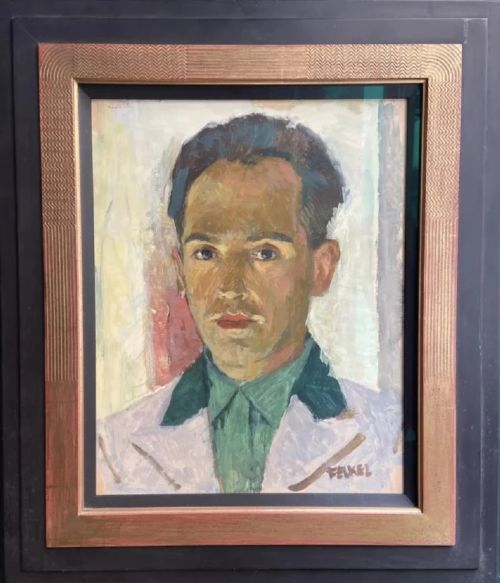
An expressionist portrait oil painting brings raw psychological intensity to a wall, capturing subjects with distortion and charged brushwork.
Expressionist Portrait Oil Painting
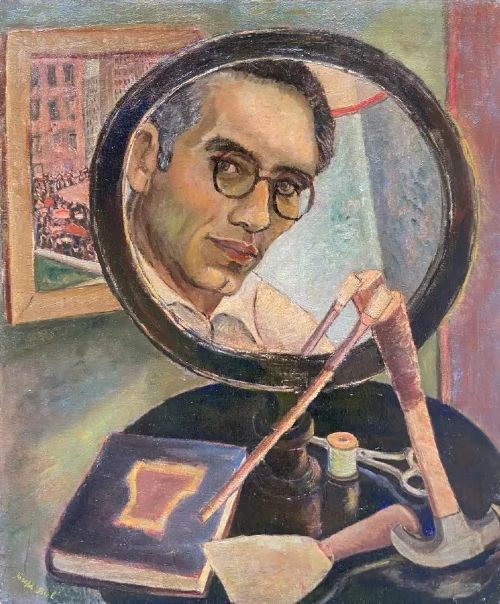
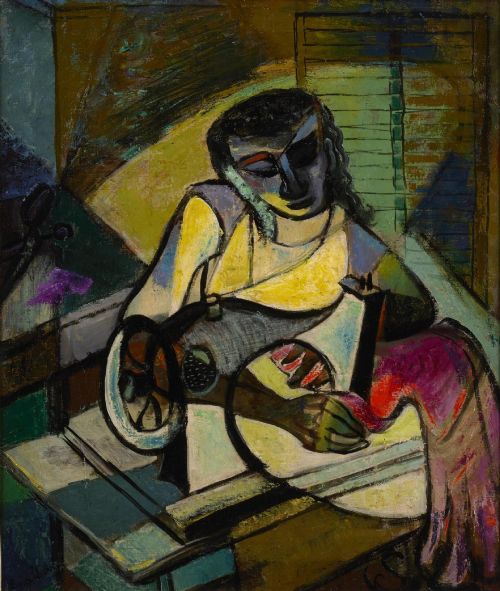
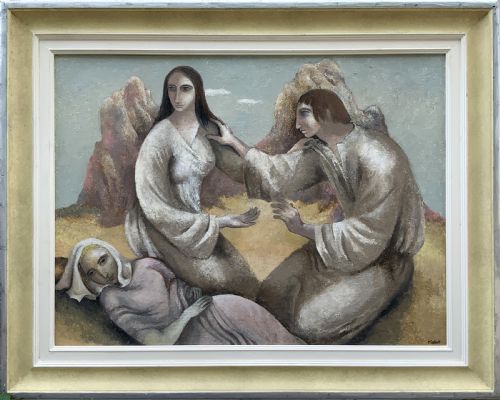
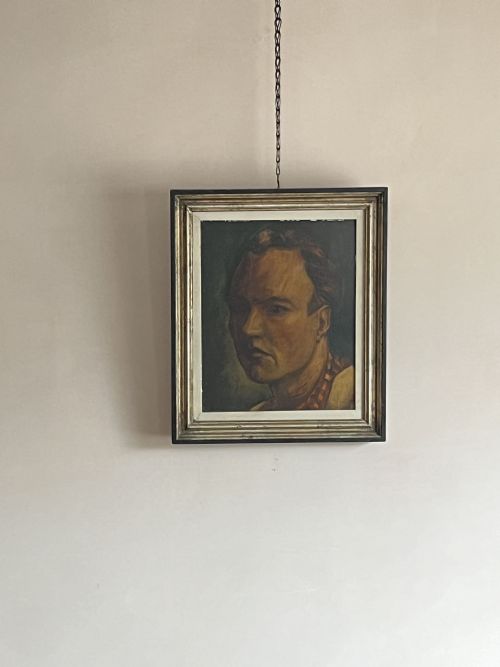
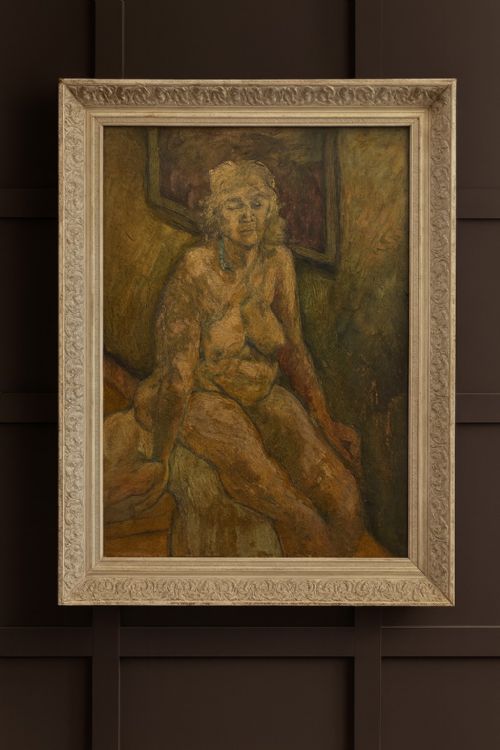
An expressionist portrait oil painting focuses on human figures, self-portraits, nudes, and seated subjects rendered through the lenses of Expressionism, Mid-Century Modernism, Art Deco, and Modern British styles. These works concentrate on emotional resonance rather than strict realism, employing bold colour choices and agitated forms.
The pieces encountered on this page span from the Edwardian era through the decades of the 1920s, 1930s, 1940s, 1950s, and 1960s. Common compositions depict figures in interiors, mirrors, or symbolic settings, executed by artists working across Britain, France, and America.
Buyers select these works to anchor a room with narrative weight and historical depth. The physical presence of oil paint applied thickly or smoothed onto the support defines the visual gravity of each canvas or board.
How they were made
Artists painted primarily with oil paint on stretched canvas, wood boards, or paper supports, sometimes incorporating impasto techniques where the pigment stands proud of the surface. Certain works also utilise metallic leaf to catch light and accentuate specific areas of the composition.
Support methods varied according to the period and availability of materials, with some later mid-century works utilising canvas laid directly onto board. The manipulation of viscous pigment allowed painters to build texture through visible brushstrokes and energetic application.
Subjects range from solitary soldiers and grooming nudes to cats sharing space with reclining models.
What varies in quality
Quality rests in the conviction of the brushwork and the psychological grip of the composition. A stronger piece harnesses distortion and palette choices to create immediate tension, whereas weaker examples rely on formulaic gestures without underlying structural force.
The handling of the medium dictates longevity and visual impact. Works that retain thick impasto or precise tonal relationships without muddying the palette demonstrate superior technical control by the painter.
Carl Felkel·Joseph Biel·Lena Gurr·Christine Nesbit·Tony Giles·Gaetan Dumas·Baruch Shalom Oskotsky·Peter Jackson·Jean Hippolyte Marchand·Pinchus Krémègne·Yetta Kane·Raymond Arthur Roadnight·Burr Singer·Richards Rubin·Bernard Meninsky
The Expressionist Portrait Oil Painting Glossary
- Impasto
- Paint applied thickly to a surface so that it stands out from it, leaving prominent brush or palette knife marks that catch the light. This technique adds literal texture and physical depth to the portrait surface.
- Expressionism
- A modernist movement where artists sought to depict subjective emotions and responses rather than objective reality. Works in this style use distorted forms and emphatic colours.
- Avant-garde
- Art that applies experimental concepts and pushes boundaries away from established academic norms. These pieces often prefigure later mid-century modernist developments.
- Fauve
- A style characterised by strong, non-naturalistic colours and flat planes of pigment. This approach prioritises emotional expression over descriptive fidelity.
- Board
- A rigid wooden or composite sheet used as a painting support instead of woven fabric. It offers a firm resistance against which the artist presses the brush.
Expressionist Portrait Oil Painting: Frequently Asked Questions
What defines an expressionist portrait?
An expressionist portrait prioritises emotional and psychological impact over photographic likeness. Artists use distorted anatomical proportions and vivid palettes to convey inner states.
Brushwork remains visible and energetic, deliberately breaking away from academic realism to communicate mood.
How should I hang these paintings?
These works demand neutral wall spaces where their strong palettes and heavy brushwork can operate without visual competition. Avoid direct harsh sunlight to protect the oil pigments.
Lighting should be gentle and directed to pick up the texture of impasto surfaces without casting distracting reflections off the varnish.
What periods are represented?
The inventory spans the Edwardian era through the 1920s, 1930s, 1940s, 1950s, and 1960s. Each decade brings distinct modernist and avant-garde interpretations to the portrait format.
Mid-century approaches sit alongside earlier post-war and interwar experiments in form and colour.
What supports were used?
Painters worked primarily on woven canvas stretched over wooden frames or rigid wooden boards. Some pieces employ paper supports or canvas laid down onto board.
The choice of support often relates to the date and the specific physical requirements of the impasto technique.