




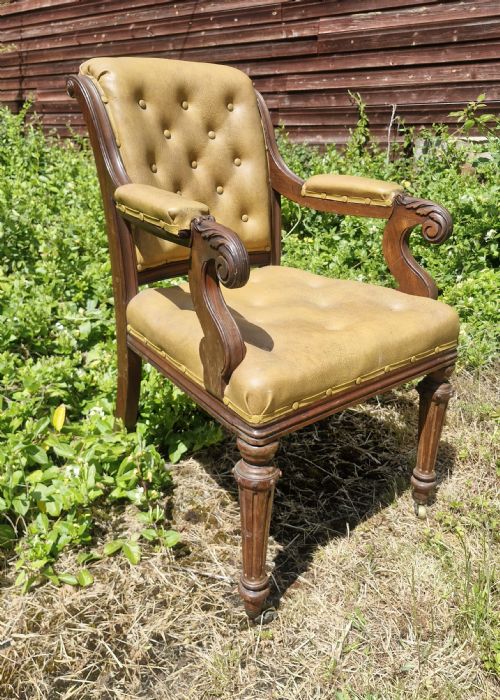


Executive Leather Office Chair
An executive leather office chair brings period character to a workspace, combining practical seating with substantial mahogany, walnut, oak, or rosewood frames.
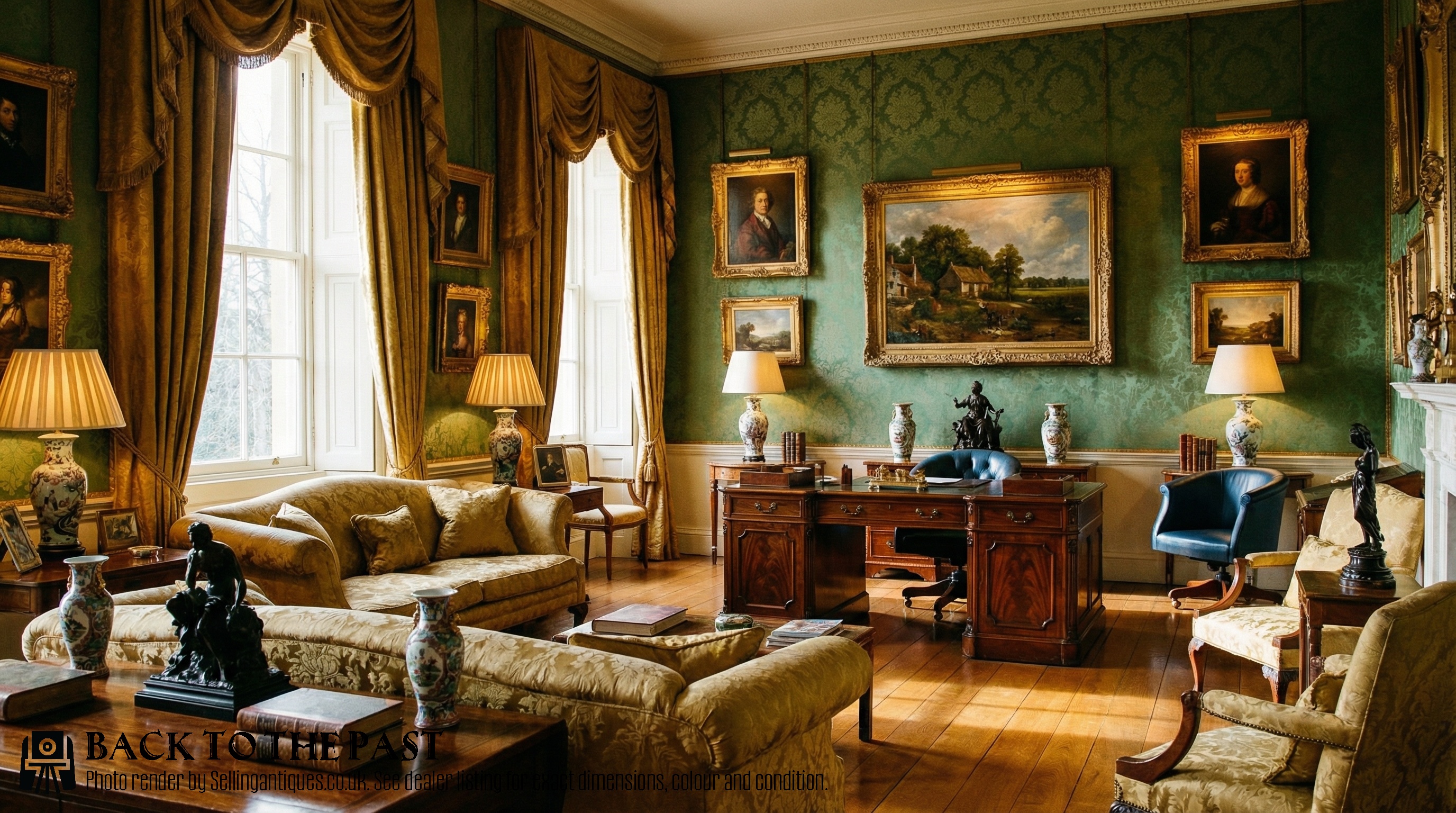
Executive Leather Office Chair
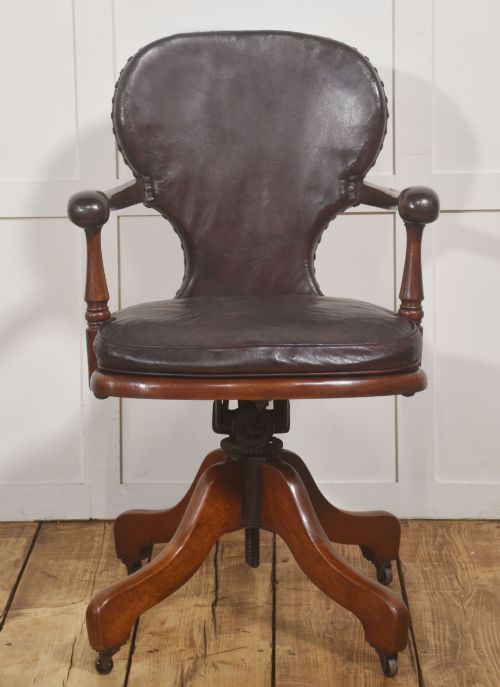
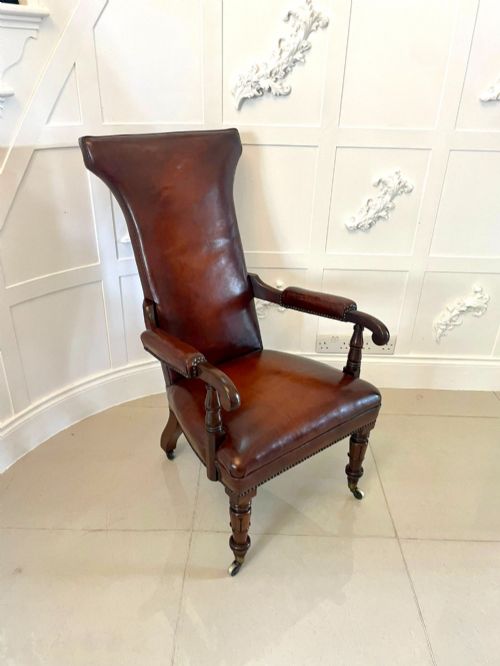
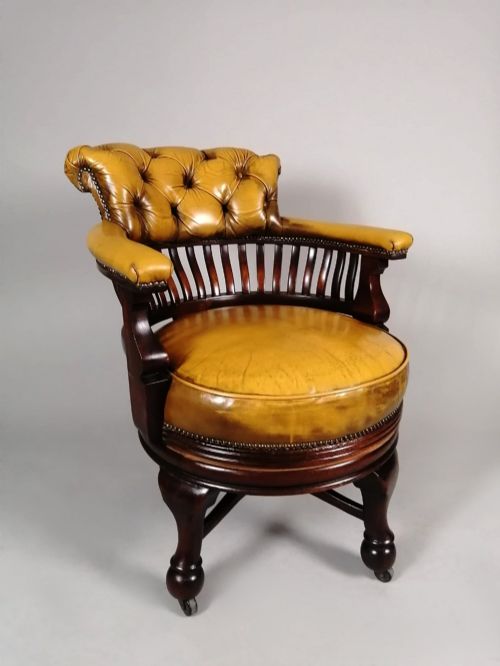
When you search for an executive leather office chair, you encounter robust seating built for heavy daily use from the mid-nineteenth century through the Edwardian period and into the early twentieth century. These pieces encompass revolving desk chairs, swivel models, and library armchairs designed to sit comfortably behind a partner desk or library table.
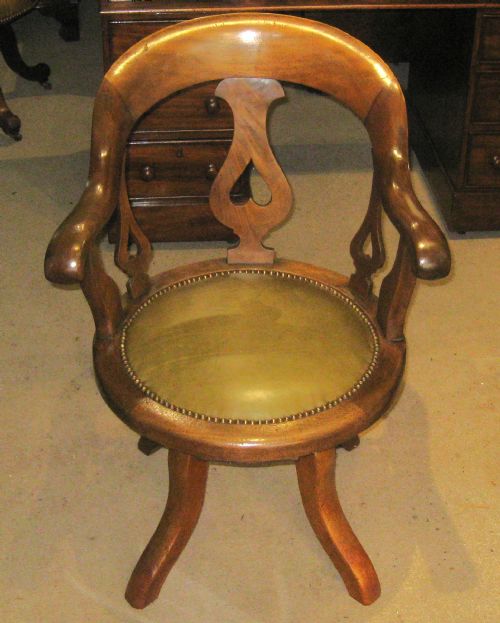
The version you are most likely to meet on this page is a Victorian or Edwardian mahogany desk chair featuring a leather upholstered seat and back. Many incorporate revolving mechanisms or swivel frames supported by brass castors and iron or cast iron components.
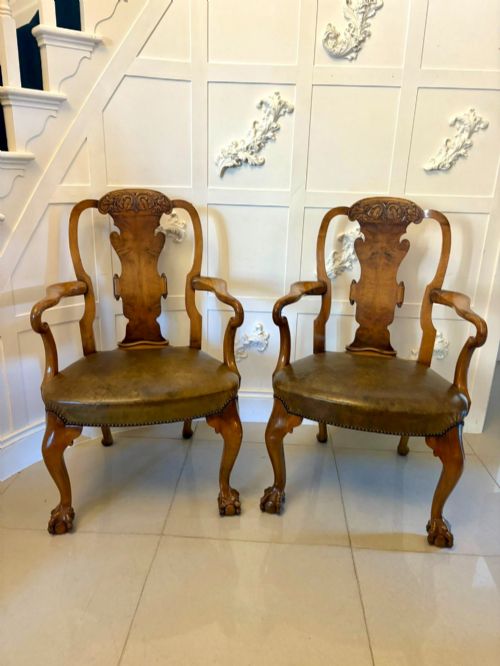
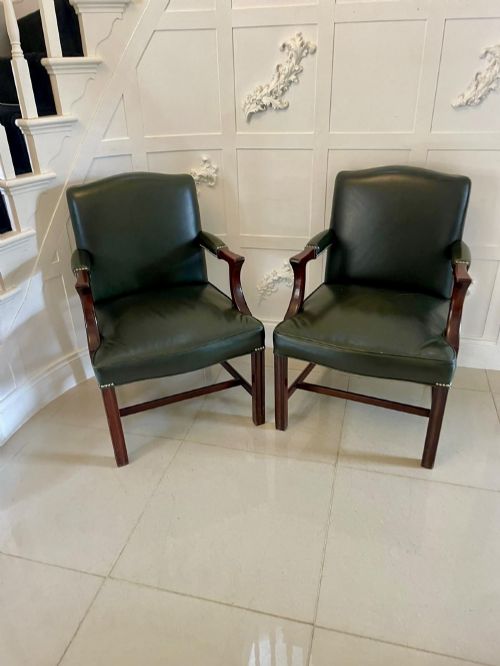
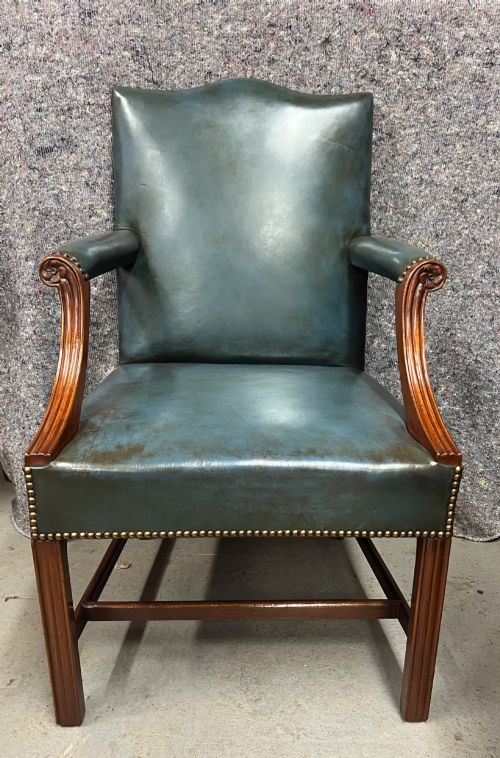
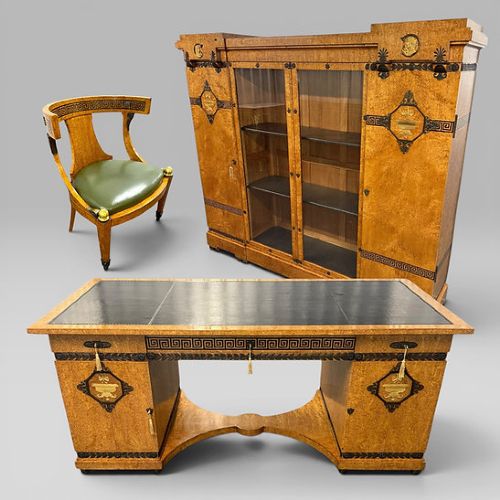
Alongside standard desk chairs, the selection includes matched office sets, French Empire fauteuils du bureau, and Gainsborough or Queen Anne style armchairs. The forms range from bow-back and X-framed designs to library chairs finished in shades of green or red leather.
Materials and construction
Makers built the frames of these chairs from dense hardwoods including mahogany, golden mahogany, walnut, oak, and satinwood, often selecting timber for its strong grain. Structural integrity depended on solid joinery, which frequently accommodated mechanical swivel or revolving systems mounted on iron and cast iron bases.
Upholsterers fitted the seats and backs with leather, securing the edges with brass nails and studs. Brass castors allowed the heavy wooden frames to move smoothly across floorboards while protecting the legs from impact.
Executive Leather Office Chair Retail Price Guide 2026
Typical asking prices for executive leather office chair among the pieces listed under this phrase on Sellingantiques today, from the lower quarter to the upper quarter. They describe what is for sale here now, not the wider market.
Period styles span Victorian, Edwardian, French Empire, French Neoclassical, Queen Anne style, and Georgian style.
Distinctions in quality
Quality rests in the weight of the timber frame, the complexity of the turnings, and the original integration of the swivel mechanism. Chairs that retain their operational cast-iron hardware and substantial mahogany or walnut structures stand apart from lighter or later interpretations.
The finish of the leather and the crispness of the wood carving dictate the distinction between a standard office seat and a finer library armchair. Examples bearing maker attributions, such as Mercier Frères, demonstrate higher levels of cabinet-making skill within French Neoclassical or Empire designs.
Mercier Frères
The Executive Leather Office Chair Glossary
- Revolving desk chair
- A seat mounted on a central spindle allowing the upper portion to turn independently of the base. This mechanical innovation became widespread during the Victorian era for office utility.
- Fauteuil du bureau
- A French term for a desk armchair, often associated with Empire or Louis Philippe styles. These chairs feature upholstered backs and arms designed to fit comfortably beneath a writing table.
- Bow back
- A curved wooden backrest that sweeps around the sitter in a continuous arc. This form provides lateral support in wider desk armchairs.
- X-framed
- A structural design where the legs cross in an X shape beneath the seat. This form appears on nineteenth-century pieces requiring additional architectural bracing.
- Swivel mechanism
- The internal iron and brass apparatus that permits rotation and sometimes height adjustment. Surviving original hardware adds to the mechanical interest of period seating.
Executive Leather Office Chair: Frequently Asked Questions
What periods do these chairs come from?
The pieces span the mid-nineteenth century through the Edwardian era, with significant representation from the Victorian period. You will find specific dates ranging from the eighteen-fifties up to the nineteen-twenties.
Cabinet makers and manufacturers of these decades produced diverse styles, from French Empire and Neoclassical designs to sturdy English oak and mahogany office seating.
What woods were used for these chairs?
Makers relied predominantly on dense hardwoods such as mahogany, golden mahogany, walnut, and solid oak. Satinwood and rosewood also appear on specific continental and formal examples.
These timbers provided the structural strength necessary to support mechanical swivel actions and heavy daily use in offices and libraries.
How do I care for the leather upholstery?
Period leather upholstery benefits from gentle cleaning and occasional conditioning to maintain its flexibility and colour. Avoid placing antique seating in direct sunlight or near heat sources that might dry the hide.
Keeping the brass studs and iron swivel mechanisms clean will help preserve the moving parts of a nineteenth-century desk chair.