



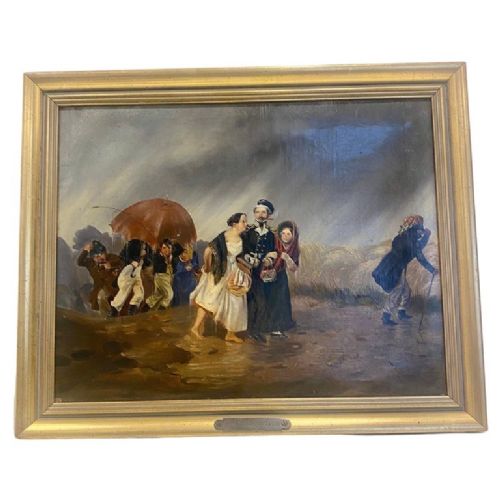
European Genre Art
European genre art captures everyday life through oils on canvas and board, offering an intimate window into past domestic and pastoral scenes.
European Genre Art
European genre art depicts scenes of daily life, including domestic interiors, peasant scenes, and pastoral moments set across the continent. When searching for european genre art, buyers encounter oil paintings on canvas, board, and tin dating from the nineteenth century.
The selections range from intimate portrayals of children and workers to detailed landscape pairings housed in period frames. These works showcase the diverse regional schools of nineteenth century realism, romanticism, and continental painting.
Most pieces date from the Victorian era up to nineteen thirty, reflecting established European artistic traditions of portraiture and narrative storytelling.
How they were made
These works utilise oil paint applied to canvas, wooden boards, and tin supports, capturing fine detail in domestic and outdoor settings. Many pieces retain their original gilt wood frames finished with gesso and gold leaf detailing.
Artists employed classical realist techniques to render figures and textures, working within established continental painting traditions of the nineteenth century.
European Genre Art Retail Price Guide 2026
Typical asking prices for european genre art among the pieces listed under this phrase on Sellingantiques today, from the lower quarter to the upper quarter. They describe what is for sale here now, not the wider market.
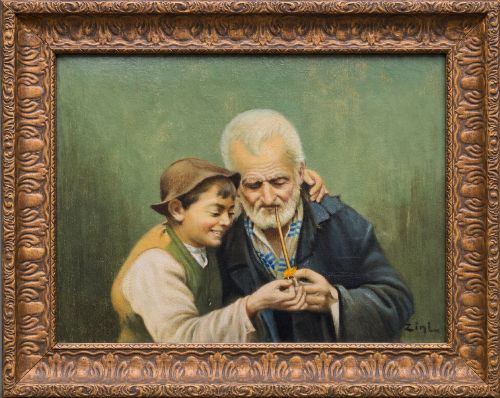
Peasants and children remain remarkably patient while holding a slipper or tapping a barrel.
What varies in quality
Quality in these paintings rests on the precision of the brushwork and the expressive character of the figures within the narrative scene. Superior works display confident handling of light and shadow, particularly in complex interiors and pastoral landscapes.
The preservation of the original paint surface and the craftsmanship of the accompanying gilt wood frame significantly influence the standing of each piece.
Alonso Perez·Max Kaltenmoser·Louis Charles Verwee·Hendricus Joseph Dillens·Karel Frans Philippeau·Joseph Emmanuel Weiser·Wilhelm Alexander Meyerheim
The European Genre Art Glossary
- Genre art
- Painting that depicts aspects of everyday life by portraying ordinary people in domestic or social scenes. This style focuses on narrative and human interaction rather than grand historical subjects.
- Oil on canvas
- A traditional painting medium where pigment is suspended in drying oils and applied to a stretched fabric support. It allows for rich colour depth and subtle blending.
- Gesso
- A plaster-like mixture applied to wooden frames as a base before gilding with gold leaf. It provides a smooth surface for ornamental moulding.
- Continental school
- A broad classification for artwork produced in mainland Europe rather than Britain. It encompasses various regional styles of the nineteenth century.
- Realism
- An artistic movement focused on representing familiar things accurately and truthfully. In genre painting, this involves depicting everyday workers and settings without idealisation.
European Genre Art: Frequently Asked Questions
What is European genre art?
European genre art consists of paintings depicting scenes from everyday life, such as domestic interiors, market squares, and agricultural labour. These works focus on human narratives rather than formal portraits.
Created primarily in oil on canvas, wood, or tin, these pieces reflect the social environments and artistic techniques of nineteenth-century continental Europe.
How do I identify a nineteenth-century painting?
Nineteenth-century paintings are typically identified through their canvas preparation, framing styles, and the specific realist or romanticist techniques employed by the artist. Signatures, inscriptions, and artist records also help establish dates.
Examining the materials used in the stretcher and the composition style provides further clues regarding the era of production.
How should I display oil paintings at home?
Oil paintings should be hung away from direct sunlight and excessive moisture to protect the canvas and paint layers. Maintaining stable room temperatures prevents warping in the wooden panels and frames.
Pairing the artwork with complementary period lighting enhances the visual depth of the gilt frame and the painted surface.
What subjects are common in these paintings?
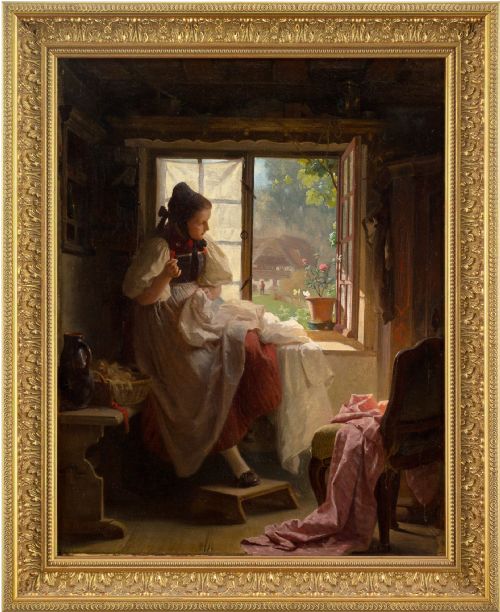
Common subjects include peasant families, children at play, pastoral landscapes, and intimate indoor scenes like sewing or social gatherings. These narratives capture the social fabric of the period.
Artists often focused on regional costumes and local architecture to ground their genre scenes in specific European locations.