
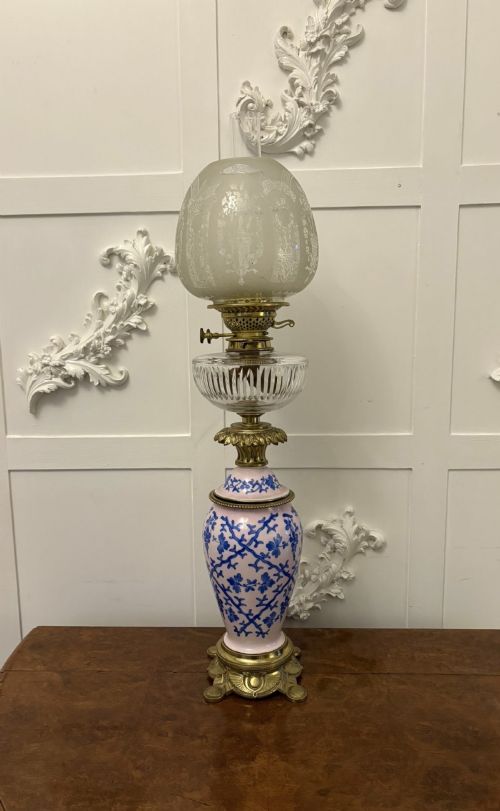
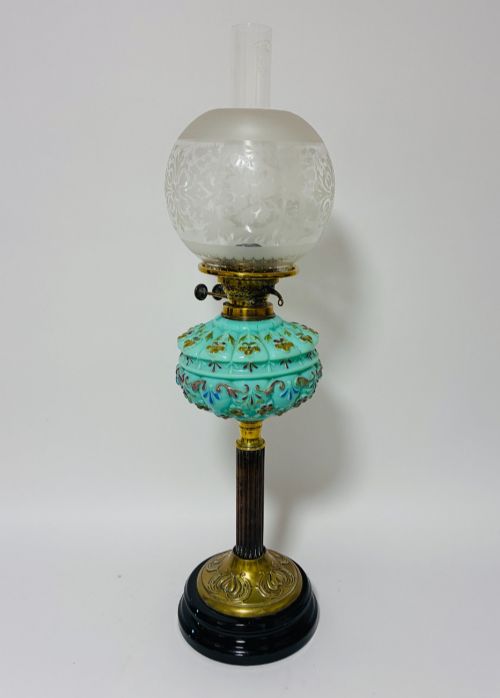
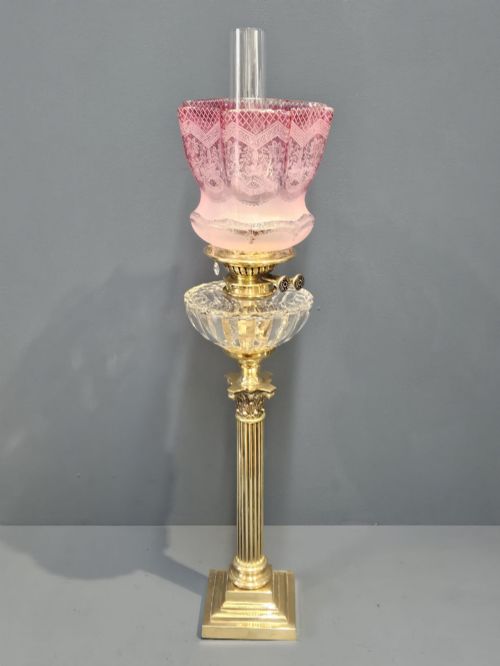
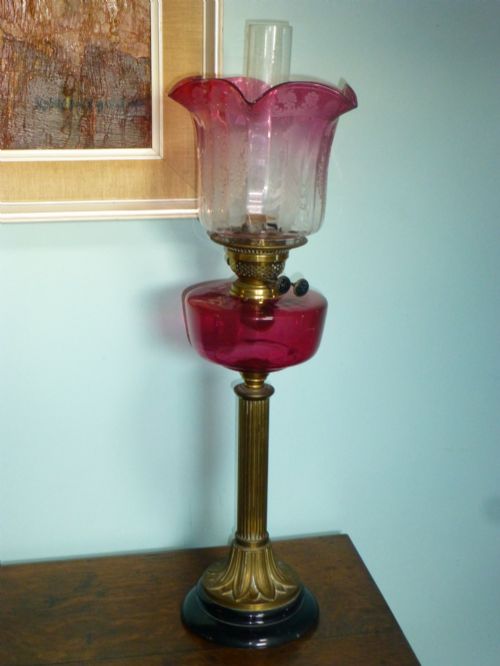




Etched Shade Paraffin Lamp
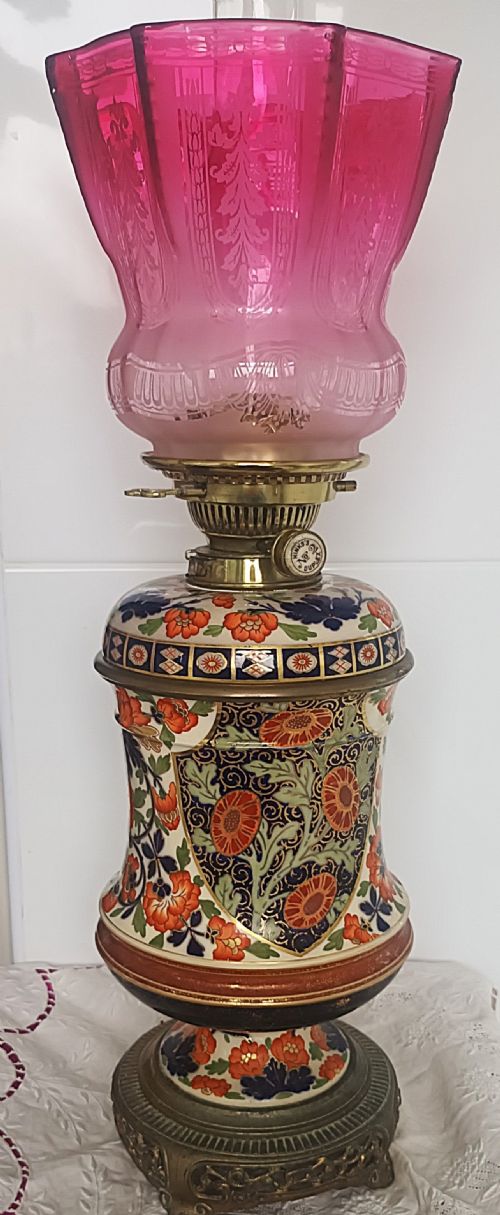
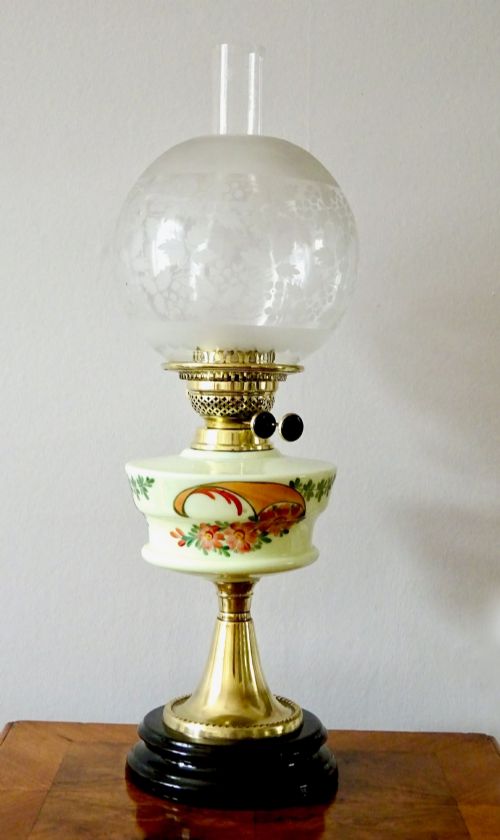
These etched shade paraffin lamp pieces bring heavy brass columns, colourful fonts and delicate glass globes together for a warm period glow.
Etched Shade Paraffin Lamp
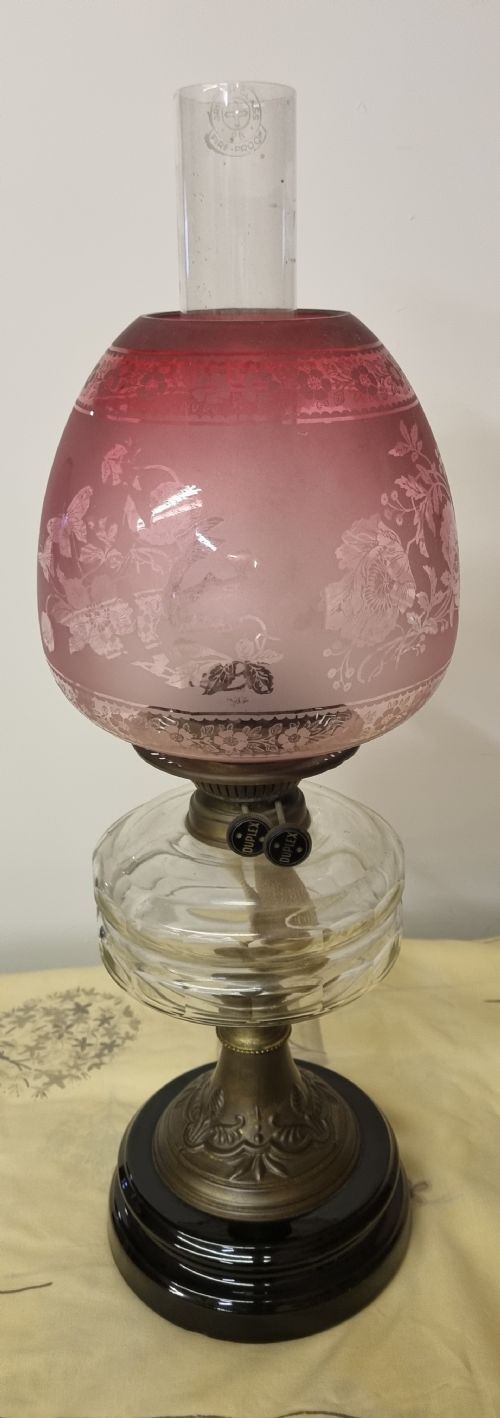
An etched shade paraffin lamp combines a heavy metal, ceramic or glass base with a decorative glass chimney or globe on top. These domestic lighting pieces date from the nineteenth century into the early twentieth century, spanning Victorian and Edwardian periods.
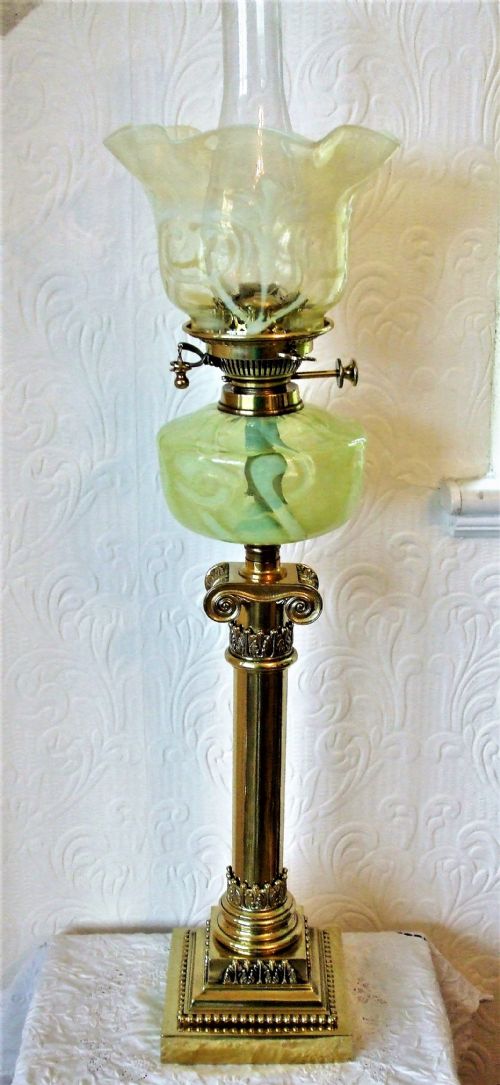
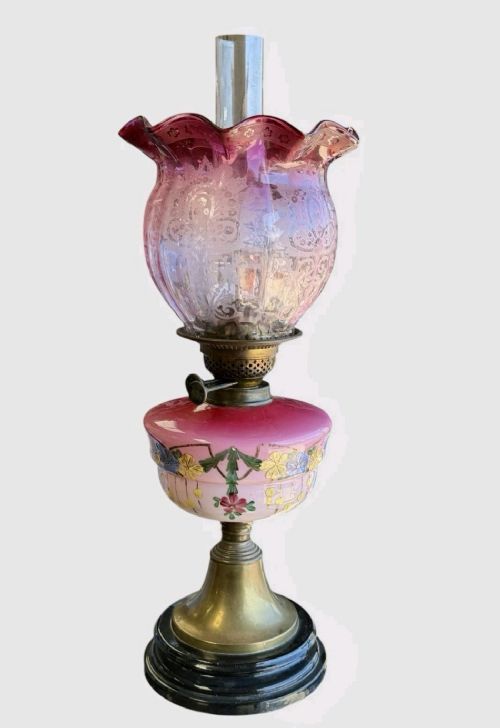
The most common version found here is the tall brass column lamp featuring a coloured glass font and a matching etched tulip shade. These domestic items provided interior illumination before electric lighting became widespread in homes.
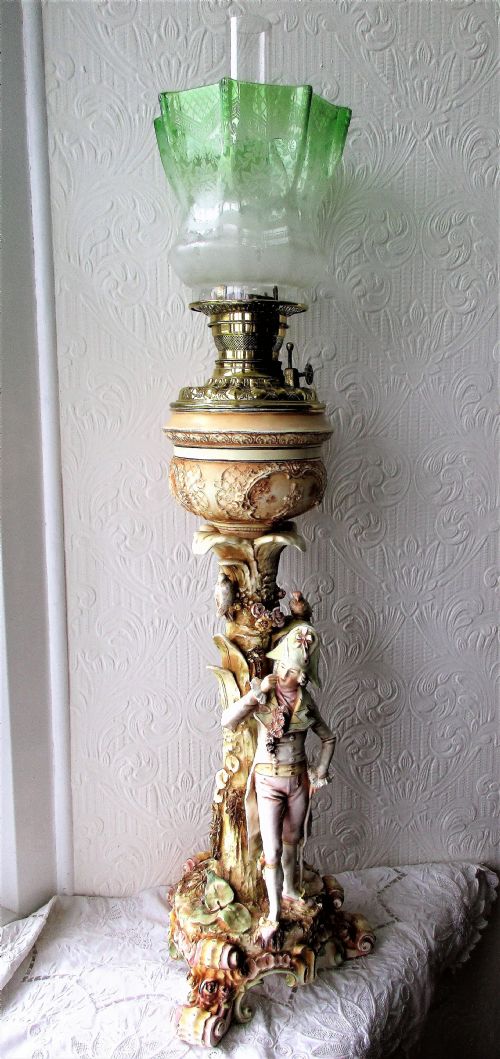
Makers and manufacturers produced these lamps in various forms, from simple domestic table models to large figural and double burner duplex examples. They draw collectors who appreciate period interior lighting and traditional craftsmanship.
How they were made
Foundries cast brass into classical columns like the Corinthian and Ionic orders, or formed silver plated and metal reservoirs to hold the fuel. Ceramic and porcelain factories shaped bodies into figural or glazed pottery vessels, sometimes incorporating hand painted details.
Glassmakers blew and moulded cranberry, green, pink and clear glass to create fonts and globes. Artisans then etched decorative patterns onto the outer surface of the shades using acid or wheel cutting techniques.
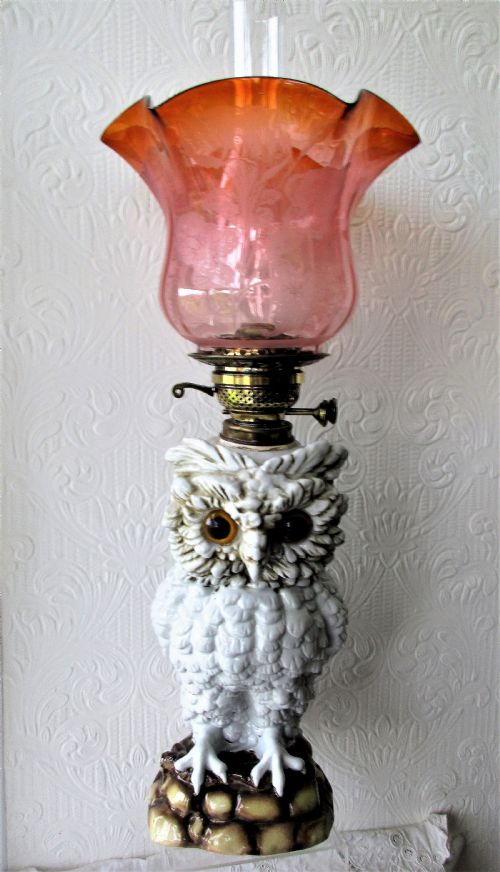
German porcelain owls stared out from Victorian mantelpieces as glowing oil lamps, keeping watch over the parlour long after dark.
What varies in quality
The weight and crispness of the cast brass elements separate standard production from superior examples, particularly in the detail of column capitals and font mounts. Hand painted porcelain figures and crisp acid etching on the glass shades indicate higher manufacturing standards.
The complexity of the mechanical burner mechanism, such as duplex double burner setups and telescopic stems, distinguishes finer workshop production from simpler domestic pieces.
Hinks·Taylor Tunnicliff·Sitzendorf·Hinks of Birmingham·Young·Messengers·Harrods
The Etched Shade Paraffin Lamp Glossary
- Duplex burner
- A double wick burner mechanism that produced a brighter flame than single wick models. These dual wicks required a wider gallery on the lamp shade.
- Font
- The oil or paraffin reservoir located near the top of the lamp. These vessels appear in brass, ceramic and coloured glass.
- Etched shade
- A glass globe decorated with surface patterns created by acid or cutting tools. These shades softened and diffused the light from the burning paraffin.
- Column lamp
- A lighting standard designed with a classical architectural column for the main shaft. Brass versions frequently adopted Corinthian or Ionic capitals.
- Tulip shade
- A bell shaped glass globe with a fluted rim resembling a flower opening. These shades sat atop the burner gallery to enclose the flame.
Etched Shade Paraffin Lamp: Frequently Asked Questions
How do I safely burn oil in a vintage lamp?
Modern paraffin or lamp oil should be used instead of heavy historic fuels to ensure a clean flame and protect the wick.
Trim the wick flat before lighting and keep the flame adjusted low to prevent soot from gathering inside the delicate glass shade.
How are nineteenth century brass columns cleaned?
Dust the brass gently with a soft dry cloth to preserve any existing surface patina and protect older metallic finishes.
Avoid harsh chemical metal polishes that can strip away the aged character accumulated over decades.
How do I identify a Victorian oil lamp?
Look for heavy cast brass columns, hand painted porcelain bodies and rich cranberry or pink glass fonts characteristic of nineteenth century production.
Maker names stamped onto the metal burner knobs or ceramic bases often confirm the period of manufacture.
Can missing shades be replaced?
Replacement glass shades can be sourced, though matching the exact period etching, fitter size and glass colour requires careful measurement.
The gallery diameter where the shade rests on the burner must fit the replacement globe precisely.