

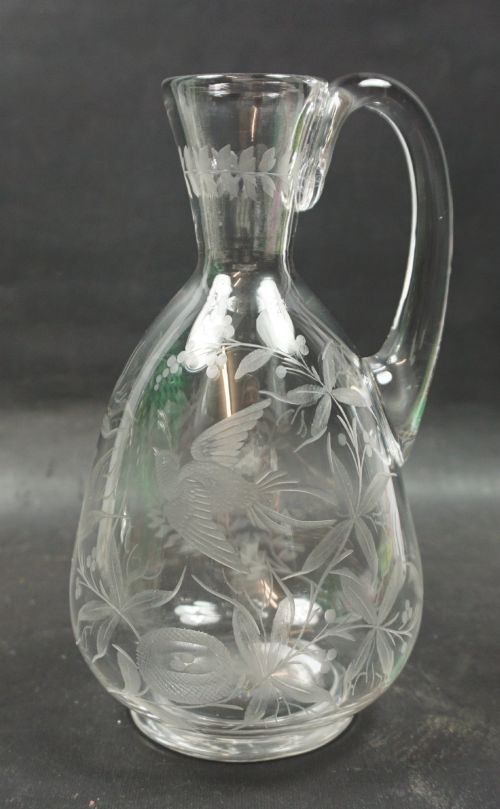
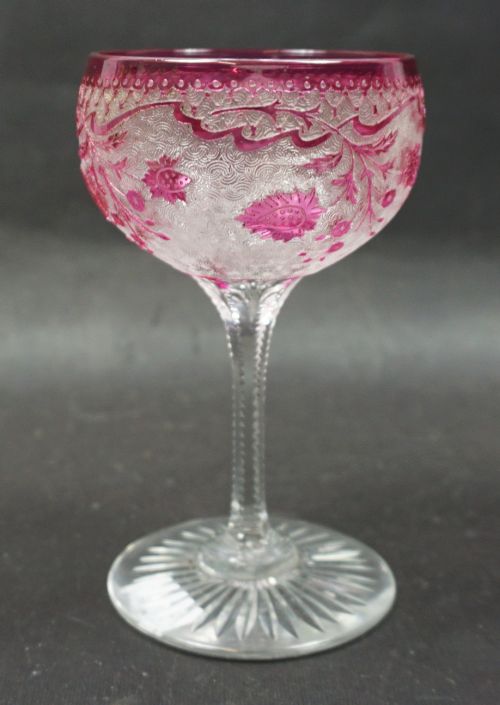
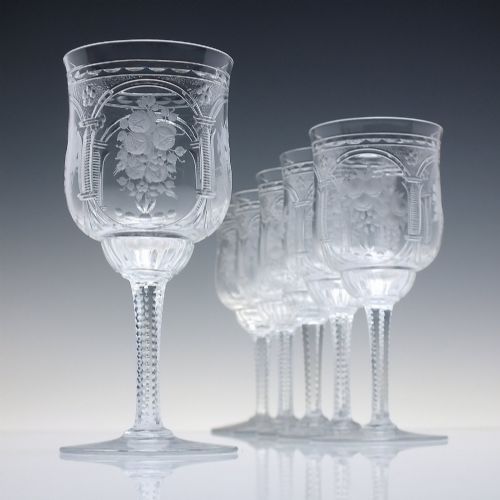
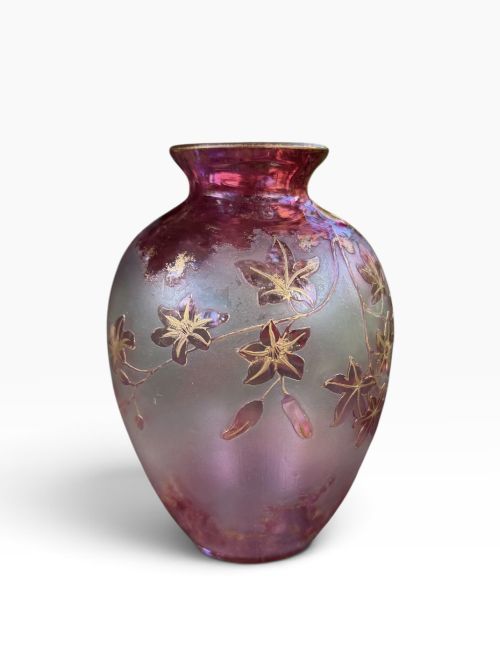
Etched Crystal Glassware
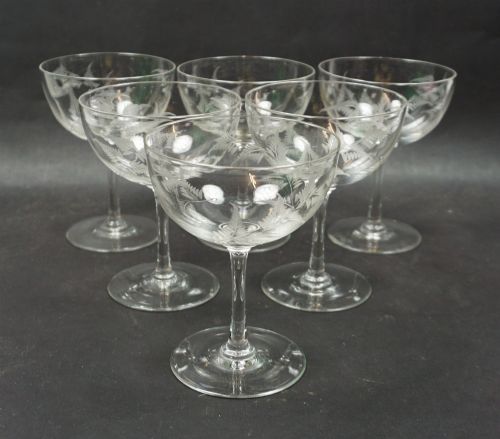
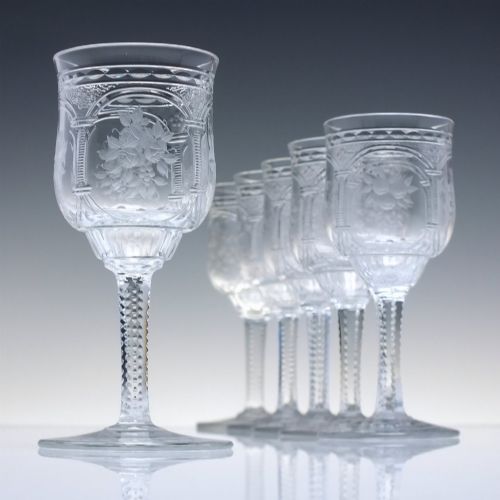
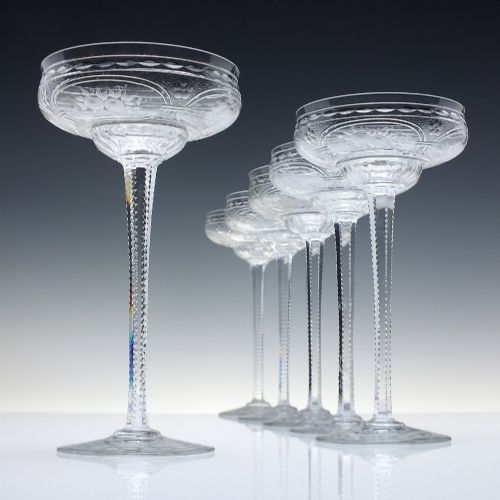
Etched crystal glassware comprises drinking vessels and table items bearing wheel-engraved or acid-etched decoration designed to catch the light during formal dining.
Etched Crystal Glassware
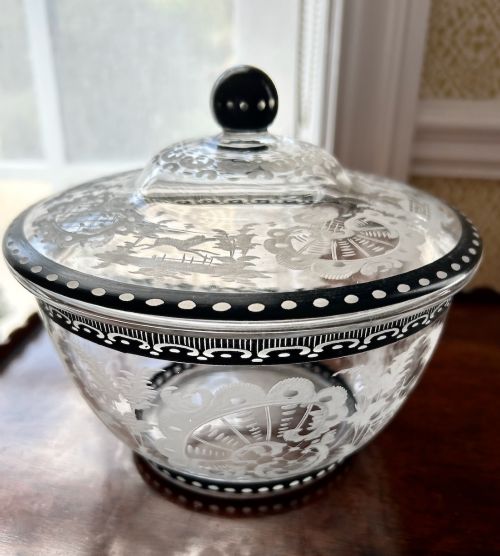
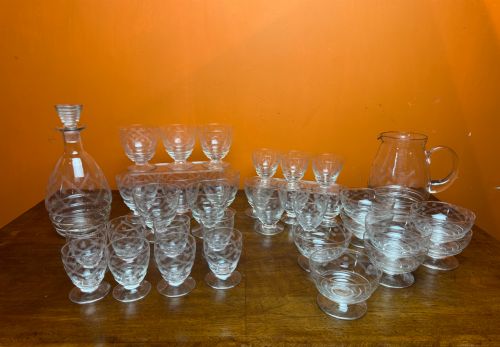
When you search for etched crystal glassware, you encounter items ranging from Georgian and Victorian table services to Art Deco French and Czech drinking sets. The selection centres on wine glasses, rummers, finger bowls, and decanter sets produced across the nineteenth and early twentieth centuries.
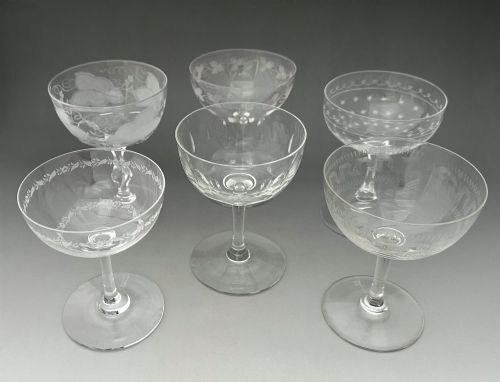
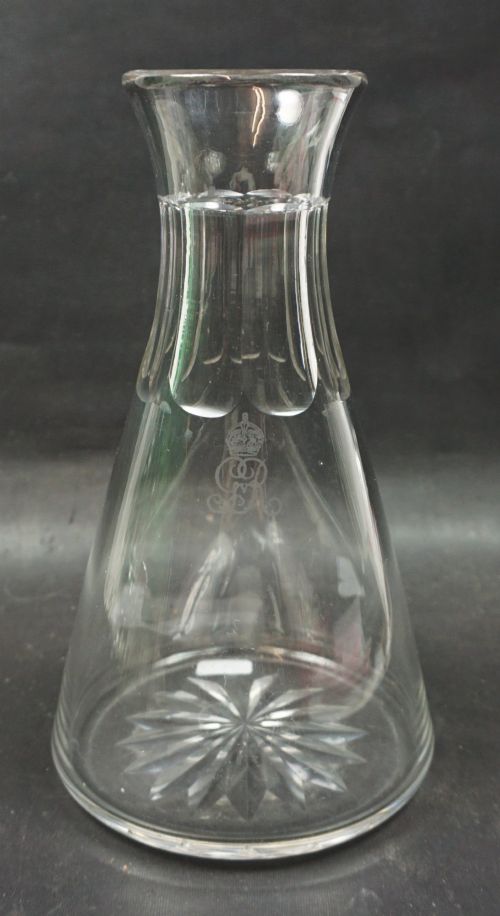
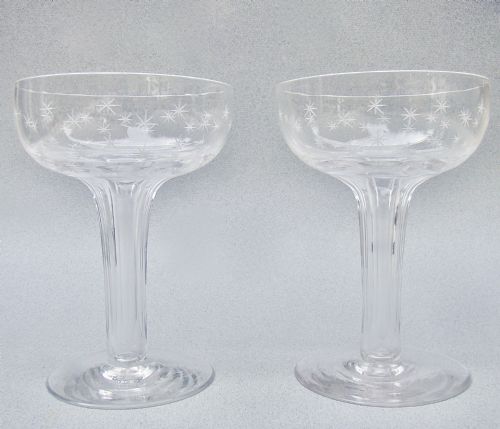
Victorian examples frequently display star motifs, Greek key bands, or naturalistic fruiting vines on clear lead crystal or coloured glass. Later twentieth-century pieces often adopt geometric Art Deco profiles with corresponding acid-etched or wheel-engraved patterns.
Materials and production methods
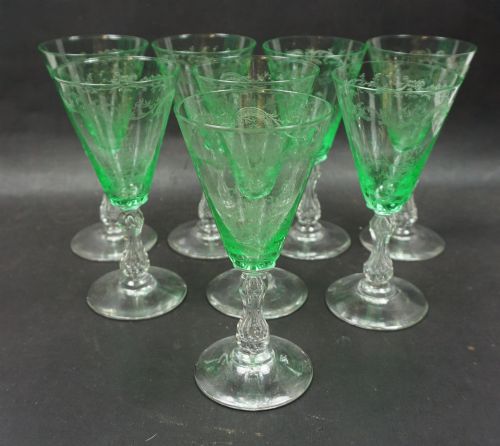
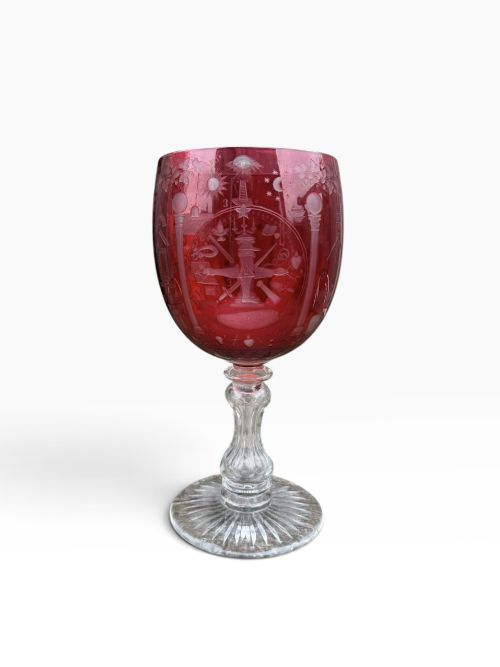
The objects combine clear lead crystal, coloured glass varieties such as cranberry, ruby, and cobalt blue, alongside frosted or cameo glass. Molten batches were blown into moulds or free-blown before undergoing extensive hand-finishing.
Decoration relied primarily on wheel-engraving with copper or stone wheels, or acid-etching where resist materials protected unmasked portions of the glass surface during chemical immersion.
Etched Crystal Glassware Retail Price Guide 2026
Typical asking prices for etched crystal glassware among the pieces listed under this phrase on Sellingantiques today, from the lower quarter to the upper quarter. They describe what is for sale here now, not the wider market.
Listings feature periods spanning from the Georgian era through Victorian, Edwardian, and Art Deco decades.
Evaluating craftsmanship and clarity
Quality rests upon the purity of the crystal matrix and the precision of the engraving work. Finer pieces demonstrate crisp, deep cutting or smoothly controlled acid lines that integrate harmoniously with the vessel form.
Weight, wall thickness consistency, and rim finish also distinguish superior examples. Matching sets with uniform bowl dimensions and unblemished bases command greater attention than assembled groups.
Rene Lalique·Stevens & Williams
The Etched Crystal Glassware Glossary
- Rummer
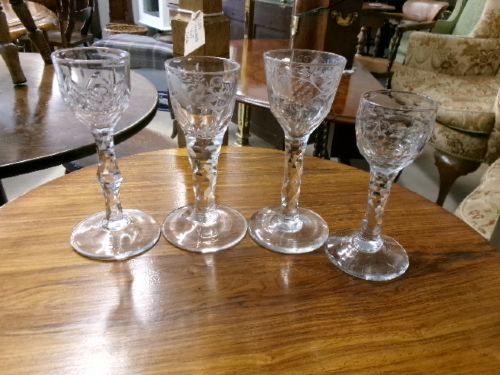
- A large, heavy-stemmed drinking glass popular in the eighteenth and nineteenth centuries. These vessels typically featured wide bowls suited to ale, wine, or punch.
- Finger bowl
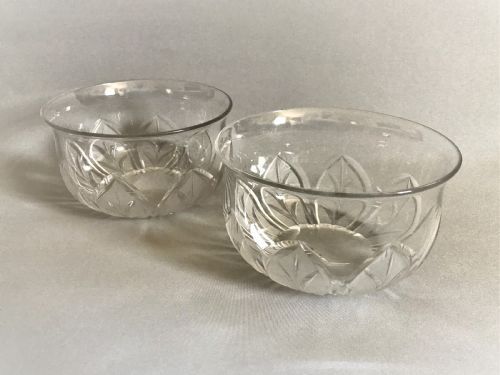
- A small, round bowl used during formal dining for rinsing fingers between courses. They often match the decorative scheme of surrounding wine glasses.
- Acid-etching
- A method of decorating glass utilising hydrofluoric acid to eat away exposed surfaces. This technique allowed intricate patterns to be produced without manual wheel cutting.
- Roemer
- A traditional Germanic stemmed drinking goblet with a large bowl and a studded or prunt stem. These often appeared in coloured glass variants such as amber or green.
- Lead crystal
- Glass containing a proportion of lead oxide which increases brilliance and weight. This material facilitates sharper wheel engraving than standard soda-lime glass.
Etched Crystal Glassware: Frequently Asked Questions
How do I clean antique crystal safely?
Wash pieces individually by hand in warm water using a mild liquid detergent. Avoid sudden temperature changes to prevent thermal shock.
Place a rubber mat at the bottom of the sink to cushion the base and rim. Dry immediately with a lint-free linen cloth to maintain clarity.
Can I use these glasses for daily dining?
Antique crystal handles everyday use provided you exercise care during washing and storage. Hand-washing remains essential to protect delicate rims and engraved details from dishwasher damage.
Store stemware upright on stable shelving with adequate space between pieces. Avoid stacking glasses inside one another to prevent rim chipping.
How do I distinguish lead crystal from standard glass?
Lead crystal exhibits a higher refractive index and greater weight than ordinary soda-lime glass. Tapping the rim gently produces a clear, resonant ring rather than a dull thud.
Examination under good light often reveals superior brilliance and dispersion of spectral colours within the crystal body. The material also feels noticeably cooler to the touch.
What indicates a matched set rather than an assembled one?
Matched sets display uniform height, identical wall thickness, and consistent engraving depth across every piece. Slight variations in weight or motif placement often signal individual hand production rather than factory mass-matching.
Inspect the pontil marks or base wear to ensure uniform age and manufacturing characteristics. Drinking sets preserved with original matching decanters and jugs carry distinct provenance.