



Etched Crystal Carafe
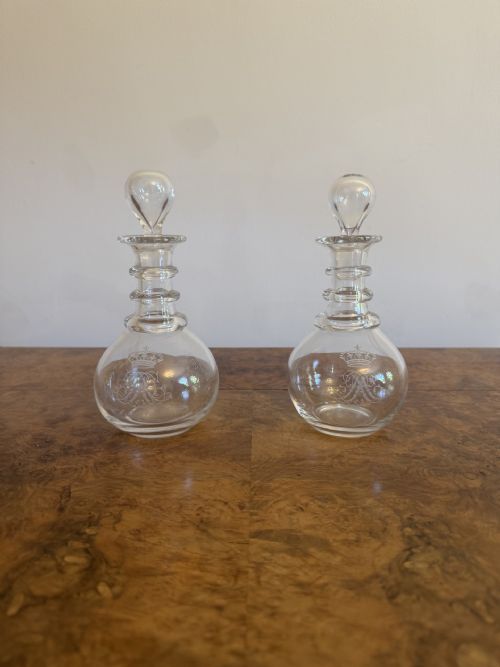
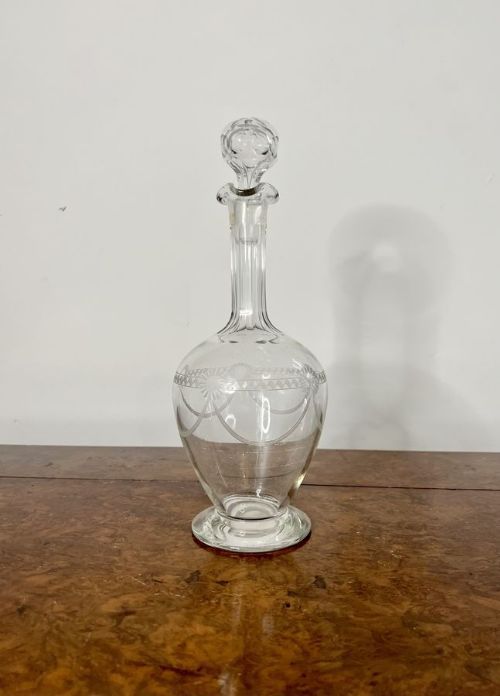
These etched crystal carafe examples bring together Victorian and Edwardian craftsmanship, offering a functional vessel designed to display and pour fine wine.
Etched Crystal Carafe
An etched crystal carafe represents a distinct category of drinking vessel, encompassing decanters, claret jugs, wine jugs, and glass ewers designed across the nineteenth and twentieth centuries. The pieces seen here span from the 1860s through the Edwardian period, alongside Victorian and French Art Nouveau examples.
Makers and origins recorded in the inventory include English works from Stourbridge as well as pieces featuring silver collars from manufacturers such as Asprey and Co. Ltd and Orfèvrerie Produx Saint Hilaire.
How they were made
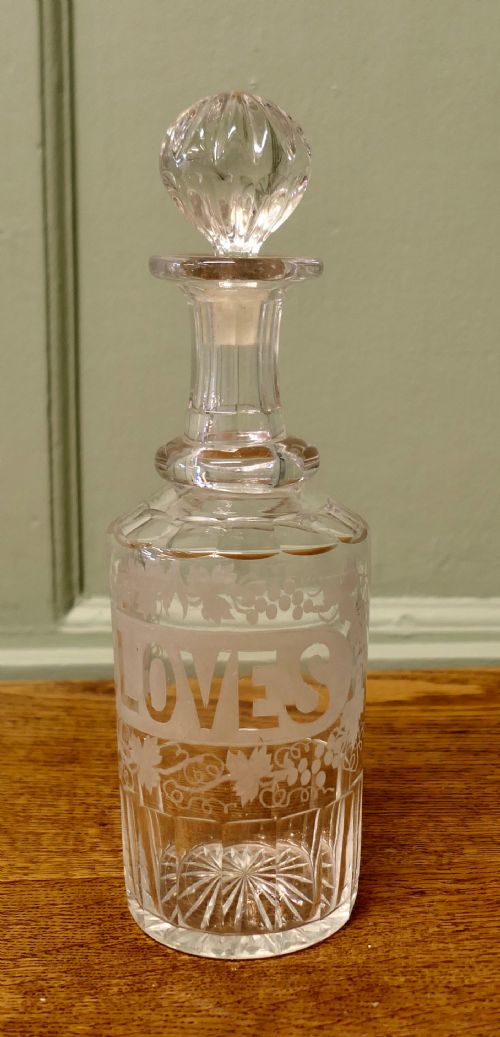
The manufacture of these vessels relies upon clear glass and heavy lead crystal formed through blowing or moulding, then finished with extensive surface decoration. Artisans utilised hand wheel engraving and acid etching to create intricate botanical motifs such as grapes and vines upon the vessel walls.
Many examples incorporate metalwork elements, uniting glass bodies with silver plate or solid silver collars and mounts. These mounts frequently include decorative details like Bacchus masks and fitted stoppers designed specifically for each jug.
Grape and vine motifs dominate the etched decoration, ensuring these vessels constantly reminded Victorian diners of the vineyards behind their claret.
What varies in quality
The distinction between standard production and the finest work lies in the depth and precision of the surface engraving. Hand wheel engraved pieces display crisp detail and tactile contrast against the clear glass, whereas simpler etched patterns appear more superficial.
Material composition and metalwork integration also determine the standard of a piece. Heavy lead crystal combined with hallmarked silver mounts or fitted stoppers elevates the overall integrity of the vessel compared to plain glass with minimal hardware.
Asprey and Co. Ltd·Orfèvrerie Produx Saint Hilaire
The Etched Crystal Carafe Glossary
- Claret jug
- A specialised pouring vessel specifically designed for serving red wine at the dining table. These typically feature a handle and a hinged metal lid or mount.
- Stourbridge
- An English town renowned for its glassmaking industry during the nineteenth century. Artisans there produced highly regarded wheel-engraved and cut crystal pieces.
- Bacchus mask
- A decorative sculptural motif depicting the face of Bacchus, often incorporated into silver mounts and handles on nineteenth-century wine jugs.
- Lead crystal
- A type of glass containing lead oxide, which increases weight, clarity, and brilliance. This material allows for deeper and sharper cutting than standard soda-lime glass.
- Hand wheel engraving
- A traditional technique where a glass vessel is held against rotating abrasive wheels of various sizes to cut detailed designs into the surface.
Etched Crystal Carafe: Frequently Asked Questions
How do I clean an old decanter?
Resist using harsh detergents or putting antique glass into a mechanical dishwasher, as thermal shock and strong chemicals can cloud the material.
Instead, rinse gently with warm water and utilise specialist cleaning beads or a soft bottle brush to address sediment inside.
Can I use these for serving wine today?
These vessels were created to hold and pour wine at the table, making them entirely suitable for contemporary dining use. Ensure you check the condition of any original stopper and handle the silver mounts with care.
Hand washing remains essential to preserve both the glass surface and any integrated metalwork.
What is the difference between a decanter and a claret jug?
A decanter generally functions as a standalone glass bottle with a matching stopper, used primarily for storing and pouring spirits or fortified wines. A claret jug incorporates an integrated handle and a hinged metal spout mechanism designed specifically for table service.
Both forms appear frequently among nineteenth-century glass tableware.
How can I identify Victorian pieces?
Victorian examples often display characteristic styles such as Rococo Revival curves or heavy cut patterns combined with etched botanical motifs like grapes and vines. Examining the weight of the crystal and the style of engraving helps establish the nineteenth-century origin.
Silver mounts, where present, may also carry hallmarks that date the metal components.