


Escapement Carriage Clock
An escapement carriage clock brings precision engineering and refined brass casing together, offering a timeless desk or mantel timepiece for the discerning collector.
Escapement Carriage Clock
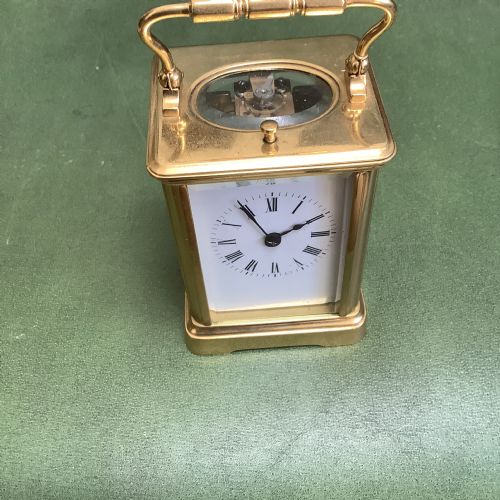
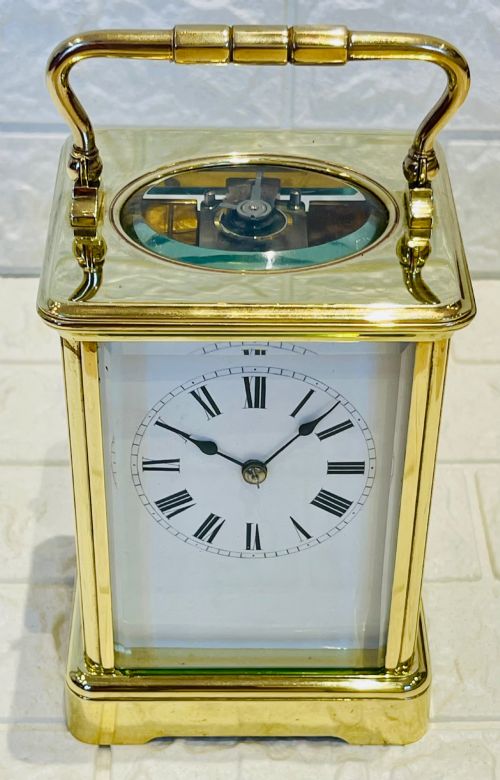
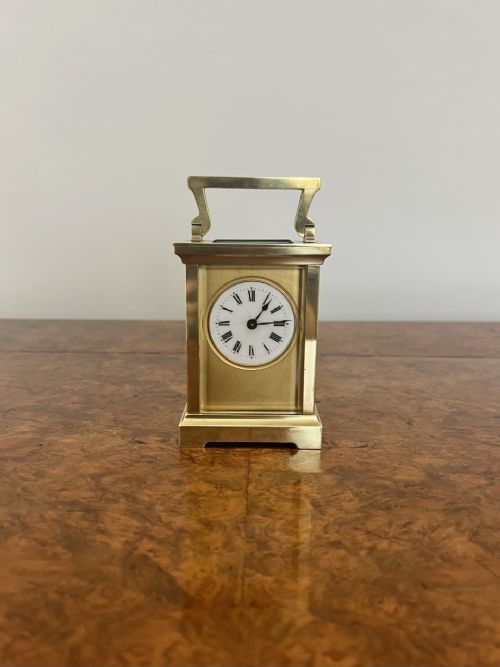
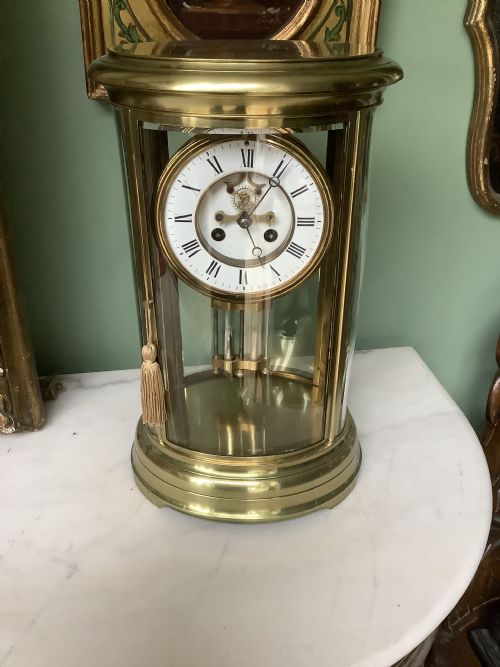
When searching for an escapement carriage clock, buyers encounter robust timepieces originating predominantly from Victorian and nineteenth-century French makers. These examples range from compact miniature and one-piece carriage clocks to larger four-glass mantel models and towering giant oval formats.
The most frequently met pieces on this page are French nineteenth-century carriage clocks and four-glass mantel clocks housed in brass or gilt brass frames. They combine visible mechanical escapements with bevelled glass panels to display the intricate inner workings from multiple angles.
Alongside standard carriage formats, the selection includes specialised variations like ebonised alarm clocks, striking movements, and novelty ships wheel designs. Each piece reflects the functional elegance demanded by nineteenth-century travellers and homeowners alike.
How they were made
These clocks are constructed primarily from brass and gilt brass, forming heavy structural frames designed to house delicate internal gear trains securely. Heavy glass panels are precisely bevelled and fitted into the metal housing to protect the dial while maintaining visual access to the movement.
The mechanical heart relies on specialised escapement platforms, sometimes featuring duplex or platform configurations alongside enamel dials marked with chapter rings. Skilled artisans engraved metal components and finished brass housings by hand to achieve the polished or gilded surfaces seen across the period.
Some nineteenth-century makers incorporated rotating ships wheels into four-glass clocks, proving that keeping time afloat was serious business.
What varies in quality
Quality rests significantly in the sophistication of the internal movement, where standard platforms contrast with exceptional platform escapements or duplex mechanisms. The complexity of the timekeeping duration, such as one-year movements or striking and alarm complications, elevates a piece considerably.
Casing execution also dictates distinction, separating simple brass frames from heavy gilt brass constructions, intricate hand engraving, and unusual forms like ships wheel pendulums or giant oval glass formats. The clarity and thickness of the bevelled glass panes further distinguish superior examples from standard production.
Gontard & Bolviller Paris·Silvani
The Escapement Carriage Clock Glossary
- Escapement
- The mechanical linkage that controls the release of the gear train to regulate the timekeeping. It gives the clock its characteristic ticking sound and maintains the swing of the balance.
- Carriage clock
- A portable spring-driven clock developed for travelling officers and gentlemen in the nineteenth century. They usually feature a carrying handle on top and a brass frame with glass panels.
- Four-glass clock
- A mantel clock enclosed by glass panels on the front, back, and both sides. This construction allows unrestricted light to illuminate the movement and pendulum.
- Platform escapement
- A small, self-contained escapement assembly mounted on its own platform within a portable clock. It replaces the traditional pendulum to allow accurate timekeeping while moving.
- Duplex escapement
- An advanced mechanical escapement utilising a two-toothed escape wheel to deliver precise impulses to the balance wheel. It represents a higher standard of horological refinement.
- Gilt brass
- Brass coated with a thin layer of gold or gold-coloured alloy to enhance appearance and prevent tarnish. It provides a warm, reflective finish characteristic of nineteenth-century French luxury pieces.
Escapement Carriage Clock: Frequently Asked Questions
What is an escapement carriage clock?
An escapement carriage clock is a portable mechanical timepiece enclosed in a brass and glass case designed for travel and domestic use. It uses an internal platform escapement instead of a hanging pendulum to regulate time accurately.
These clocks emerged during the nineteenth century in Britain and France, combining robust portability with ornamental refinement. Their glazed panels allow the inner gears to remain visible from all sides.
How do four-glass clocks differ from standard carriage clocks?
Four-glass clocks are typically larger mantel timepieces designed for stationary display rather than travelling. They feature glass panels on all four vertical sides to showcase the central movement and pendulum.
Standard carriage clocks are more compact, often equipped with a folding top handle for carrying. They rely on enclosed platform escapements rather than suspended pendulums.
How do you wind a Victorian carriage clock?
Winding is generally accomplished using a matching winding key inserted into arbours located on the back plate or beneath the base. Care must be taken not to overwind the mainspring.
Many nineteenth-century examples require the key to be turned in a specific direction depending on whether the movement drives timekeeping, striking, or alarm functions. Consulting the individual movement layout prevents internal strain.
What does a platform escapement do?
A platform escapement mounts the balance wheel, hairspring, and escapement components onto a small portable chassis. This innovation permits accurate timekeeping without relying on a stationary vertical pendulum.
Its presence enabled clockmakers to miniaturise precision timepieces for travel. Exceptional platform escapements often indicate superior grade movements.
How are brass cases cleaned safely?
Brass cases are best maintained with a soft, dry microfibre cloth to remove surface dust. Abrasive polishes should be avoided to preserve original gilding and patination.
Enamel dials and bevelled glass require gentle wiping with a damp cloth free of harsh chemical solvents. Professional horological cleaning is recommended for internal mechanical servicing.