

Equestrian Landscape Artwork
Equestrian landscape artwork brings together horses and open country, offering a window into rural tradition and sporting life.
Equestrian Landscape Artwork
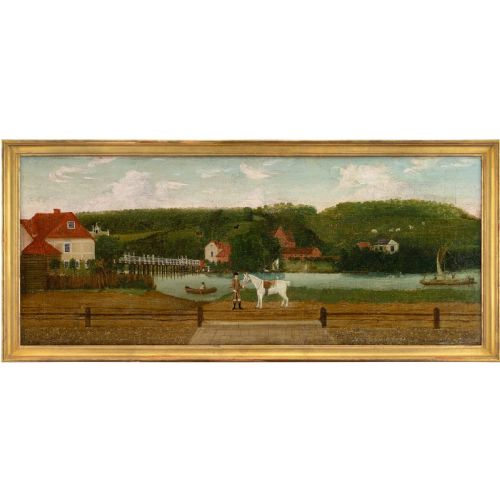
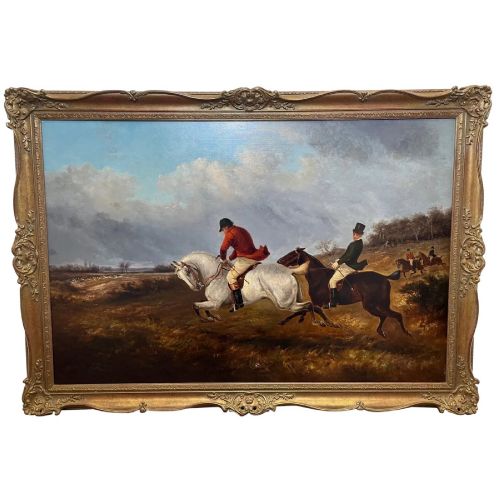
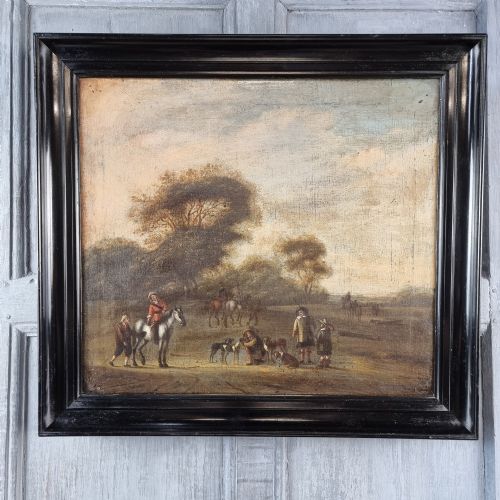
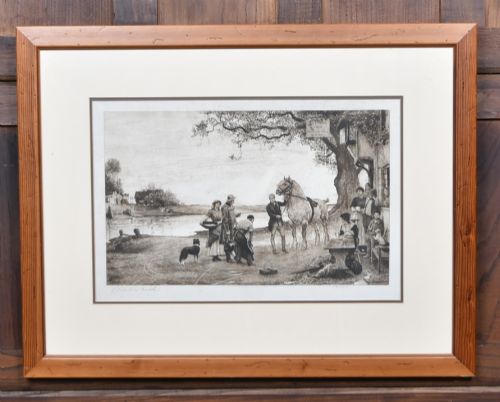
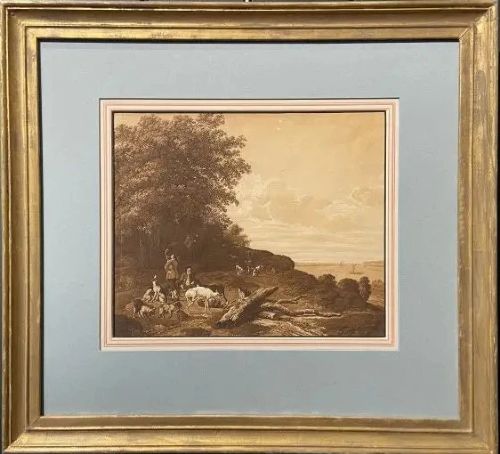
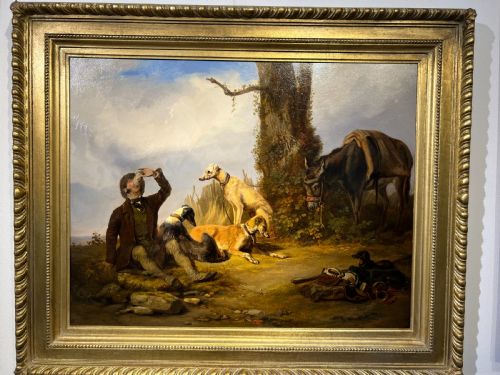
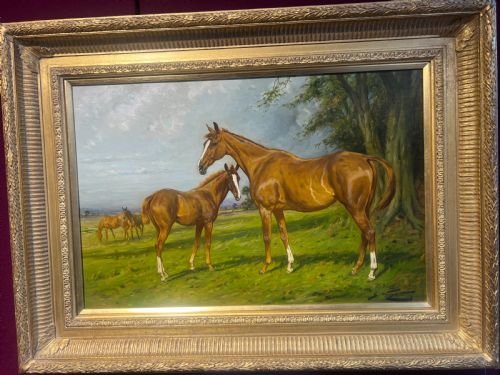
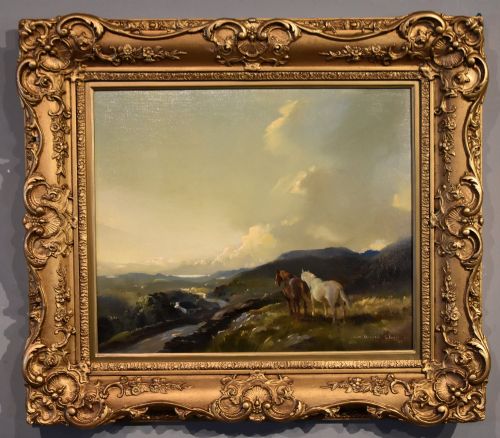
When you search for equestrian landscape artwork, you encounter painted and drawn scenes where horses inhabit riversides, country estates, and hunting fields. These works span centuries, capturing working animals, racing tracks, and pastoral views across various British and European schools.
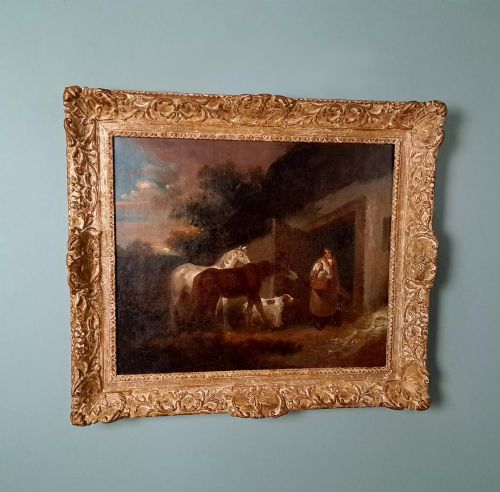
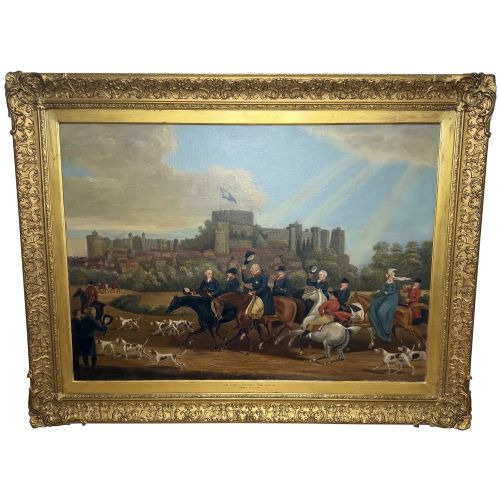
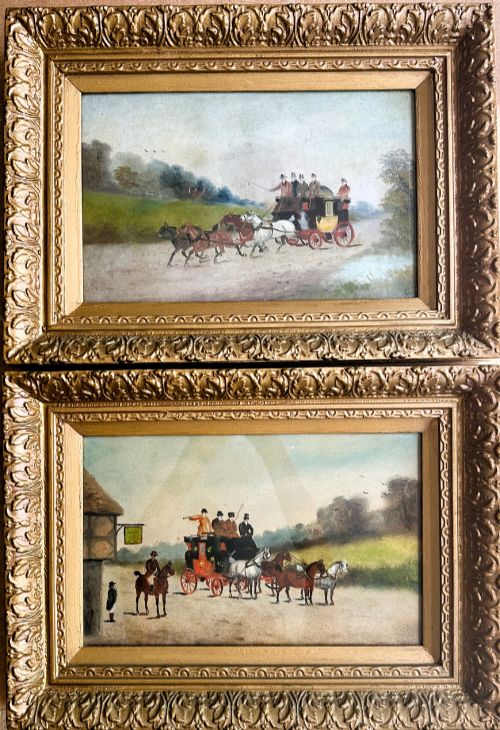
The most frequent examples on this page are oil paintings on canvas or board dating from the nineteenth century, alongside watercolours and etchings. They range from intimate portrayals of ponies in farmyards to grand depictions of hunts and coaching scenes set against expansive skies.
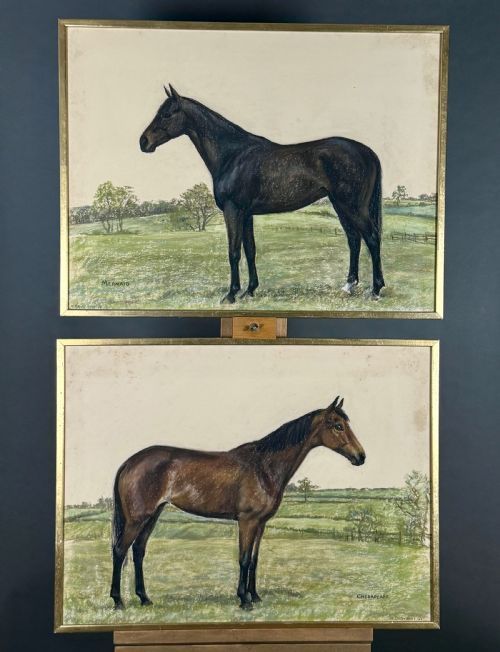
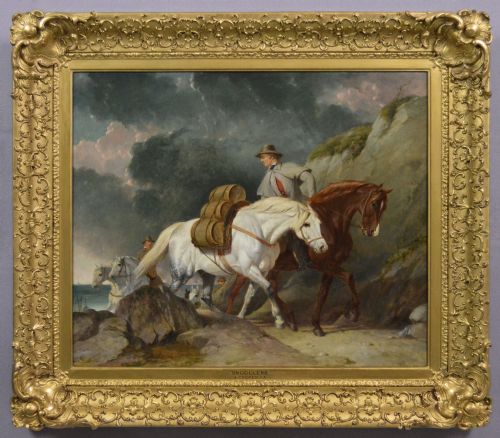
Subjects include portraits of specific horses with their handlers, coaching journeys, and dramatic sporting moments. The landscapes vary from quiet rural paths to bustling racetracks, reflecting the changing roles of horses in transport, work, and leisure.
How they were made
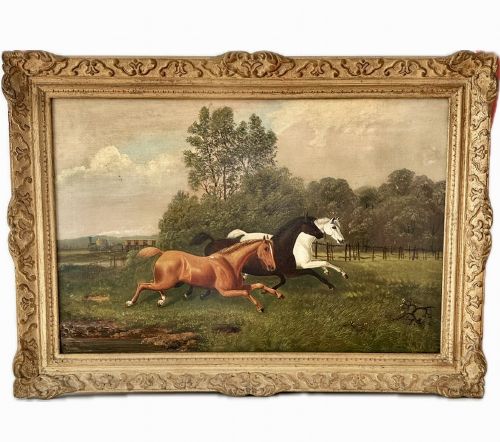
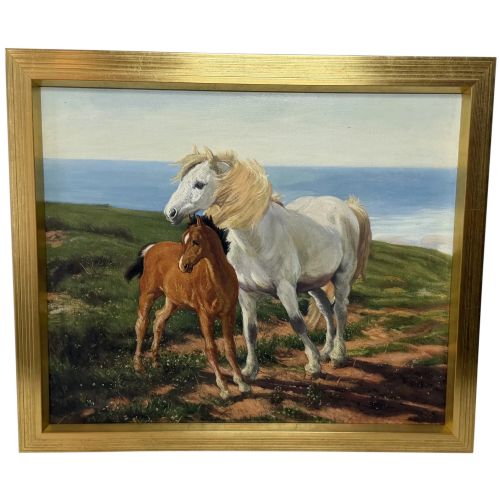
Artists primarily employed oil paint applied to canvas or wood panels, building rich surfaces that capture the sheen of coats and the textures of open fields. Watercolour on paper and detailed etchings also appear frequently, offering lighter studies or reproducible illustrations of rural scenes.
Giltwood frames frequently enclose these works, providing decorative borders that complement the pigments and subjects within the composition.
Several canvases squeeze in an assortment of farmyard ducks, chickens, and pigs alongside the working horses.
What varies in quality
The handling of anatomical proportion and movement distinguishes accomplished portrayals from simpler compositions. Skilled hands render the muscle structure and posture of horses with convincing weight and energy.
Depth of perspective and atmospheric light shape the surrounding landscape, separating richly observed regional views from formulaic backgrounds. The integration of horse and scenery demonstrates the artist's command of composition and natural colour.
Thomas Smythe·Abraham Cooper·John Ferneley Senior·John Frederick Herring Jnr·Philip Henry Rideout
The Equestrian Landscape Artwork Glossary
- Oil on Canvas
- Pigments bound in drying oil applied to a woven fabric stretched over a wooden frame. This medium allowed artists to work with rich tones and blend colours smoothly.
- Etching
- A printmaking technique where lines are bitten into a metal plate with acid before being inked and pressed onto paper. It produces fine, highly detailed linear work.
- Giltwood
- Wood carved and coated with a thin layer of gold leaf or metallic paint. It is commonly found on traditional picture frames from the nineteenth century.
- Watercolour
- Paint made from pigments suspended in a water-soluble vehicle, typically applied to paper. This medium creates translucent washes and delicate effects.
- Sporting Art
- Genre depicting bloodsports, racing, coaching, and animal portraits. It flourished in Britain throughout the eighteenth and nineteenth centuries.
Equestrian Landscape Artwork: Frequently Asked Questions
What periods do these artworks come from?
The selection spans from the seventeenth century through the Georgian and Victorian eras up to the mid-twentieth century. Nineteenth-century pieces form a large part of the available selection.
Works range from early Dutch golden age landscapes to mid-twentieth-century British and French modern interpretations of rural life and racing.
How were horses depicted?
Horses appear in varied contexts, including working farm scenes, coaching journeys, fox hunting, and racecourses. Some works show detailed portraits of individual animals with handlers.
Artists captured both static pasture scenes and dynamic moments like galloping hounds or running horses in open landscapes.
Where were these pieces created?
Many works originate from British artists and schools, reflecting local country sports, coaching routes, and rural estates. Other pieces come from French and European traditions.
Regional locations such as Dartmoor, Sussex, and Normandy appear in the titles, tying specific scenes to recognizable countryside.