


Equestrian Hunting Oil Art
Equestrian hunting oil art captures horses, hounds, and sporting scenes rendered in oil paint on canvas.
Equestrian Hunting Oil Art
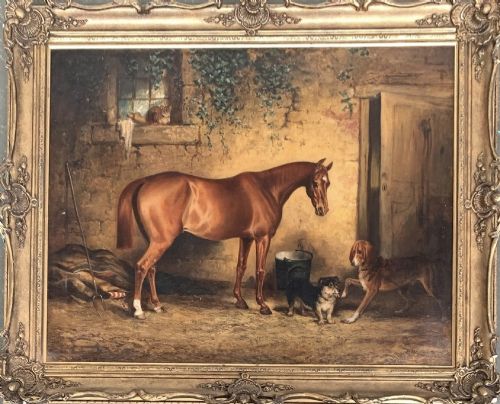
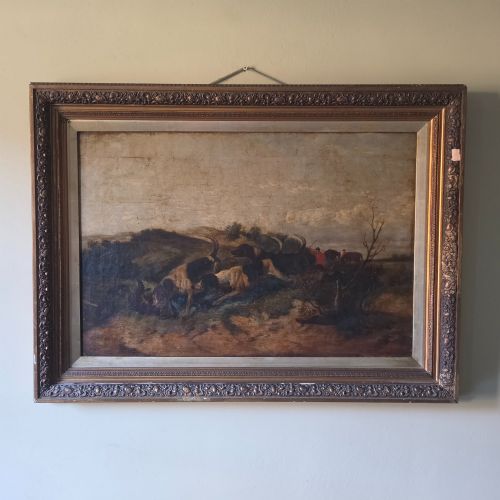
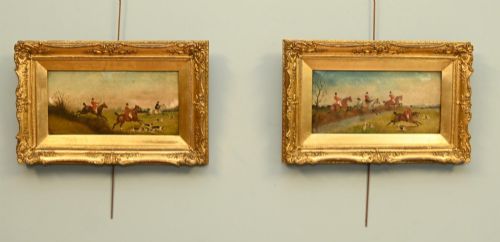
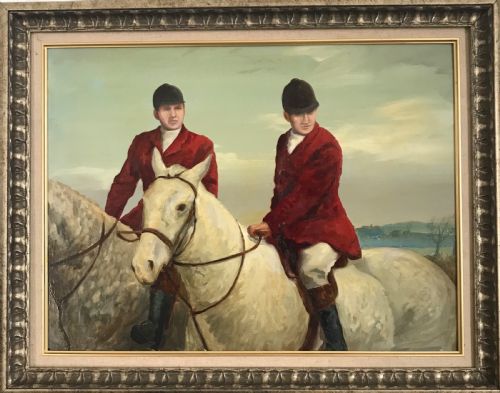
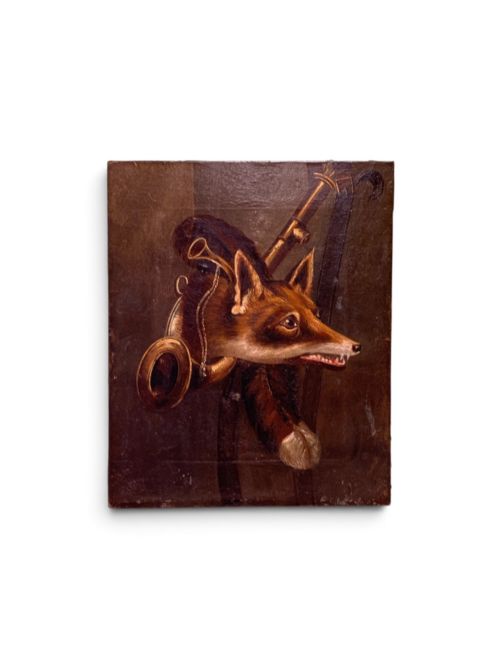
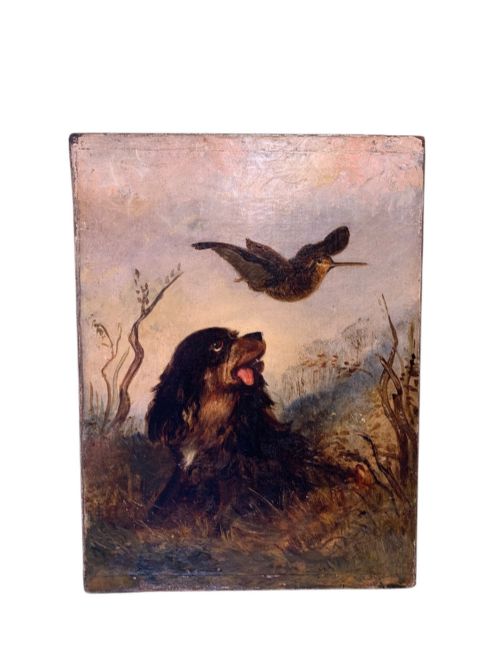
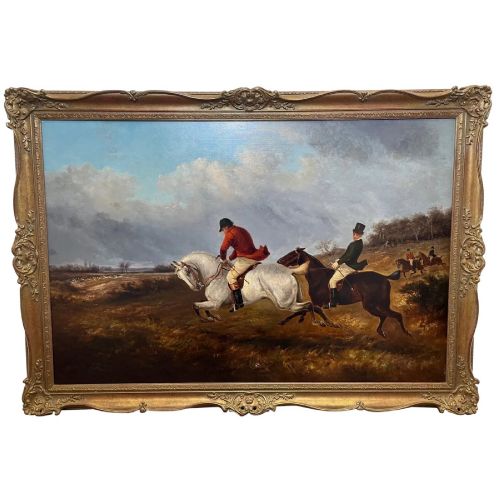
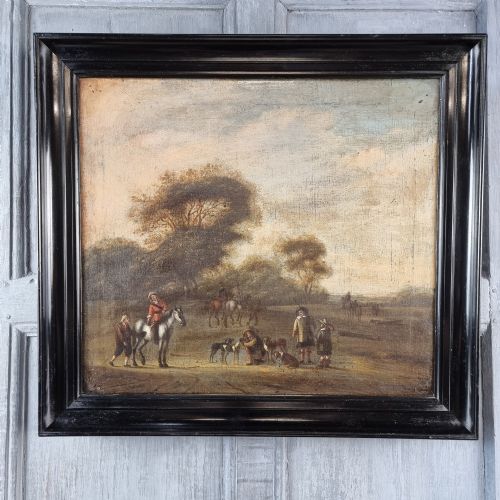
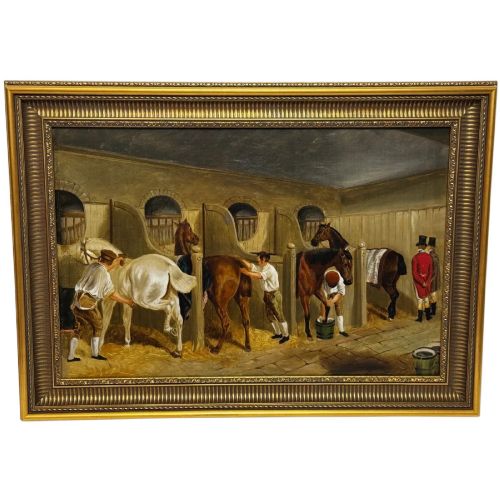
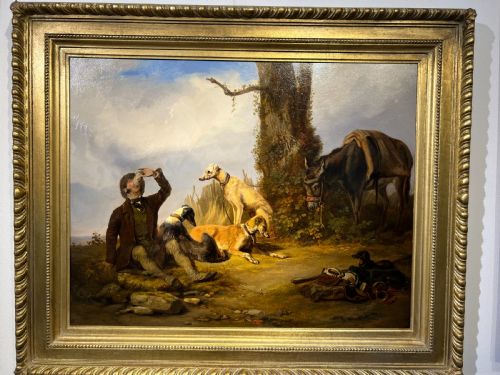
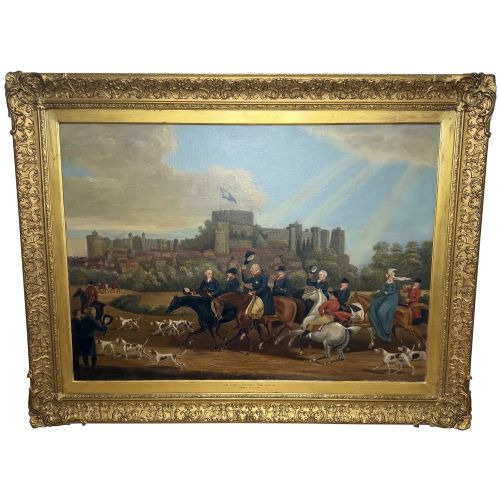
When you search for equestrian hunting oil art, you find works depicting horses, hounds, huntsmen, and sporting pursuits across various periods. These paintings record the traditions of the hunt, coaching scenes, and canine portraits set in landscapes.
The pieces on this page are most frequently Victorian and nineteenth-century works, alongside examples from the Edwardian era and mid-twentieth century. Canvas is the primary support, housed within period wooden and gilt frames.
Subjects range from full-cry hunts and stable yards to detailed studies of hunters, spaniels, and terriers. This selection draws on British sporting art traditions as well as continental European depictions of horses and hounds.
Materials and Construction
These works utilise oil paint applied to canvas or board, allowing artists to build rich textures and deep tones. The physical properties of oil permit precise detail in the rendering of horse coats, hound musculature, and changing weather conditions.
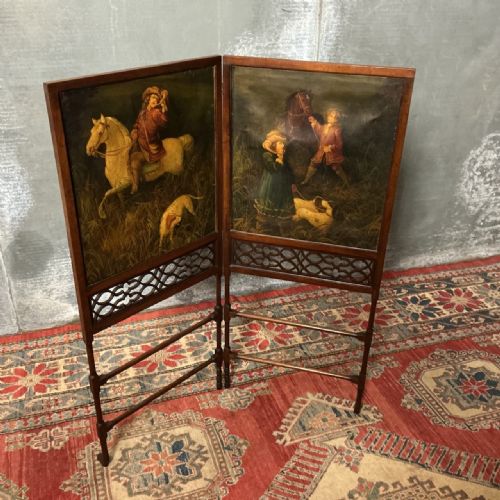
Frames are constructed from wood, frequently finished with giltwood or gold leaf to complement the dark palettes of nineteenth-century interiors. Joinery and moulding techniques align with the specific period of the canvas, from seventeenth-century landscapes to Edwardian screen sets.
Listings feature works spanning from the seventeenth century through to the mid-twentieth century, executed in oil on canvas and wood.
Evaluating Quality and Execution
Quality in these works rests upon the anatomical accuracy of the horses and hounds, alongside the artist's command of composition and movement. Superior paintings capture the tension of a gallop or the stillness of dogs at rest with convincing perspective and brushwork.
The handling of light and atmosphere separates standard depictions from masterworks, particularly in winter snow scenes or complex woodland backdrops. Preservation of the original canvas and the integrity of the period frame further influence the standing of an individual piece.
Thomas Smythe·Sir Edwin Henry Landseer·John Arthur Lomax·George Wright·Philip Henry Rideout·Charles Faulkner·Fannie Moody·Robert Cleminson·John Frederick Herring Jnr·John Charles Tunnard·John Sanderson-Wells·Alfred Duke·Michael Lyne·Henri Schouten·Heywood Hardy·Guillaume Urban Régamey·George Goodwin Kilburne·Thomas Blinks
The Equestrian Hunting Oil Art Glossary
- Oil on Canvas
- A painting medium where pigments bound in drying oil are applied to stretched woven fabric. This combination provides durability and a flexible surface for layered brushwork.
- Giltwood
- Wood carved and coated with gold leaf or metallic powder to create a bright, reflective finish. It is commonly found on traditional picture frames from the Victorian and earlier periods.
- Full Cry
- A hunting term describing hounds in active pursuit of quarry with vocal baying. In art, it denotes high-action scenes depicting horses and dogs moving at speed across open terrain.
- Sporting Art
- A genre of painting dedicated to equestrian subjects, hunting, shooting, and animal portraits. This category reflects the rural pursuits and livestock interests of landowners.
- Canvas
- A heavy woven fabric used as a support surface for oil paintings. It is typically stretched over a wooden frame before application of the ground layer and paint.
Equestrian Hunting Oil Art: Frequently Asked Questions
What periods do these paintings come from?
The works span multiple centuries, with a strong concentration of nineteenth-century and Victorian pieces. Examples also reach back to the seventeenth century and extend forward through the Edwardian era into the mid-twentieth century.
Dates are established through stylistic analysis, artist signatures, and framing materials that correspond to specific historical eras of British and European sporting art.
What subjects are included in equestrian hunting oil art?
These artworks show fox hunting scenes, coaching journeys with stagecoaches, and individual portraits of hunters and hounds. Other compositions feature terriers guarding game, stable yards, and rural landscapes with horses.
The focus remains on animals and field sports, capturing both action-packed chases and quiet moments between huntsmen and their dogs.
How were these paintings originally displayed?
Paintings of this scale were typically hung in country houses, libraries, and estate reception rooms. They celebrated landed estates, prized horses, and successful hunting seasons.
Some pieces were incorporated into larger furnishings, such as mahogany fire screens designed to sit before hearths.
How do I care for an oil painting on canvas?
Keep paintings away from direct sunlight, extreme temperature fluctuations, and high humidity to prevent the canvas from sagging and the paint from cracking. Dust the surface gently with a soft, dry brush without applying pressure.
Avoid using water or chemical cleaners on either the canvas or the gilt wood frame, consulting a professional conservator for deeper cleaning.