


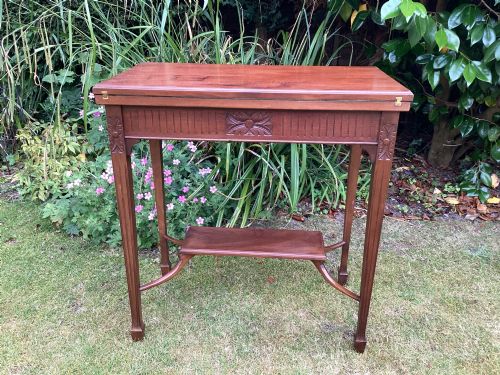


Envelope Top Games Table
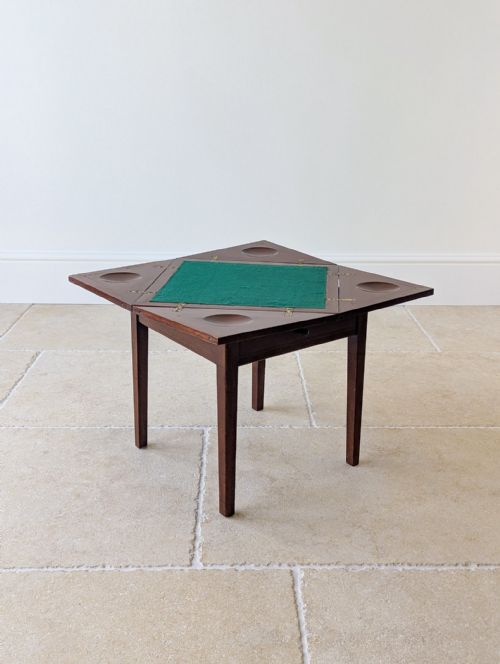
An envelope top games table is a clever folding piece designed for parlour play, offering a swivel leaf that reveals a baize-lined surface and corner wells.
Envelope Top Games Table
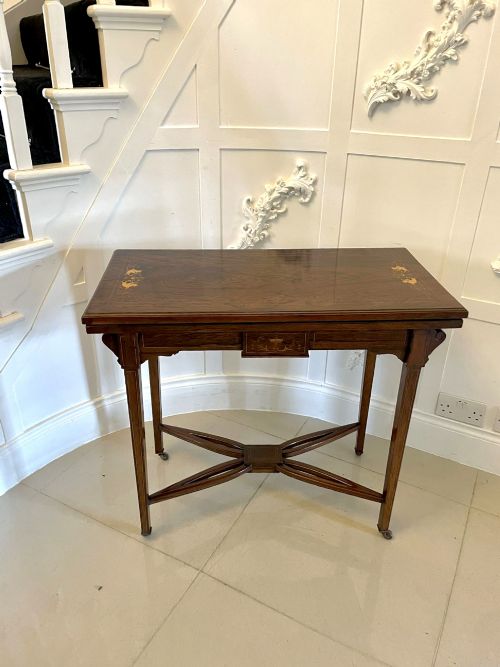
When searching for an envelope top games table, a buyer encounters pieces spanning the nineteenth century into the early twentieth century, with Edwardian and Victorian examples appearing most frequently. These items function primarily as occasional or side tables until the square top rotates and the four triangular flaps fold open like an envelope to create a larger surface for cards. Card tables and games tables dominate the current selection, featuring both standard and diminutive proportions suited to period interiors.
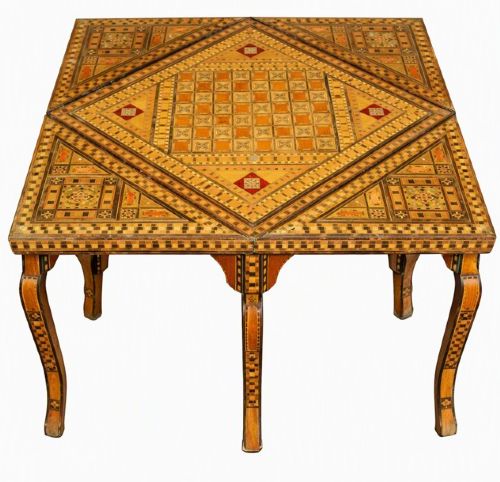
The stylistic range on this page stretches from plain Edwardian mahogany to more ornate Victorian and 1900s pieces incorporating marquetry, inlay, and revival designs. Alongside standard British cabinetwork, the evidence includes specific stylistic expressions such as Ottoman, Art Nouveau, Regency, Aesthetic Movement, French Rococo Revival, and Chinese Export forms. Buyers are most likely to meet mahogany or rosewood Edwardian versions fitted with inlaid stringing and interior gaming wells for counters.
Construction dates cluster around the late Victorian and Edwardian eras, though earlier nineteenth-century and Regency interpretations also feature in walnut, satinwood, and fruitwood. The clever mechanical action of the pivoting top remains the defining characteristic across all these periods, supported by slender cabriole or square tapering legs. Whether plain or heavily inlaid, each piece balances domestic utility with the social rituals of Victorian and Edwardian card games.
Materials and construction
Cabinetmakers utilised dense hardwoods such as mahogany, rosewood, and walnut to build the foundational frames and folding flaps of these tables. Satinwood, boxwood, and fruitwood appear frequently as contrasting veneers and delicate stringing lines to define the borders of the envelope top.
Metal components such as brass hinges and pivoting mechanisms concealed within the frieze allow the square top to swivel smoothly before the four leaves unfold. Secondary materials like bone and brass occasionally surface in inlaid details or gaming counters, while interior surfaces are traditionally lined with baize or felt for card play.
Envelope Top Games Table Retail Price Guide 2026
Typical asking prices for envelope top games table among the pieces listed under this phrase on Sellingantiques today, from the lower quarter to the upper quarter. They describe what is for sale here now, not the wider market.
Corner wells wait patiently beneath the folded flaps, harbouring forgotten secrets from nineteenth-century card nights.
Distinguishing finer examples
The precision of the mechanical swivel and the tight alignment of the four folding flaps determine the baseline mechanical success of any envelope top games table. Finer pieces demonstrate seamless movement where the triangular leaves meet precisely at the centre without sagging or friction.
The choice of timber and the execution of inlay separate standard production from superior cabinetwork. Richly figured mahogany or rosewood paired with intricate boxwood and satinwood marquetry elevates a piece, whereas simpler structural builds rely entirely on the clever folding mechanism for their appeal.
The Envelope Top Games Table Glossary
- Envelope top
- A square table top composed of four triangular flaps that rotate and fold open diagonally to reveal a playing surface. This ingenious folding mechanism defines the entire category.
- Gaming wells
- Small recessed compartments built into the corners of the inner table surface to hold counters or coins during card games. They sit neatly beneath the closed flaps.
- Marquetry
- Decorative veneer work arranged in pictorial or geometric patterns using various coloured woods. It frequently adorns the top and frieze of Edwardian and Victorian examples.
- Baize
- A coarse woollen material used to line the playing surface of the table. It provides a soft, durable texture that prevents cards from sliding.
- Stringing
- Thin inlaid lines of contrasting timber set flush into the surface of the wood. This technique outlines the edges of the flaps and legs on inlaid tables.
Envelope Top Games Table: Frequently Asked Questions
What is an envelope top games table?
An envelope top games table is a compact occasional table with a clever rotating top that opens into four triangular flaps. This mechanism transforms a small square surface into a larger table designed specifically for card playing.
Most examples date from the Victorian and Edwardian periods, constructed in timbers like mahogany or rosewood. They combine everyday domestic utility with interactive furniture design.
How do the folding flaps work?
The central section of the table top swivels on a pivot concealed within the frame beneath. As the top rotates, the four triangular leaves unfold outwards in a sequence resembling an opening envelope.
Supporting arms swing out automatically from beneath the frame to catch the opening leaves. This creates a stable, larger square surface complete with corner wells for game counters.
Were these tables used every day?
Yes, these pieces functioned primarily as side tables or card tables in period drawing rooms and parlours. When closed, they occupied minimal space against a wall or in the centre of a room.
They only took up a larger footprint when guests gathered for evening entertainment and the top was unfolded. This dual purpose made them exceptionally popular in late nineteenth-century homes.
How do I identify an Edwardian table?
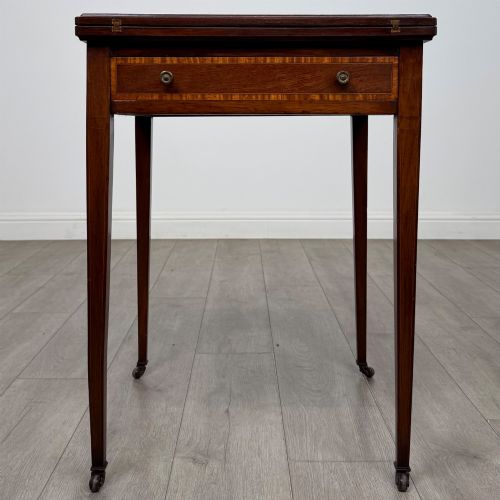
Edwardian envelope games tables generally feature lighter timbers such as mahogany or satinwood, often decorated with delicate boxwood stringing and marquetry inlay. Their legs tend to be slender and tapering, sometimes ending in spade feet.
Earlier Victorian versions often utilise heavier rosewood or walnut with more robust proportions and simpler turnings. Examining the timber choice and decorative motifs helps clarify the period of manufacture.