
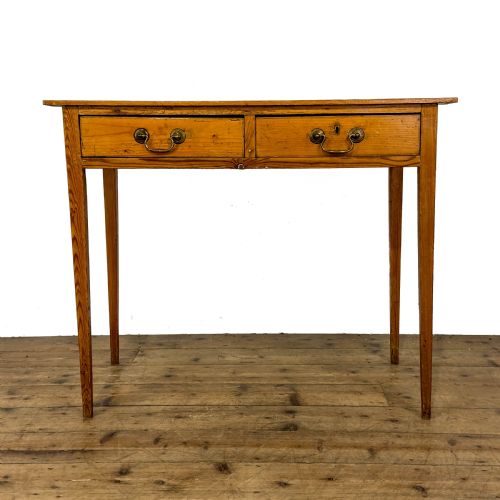


Entry Table with Drawer
An entry table with drawer is a practical narrow surface for a hallway, offering useful storage in solid timbers across Georgian, Victorian and Edwardian periods.
Entry Table with Drawer
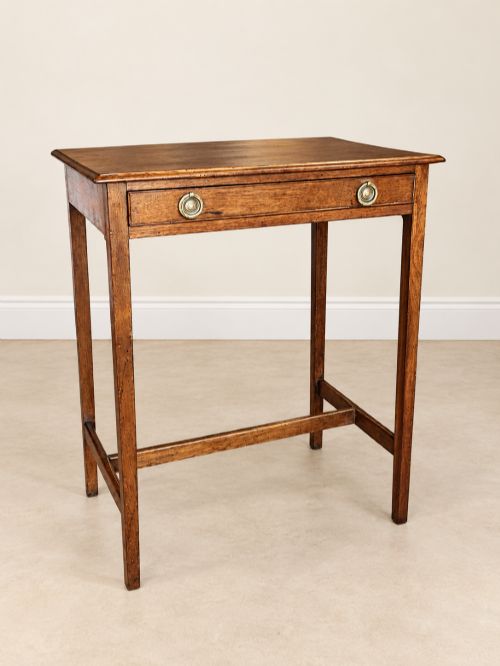
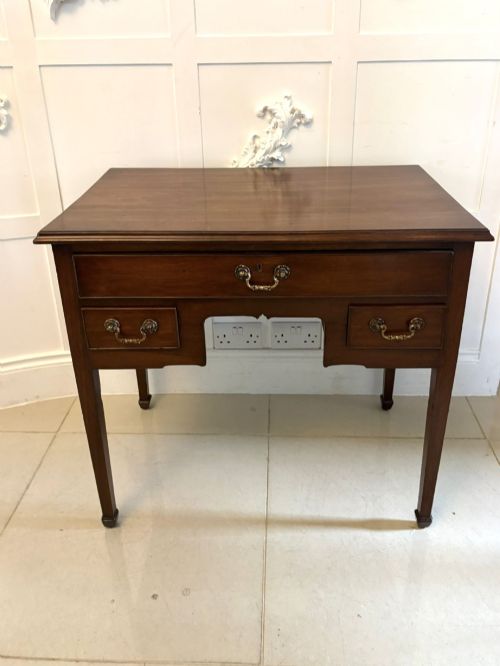
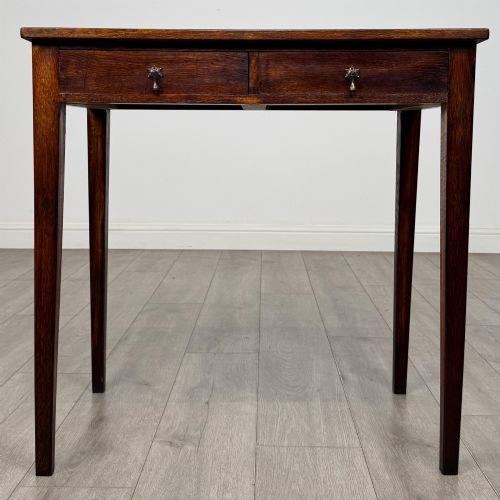
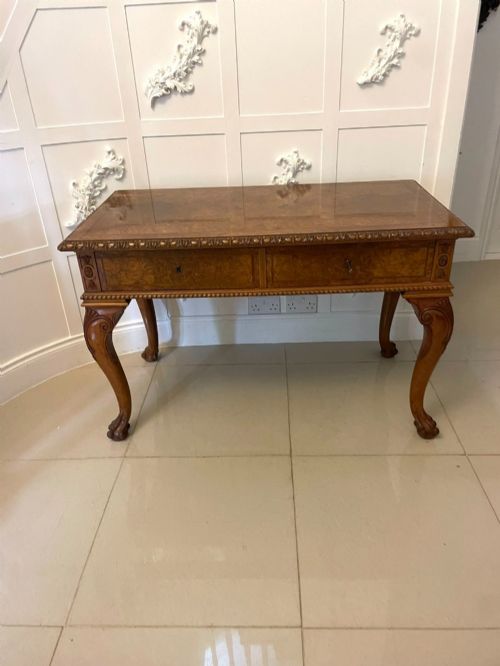
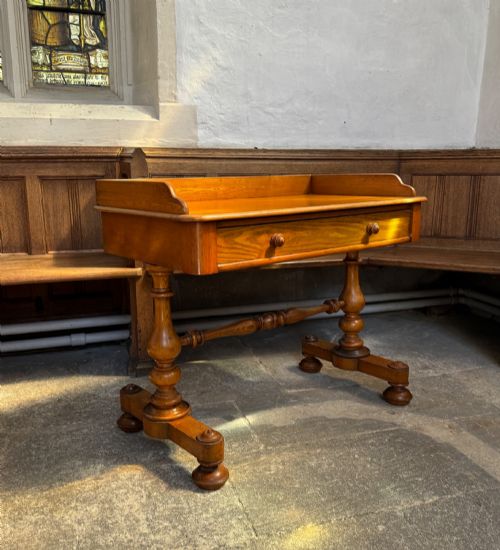
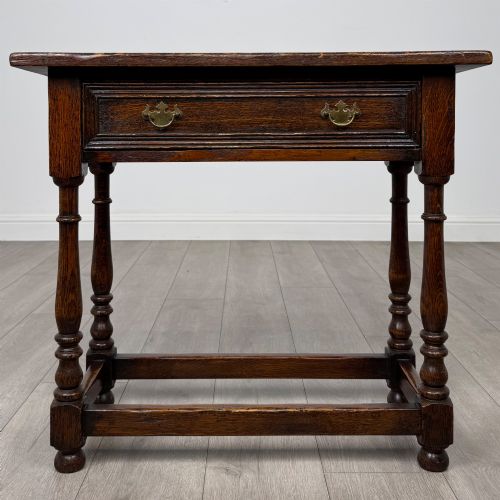
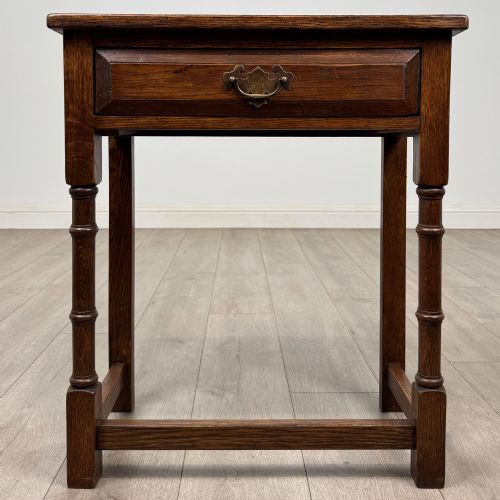
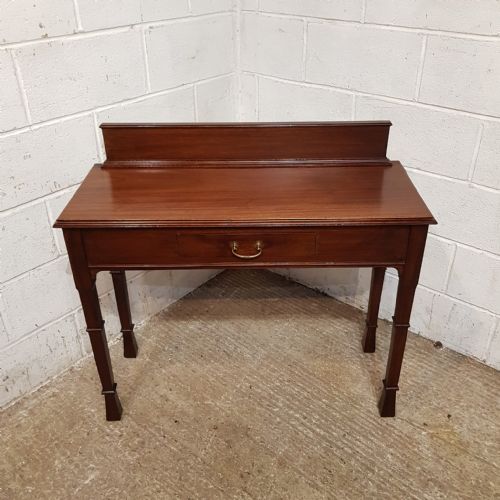
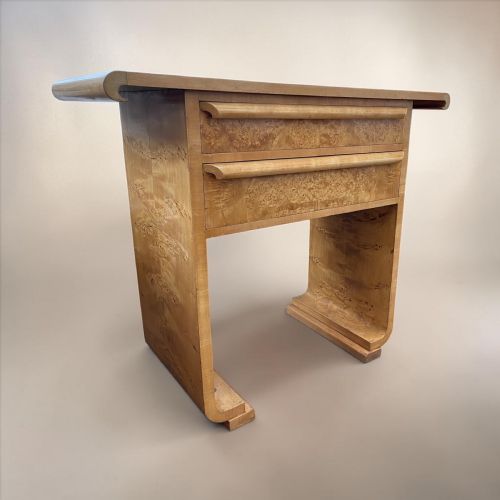
An entry table with drawer serves narrow spaces like hallways and corridors, functioning primarily as a console or side table with a built-in drawer for small essentials. The pieces found here span multiple eras, including Georgian, Victorian, Edwardian and the 1920s.
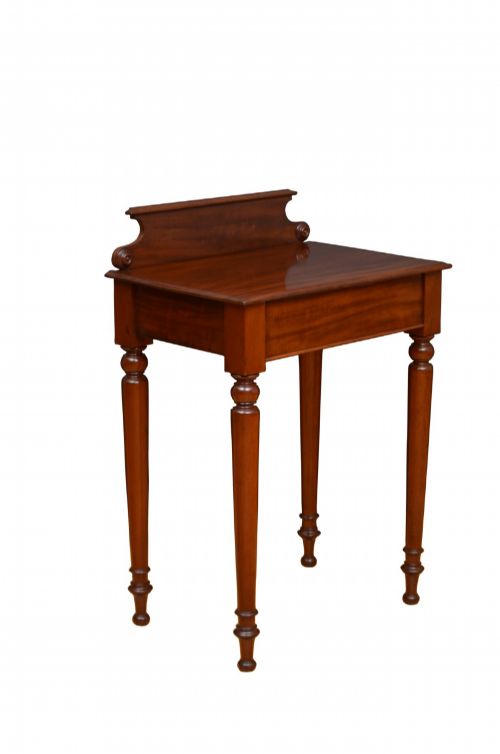
Most examples take the form of console tables, hall tables or side tables, occasionally crossing over with washstands or hall stands. They appear in traditional silhouettes reflecting styles such as Jacobean Revival, Queen Anne Revival, Arts and Crafts and Regency.
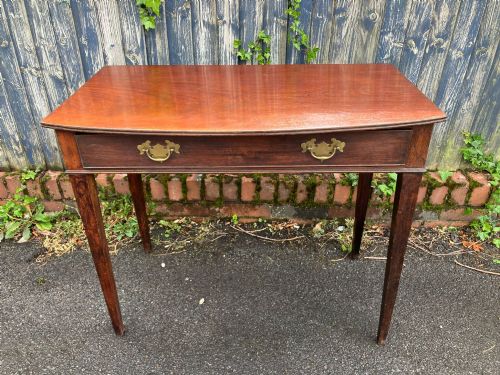
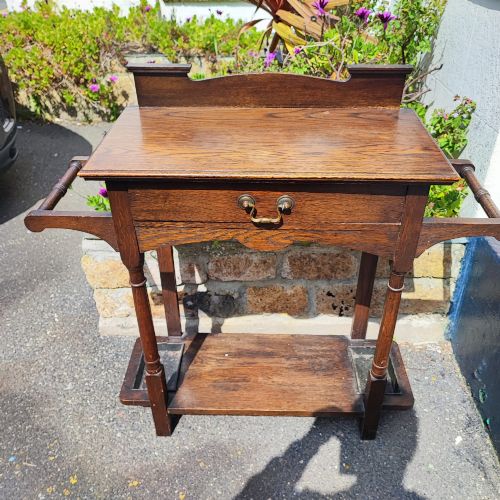
Buyers will encounter various formats on this page, from mid-eighteenth-century mahogany serving tables to compact oak side tables from the early twentieth century. Each version provides a functional surface paired with integrated drawer storage suited for narrow architectural layouts.
How they were made
Cabinetmakers constructed these tables using a range of timbers, relying heavily on mahogany and oak alongside pitch pine, burr walnut, walnut, Chinese elm and standard wood. Timber selection dictated both the weight and the grain pattern visible on the top surface.
Metal hardware such as brass handles and fittings frequently accompany the drawer construction, securing the pull mechanisms on the timber face. Joinery techniques varied according to the period, supporting the structural integrity of the console and side table forms.
Object forms span console tables, side tables, washstands and hall stands with integrated single or multiple drawers.
What varies in quality
The choice of primary timber creates a distinct difference across the range, where figured veneers like burr walnut or dense hardwoods like Georgian mahogany sit above simpler pine or mixed woods. Timber selection directly influences the visual depth and tactile finish of the piece.
Refinement in the joinery and the execution of period stylistic details, such as revival mouldings or clean console lines, distinguish standard utilitarian items from finer cabinetwork. The integrity of the drawer construction and the harmony of proportions further separate simpler workshop pieces from exceptional examples.
Druce and Co
The Entry Table with Drawer Glossary
- Console table
- A table designed to be placed against a wall, frequently supported by brackets or legs at the front. These tables provide a slim surface profile ideal for narrow entrance halls.
- Washstand
- A piece of bedroom or hallway furniture originally intended to hold a wash basin and pitcher, often equipped with a drawer or lower shelf. Many survive and function as versatile side tables.
- Serving table
- A large side table originating in the dining room during the eighteenth century, used for holding dishes before service. They often feature robust timber construction and generous drawer space.
- Hall stand
- A piece of furniture combining a table surface, drawer, mirror and coat hooks for an entranceway. They organise outdoor garments and accessories in domestic spaces.
Entry Table with Drawer: Frequently Asked Questions
What is an entry table with drawer used for?
An entry table with drawer provides a narrow surface in hallways for placing keys, post and decorative objects. The integrated drawer offers concealed storage to keep entrance areas tidy.
These tables suit narrow corridors where deeper furniture obstructs movement. Their compact footprint makes them practical for transitional spaces in the home.
How do I identify a Georgian hall table?
Georgian hall tables typically feature dense mahogany construction, restrained classical proportions and understated timber moulding. Drawer linings often utilise secondary woods like oak or pine with hand-cut joinery.
These pieces reflect eighteenth-century design standards prioritising functional elegance. Examining the underside and drawer construction helps confirm the period of manufacture.
Are oak and mahogany the only woods used?
Oak and mahogany appear frequently, but cabinetmakers also utilised pitch pine, burr walnut, walnut and Chinese elm. Each timber brings distinct grain patterns and colour variations to the furniture.
Lighter woods like pine often appear in country or Victorian pieces, while burr walnut provides highly figured decorative surfaces. Timber choice generally reflects the period and regional workshop traditions.
How do I care for a antique side table?
Protect antique wood surfaces by avoiding direct sunlight and maintaining stable room humidity. Regular dusting with a soft cloth preserves the natural polish of the timber.
Apply suitable wax occasionally to nourish older finishes without building up residue. Handle the drawer gently to protect traditional runners and joints.