


Entry Hall Mirror Console
An entry hall mirror console combines a reflective surface and a supportive table, making an immediate impression upon arrival in a home.
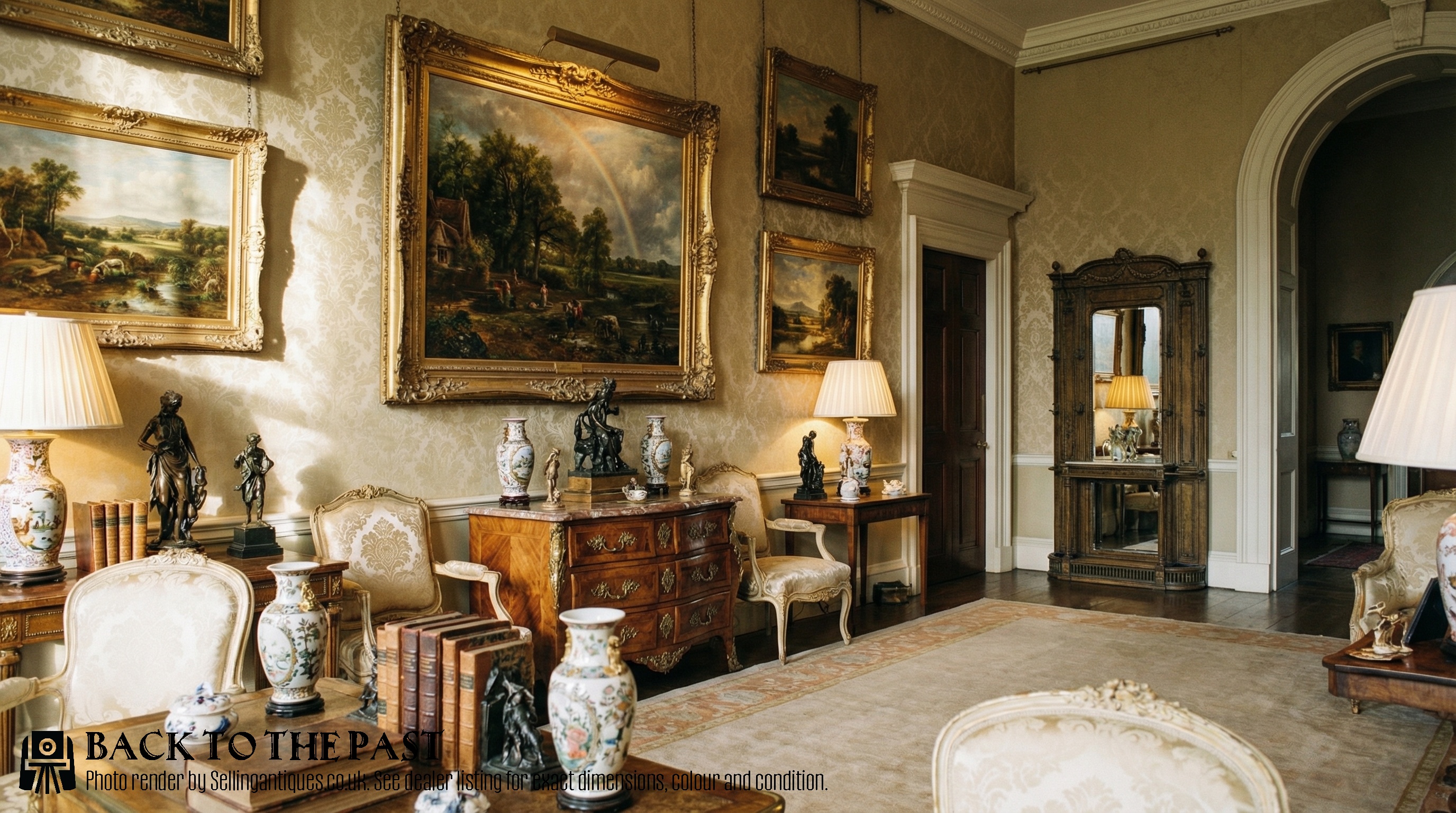
Entry Hall Mirror Console
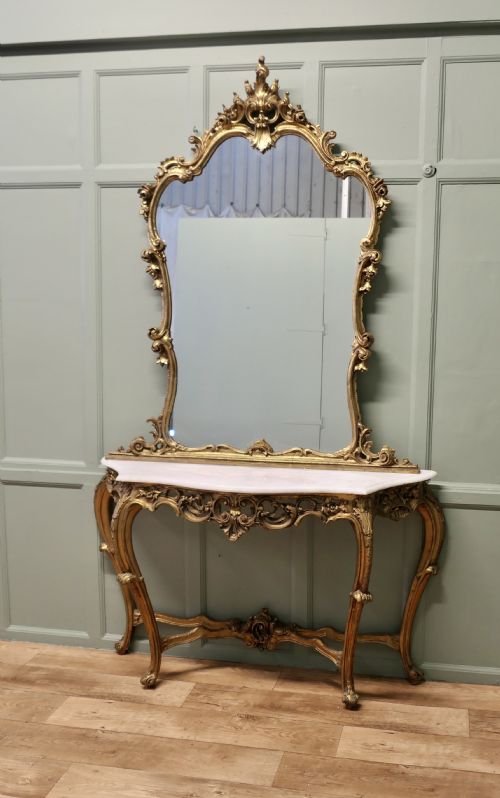
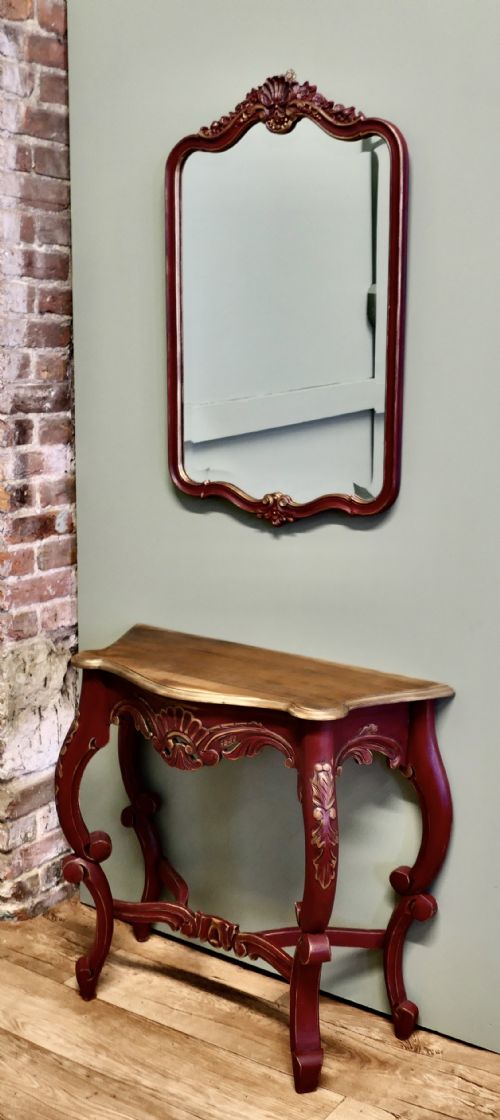
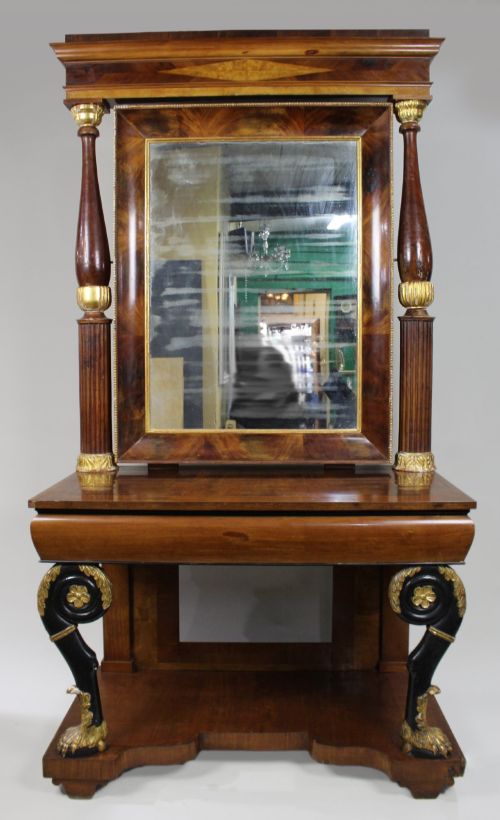
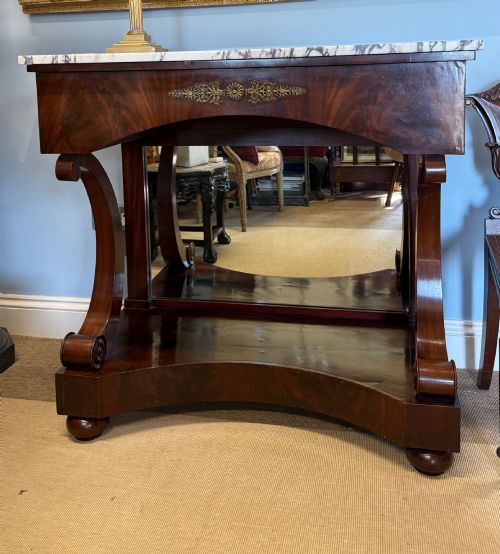
When searching for an entry hall mirror console, a buyer encounters a pairing of a table and a matching or integrated mirror designed to sit against a wall in a passage or reception space. The items on this page span several decades and centuries, ranging from the Regency period and William IV era through to Victorian examples and early twentieth-century designs.
The most common forms on this page include console tables with mirror backs, console table and mirror sets, pier mirrors, and hall stands. These pieces utilise various stylistic influences, including French Rococo, Italian Rococo Revival, Rococo Revival, and Georgian Style, reflecting diverse aesthetic preferences from different periods.
How they were made
The construction of these pieces relies heavily on timbers such as mahogany, walnut, oak, and rosewood, often paired with decorative elements in giltwood, gesso, and brass. Many tables incorporate heavy stone surfaces, utilising marble for the tabletops to provide durability and a distinct visual weight beneath the glass.
Joinery and carving techniques vary across the eras, with artisans employing hand-carving for intricate details on giltwood and wood frames. Glass and mirror plates are fitted directly into architectural wall mirrors, console backs, or hall stands, secured within frames of varying depths.
One towering eight-foot Italian specimen arrives with enough presence to make even the postman pause for reflection.
What varies in quality
The caliber of an entry hall mirror console is often evident in the crispness of the hand-carving and the choice of primary timbers, such as burr walnut or figured mahogany. Finer examples display meticulous attention to detail in the gilding and the integration between the table base and the supporting mirror structure.
The quality of the marble top and the clarity or age of the glass plate also distinguish different tiers of pieces. Greater articulation in revival styles, such as French Rococo or Neoclassical interpretations, points to skilled workshop production rather than simpler commercial output.
The Entry Hall Mirror Console Glossary
- Console table
- A table designed to be fixed against a wall, frequently supported by front legs or brackets. It often pairs directly with a wall-mounted mirror above it.
- Pier mirror
- A tall mirror specifically designed to hang on the pier, the section of wall between windows. These mirrors often sit directly above console or pier tables.
- Giltwood
- Wood that has been coated with a thin layer of gold leaf or gesso and gold paint. It appears frequently in decorative frames and console sets.
- Gesso
- A plaster-like material applied to wood surfaces as a base for painting or gilding. Artisans mould it to create raised ornamentation on frames.
- Biedermeier
- A Central European style from the nineteenth century focusing on utilitarian comfort and clean lines. It utilises domestic wood veneers without excessive ornamentation.
Entry Hall Mirror Console: Frequently Asked Questions
How do I style an entry hall mirror console?
Position the piece against a main wall in your hallway where it can catch natural light and visually expand the space. Keep the marble surface relatively clear, perhaps adding a small tray or a single decorative object.
Allow the integrated mirror to serve as the primary visual anchor for the entrance. Avoid overcrowding the console table so the timber grain and carved details remain visible.
Were these tables originally made with mirrors?
Many console tables were paired with matching pier mirrors or built with attached mirror backs from the outset. This combination created a unified decorative scheme for grand reception rooms and hallways.
Some pieces on this page represent matched sets where the table and mirror share a period style and material palette. Others feature integrated frames where the mirror structure connects directly to the table base.
How do I distinguish between Victorian and Regency styles?
Regency pieces often display restrained classical lines influenced by ancient Roman and Greek designs. The timbers used tend towards dark mahogany with subtle brass inlay.
Victorian and revival pieces generally embrace heavier ornamentation, such as the curved motifs seen in Rococo Revival items. Carved giltwood and elaborate scrollwork become much more prominent in the later nineteenth century.
Can these consoles support heavy items?
The marble tops found on many of these tables provide a solid and durable surface for everyday items. The weight capacity depends on the stability of the legs and whether the console is secured to the wall.
Tables with pier mirrors often anchor into the wall structure for added stability. It is advisable to check the specific construction of the base before placing substantial weight upon the stone.