
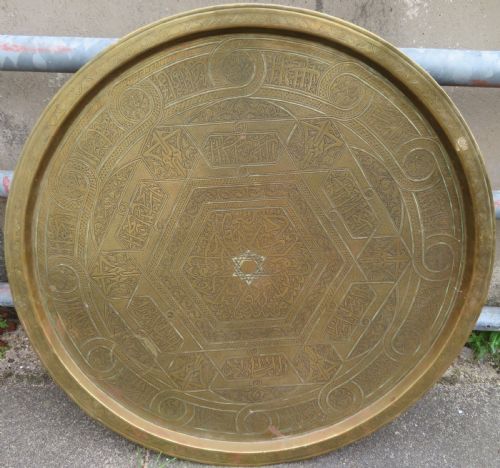

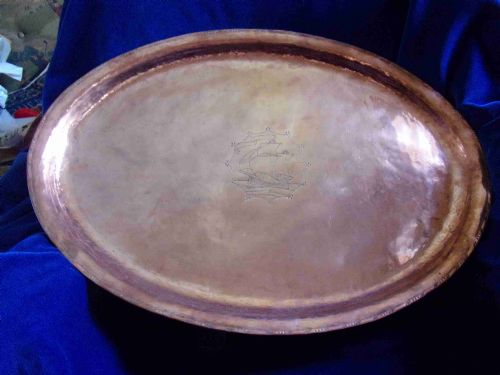

Engraved Tea Platter
An engraved tea platter brings heavy metalwork to the table, offering a broad surface for serving afternoon tea with distinct period character.
Engraved Tea Platter
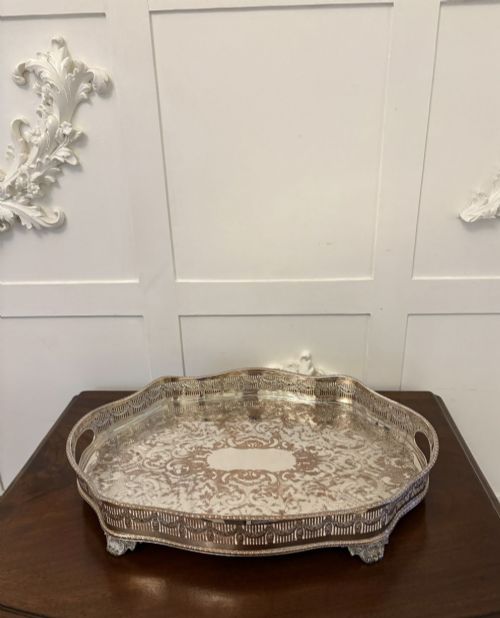
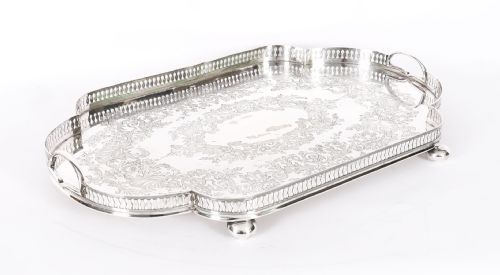
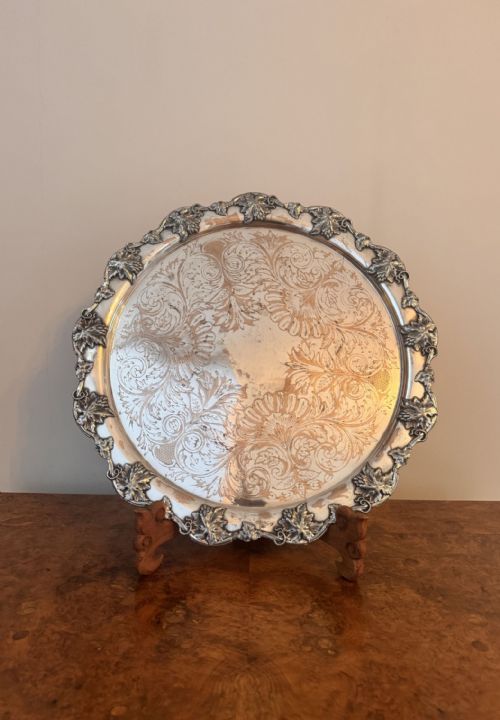
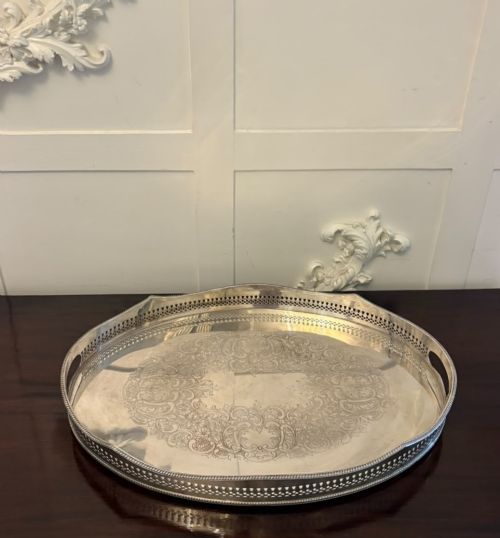
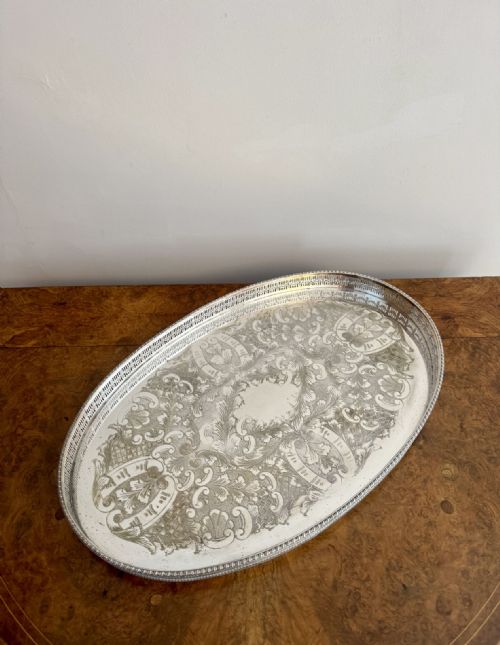
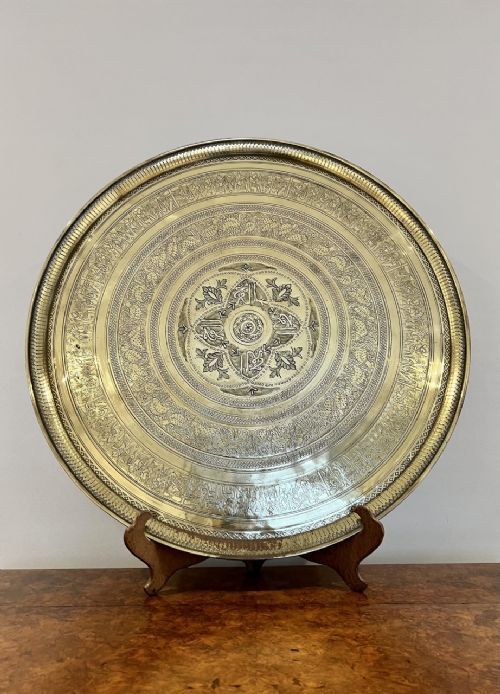
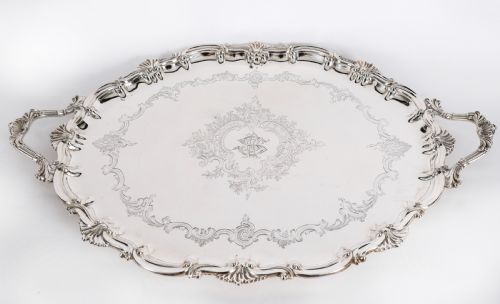
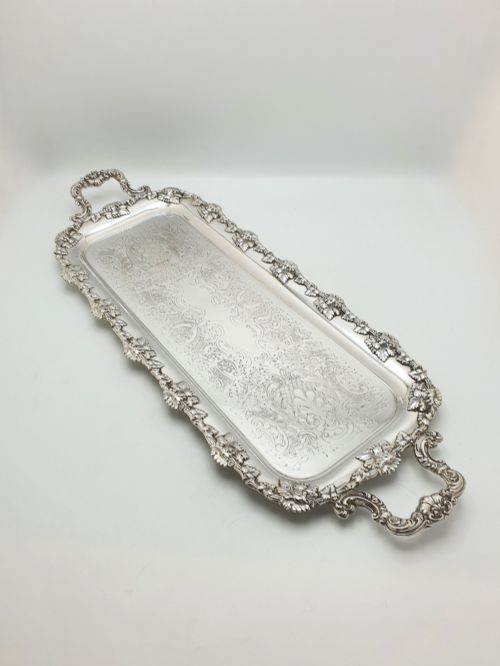
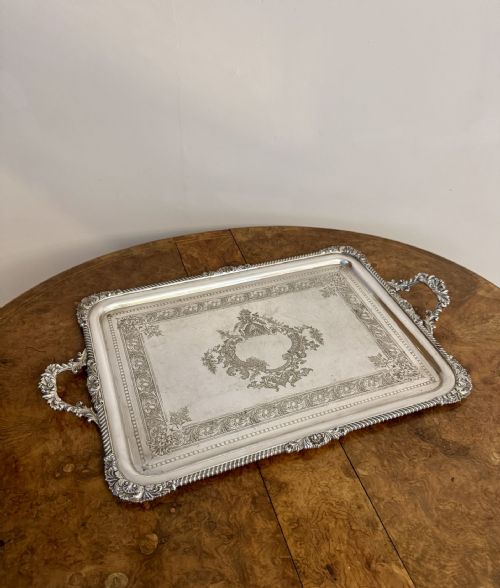
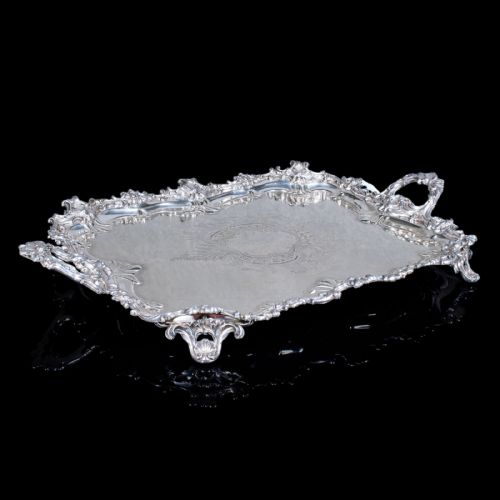
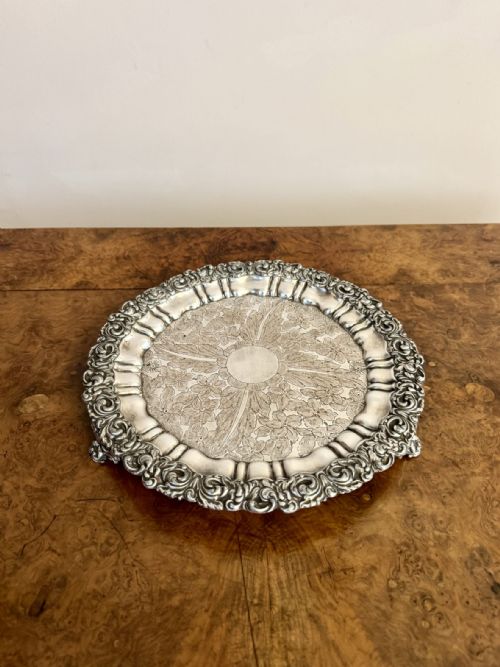
An engraved tea platter spans the Victorian, Edwardian, and nineteenth-century periods, taking circular, oval, and rectangular forms. These pieces serve afternoon tea and drinks, often featuring raised galleries or decorative handles.
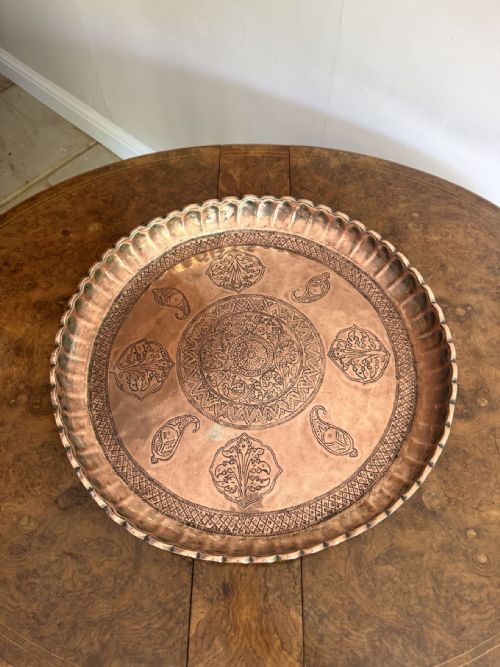
Silver plate and copper dominate the selections, alongside sterling silver and mixed metal variations. Makers construct these trays in styles ranging from standard Victorian presentation to Arts and Crafts and Anglo-Indian designs.
Materials and Technique
Silversmiths utilise silver plate, electroplated nickel silver, and solid sterling silver, often applying extensive hand engraving to the central field. Copper and brass appear in mixed metal creations and regional work.
Workshops employ techniques like piercing, reticulation, and embossing to shape borders and handles. Sheffield plating and heavy electroplating provide durable surfaces across large circular and oval formats.
Listings feature copper and silver plate across nineteenth and twentieth-century periods, including Arts and Crafts and Victorian styles.
Standards of Production
The depth and clarity of the surface engraving distinguish standard production from exceptional examples. Crisp hand-chased motifs require skilled labour that elevates the piece beyond simple machine stamping.
Substantial weight in the metal base and robust construction of handles and galleries indicate superior manufacturing. Well-executed borders, whether pierced or cast with grapevine motifs, show greater attention to detail.
James Deakin·Mappin And Webb·Thomas Bradbury And Sons·Hugh Wallis·John Harrison·Harrison Bros·Christofle·J Dixon And Sons·Fenton Russel·Elkington·Paul Storr·Lee And Wigfull·J H Potter
The Engraved Tea Platter Glossary
- Gallery tray
- A tray featuring a pierced or solid upright metal wall around its perimeter. This gallery prevents glassware and teapots from sliding off the surface during service.
- Sheffield plate
- A material made by fusing a thin sheet of sterling silver to a thicker copper base. This technique predates modern electroplating.
- EPNS
- Electroplated nickel silver, a common base material coated in a layer of pure silver. It provides the appearance of solid silver at a lower production cost.
- Reticulated
- Having an openwork pattern resembling a net or lattice. Makers achieve this effect by piercing intricate designs through the metal rim.
- Salver
- A flat serving tray typically used for drinks or calling cards. These items usually rest on small feet rather than flat bases.
Engraved Tea Platter: Frequently Asked Questions
How do I clean an antique silver plated tray?
Use a gentle silver polish and a soft cloth to remove tarnish without wearing through the plated layer. Avoid abrasive cleaners that can damage the underlying metal.
Take care around deep engraving lines where dark residue accumulates intentionally to highlight the pattern. Store the tray in a dry environment to slow future oxidation.
Can I use these trays for daily serving?
These platters function well for serving drinks or displaying objects on a table. The robust construction of silver plate and copper suits regular domestic handling.
Protect the surface from acidic foods and moisture to preserve the finish. Placing felt pads underneath prevents scratching both the tray and your furniture.
What is the difference between Old Sheffield Plate and electroplate?
Old Sheffield Plate involves mechanically fusing silver and copper sheets together before shaping the metal. This process creates a distinctive layered edge visible on older items.
Electroplate uses an electrical current to bond a thin coating of silver onto a nickel silver or base metal foundation. This later method became standard production practice toward the end of the nineteenth century.
How do I identify the period of a tray?
Examine the decorative style, maker's marks, and manufacturing techniques to establish a timeline. Victorian pieces often display heavy scrollwork, while Edwardian examples favour lighter, refined borders.
Maker's marks stamped into the reverse or rim help date the piece through historical registry records. Copper trays with hand-hammered surfaces typically point towards the Arts and Crafts movement around nineteen hundred.