
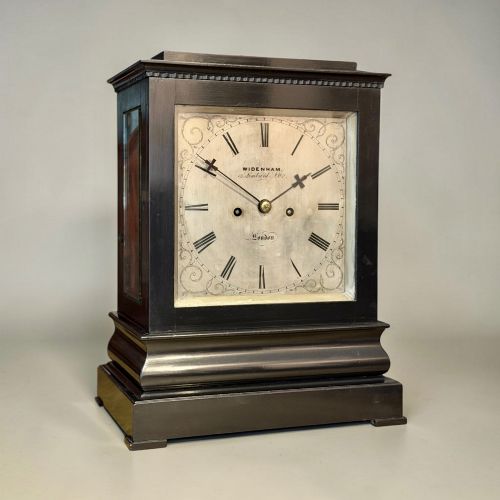
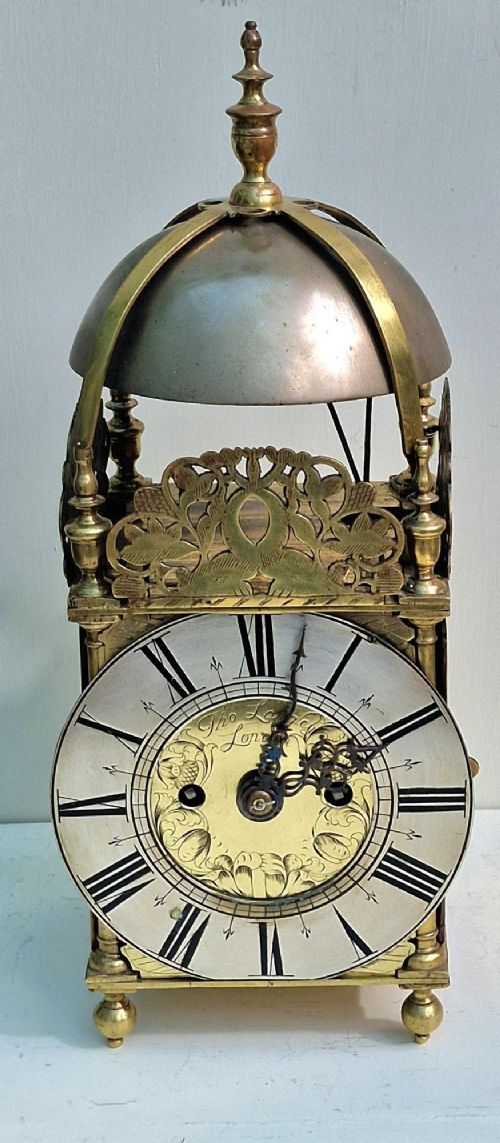
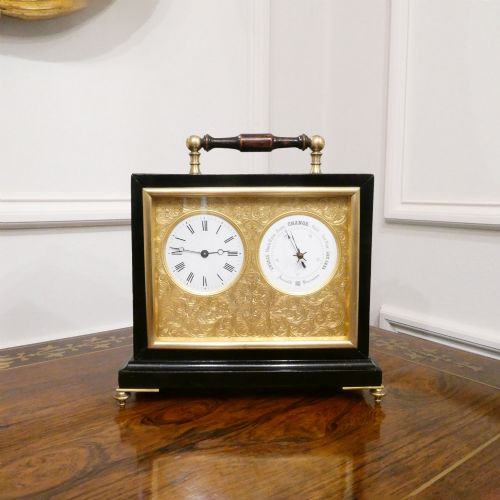
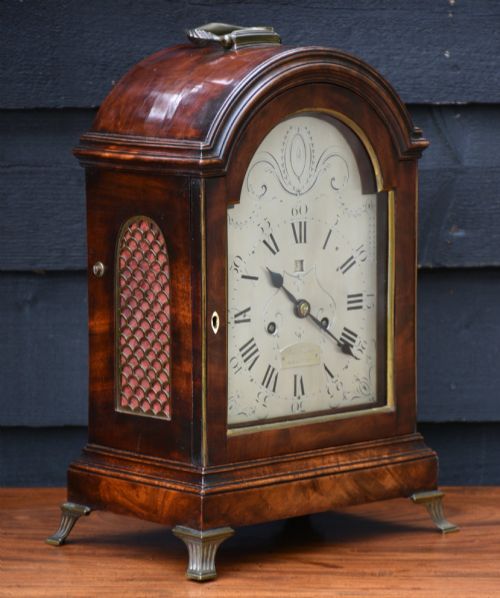






Engraved Table Clock
An engraved table clock brings together precision horology and surface decoration, spanning lantern clocks to carriage clocks across multiple centuries.
Engraved Table Clock
An engraved table clock is a portable timekeeper designed for desks, brackets, and mantelpieces, featuring surface decoration across brass, gilt metal, or silvered dials. Collectors encounter various forms here, ranging from seventeenth-century lantern clocks to nineteenth-century French carriage clocks and library clocks.
The selections span distinct historical periods including the seventeenth century, Georgian era, Victorian period, and Art Deco, housed in materials such as mahogany, ebonised wood, rosewood, and glass.
Makers and retailers represented across these pieces include noted horologists like Thomas Langley, William Clement, and Dent, alongside firms such as Mappin & Webb and Tiffany.
Materials and construction
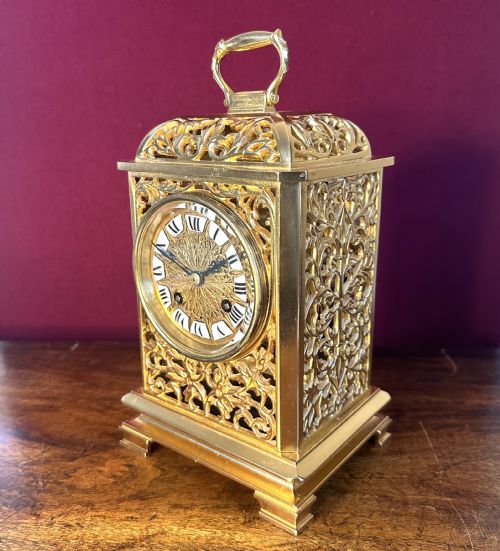
Makers utilised durable metals like brass and gilt brass for structural frames, lantern clock plates, and carriage clock cases, often pairing them with silvered metal for engraved dials and mask plates.
Woodwork relied on dense timbers such as mahogany, rosewood, and ebonised wood to build bracket clocks and library clock cases capable of housing complex fusee movements.
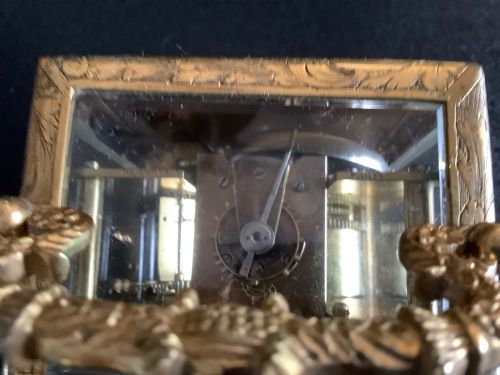
Surface ornamentation involved hand engraving directly onto brass plates, dials, and bezels, complemented by glass panels in library and carriage clocks to display the internal mechanics.
Some nineteenth-century carriage clocks arrived with their original double-ended winding keys tucked safely into velvet-lined travel cases.
Evaluating craftsmanship and execution
The refinement of an engraved table clock rests on the crispness and depth of the hand-engraving across the brass masks, dials, and backplates, where skilled execution defines the visual weight of the piece.
Mechanical sophistication separates standard timepieces from finer examples, particularly fusee movements, year-going mechanisms, and striking or repeating trains housed within robust brass and wooden cases.
Thomas Langley·Widenham of London·Mappin & Webb·James Ogden Senior·William Clement·Charles Frodsham·Drocourt·L Epee
The Engraved Table Clock Glossary
- Fusee
- A conical pulley used in spring-driven clocks to maintain an even pull on the gear train as the mainspring unwinds. This mechanism ensures consistent timekeeping throughout the running period.
- Lantern clock
- An early brass chamber clock driven by weights or springs, featuring strap-work frames and bell top ornaments. These seventeenth-century forms represent some of the earliest portable domestic timepieces.
- Carriage clock
- A small, spring-driven portable clock developed for travelling in the nineteenth century. They typically feature glass panels and a folding handle above a gilt brass case.
- Bracket clock
- A portable table clock originally designed to sit on a wall bracket to aid resonance and visibility. Eighteenth and nineteenth-century versions frequently employ wooden cases with arched tops.
- Library clock
- A substantial table clock, often with glass panels on all sides to expose the mechanical movement. These pieces usually incorporate single or double fusee movements.
Engraved Table Clock: Frequently Asked Questions
What is a fusee movement?
A fusee movement uses a conical pulley connected to the mainspring by a cord or chain. This clever device equalises the diminishing power of the spring as it unwinds.
Clocks with fusee movements generally offer superior timekeeping consistency compared to standard barrel spring mechanisms found in later mass-produced clocks.
How do I date a brass lantern clock?
Dating a lantern clock involves examining the construction of the brass frame, the style of the engraved dial, and the signature of the maker. Seventeenth-century examples often feature iron top spikes, posted frame construction, and pierced fretwork above the dial.
Later Victorian and twentieth-century revivals typically display heavier castings, machine-assisted engraving, and modern screw fittings rather than pinned or wedged joints.
Where were carriage clocks placed?
Carriage clocks were originally built for travellers during the nineteenth century, designed to be packed into leather cases for journeys by coach or rail. Their spring-driven movements and robust gilt brass frames allowed them to keep accurate time while in motion.
As travel became more comfortable, these clocks transitioned into domestic settings, sitting on mantelpieces, desks, and bedside tables.