


Engraved Silver Serviette Rings
Engraved silver serviette rings are formal dining accessories that bring personal distinction and tactile weight to the table.
Engraved Silver Serviette Rings
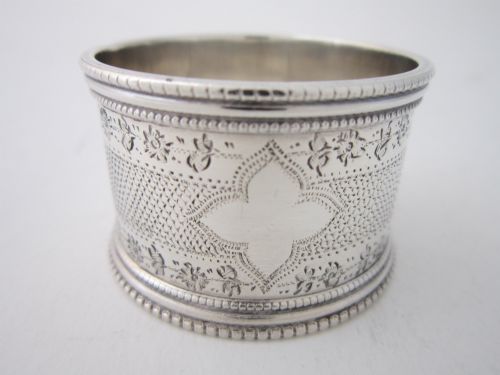
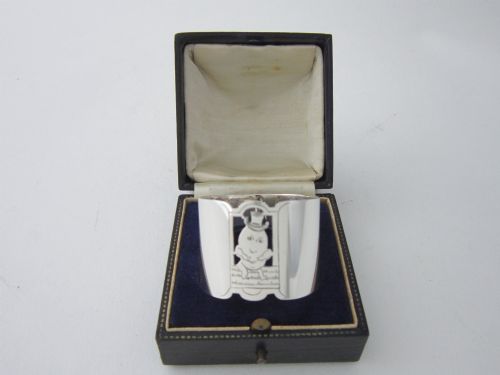
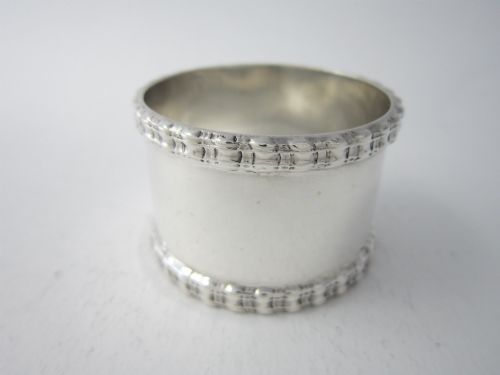
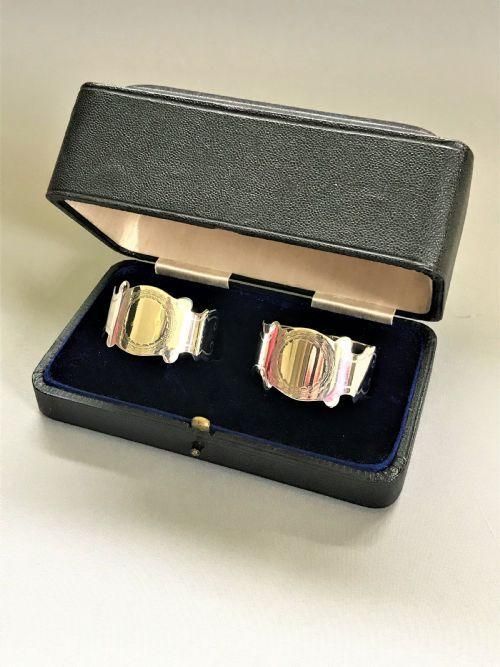
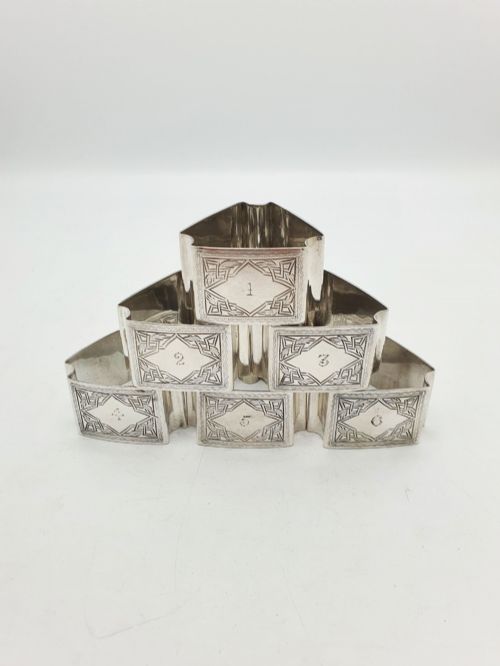
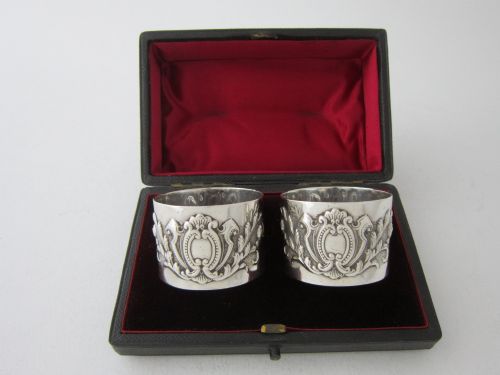
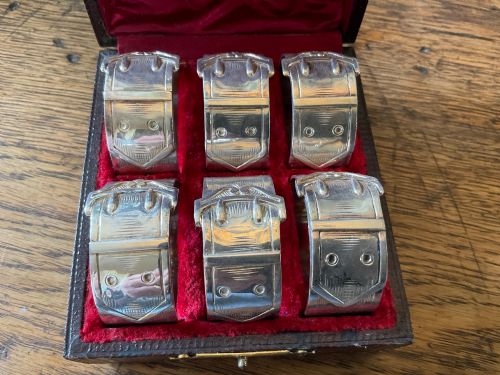
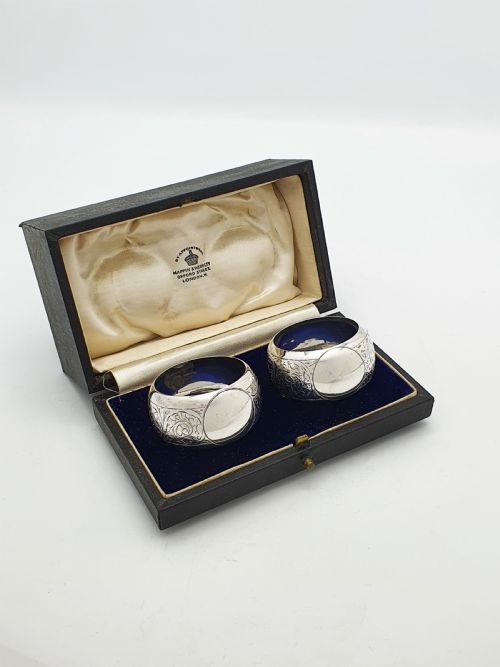
Engraved silver serviette rings appear primarily as Victorian, Edwardian, and George V examples, often featuring detailed hand-chiselled decoration. These table accessories range from single heavy specimens to matched pairs and cased sets of six, sometimes modelled as belt buckles or fitted with silk and velvet linings.
The form spans decades of British dining custom, running from the late nineteenth century through the Art Deco period into mid-century design. Collectors encounter individual pieces alongside fitted boxes lined in leatherette, preserving the domestic rituals of past generations.
Distinctions in quality
The calibre of an engraved silver serviette ring rests upon the crispness of the hand-engraving and the gauge of the metal used. Heavier pieces maintain structural integrity and sharp detail, whereas lighter items show softer lines from wear and polishing.
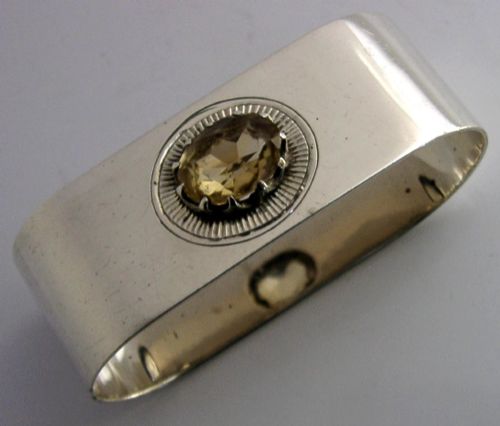
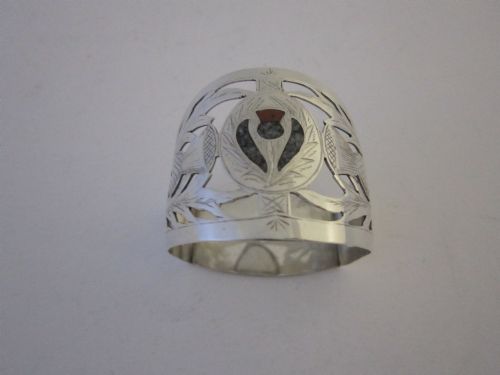
Design complexity also separates standard productions from exceptional work, particularly when unusual motifs or integrated hardstones like agate and citrine are involved. Complete cased sets retaining their original fabric linings command distinct consideration compared to stray single examples.
Dining etiquette once required guests to recognise their own engraved band at every meal, turning simple silver hoops into miniature territorial markers.
Mappin And Webb·Henry Wilkinson
The Engraved Silver Serviette Rings Glossary
- Sterling silver
- An alloy containing 92.5 percent pure silver and 7.5 percent other metals, usually copper. This standard provides the durability required for everyday dining items.
- Silver plate
- A base metal foundation coated with a thin layer of pure silver. This technique offered a more accessible option for large dining sets.
- Serviette ring
- An alternative term for a napkin ring, used widely in British households to identify individual table markers. These bands keep table linen organised between meals.
- Aesthetic design
- A late nineteenth-century artistic movement favouring asymmetry and stylised natural motifs over strict classical symmetry. Pieces bearing this style display distinct linear ornamentation.
Engraved Silver Serviette Rings: Frequently Asked Questions
How were serviette rings used?
These rings marked individual places at the family dining table, ensuring each person's linen napkin remained identifiable between meals.
They appeared for breakfast, luncheon, and evening dining, often forming part of elaborate matched sets housed in fitted presentation boxes.
How do I clean silver napkin rings?
Regular dusting with a soft microfibre cloth prevents tarnish build-up on the engraved surfaces without removing the underlying metal.
Avoid harsh chemical dips, particularly on pieces set with delicate stones like agate or citrine, or those retaining original velvet and silk box linings.
Can I date a serviette ring from its marks?
British silver bears hallmarks that indicate the assay office, standard of metal, and a specific year letter code. These stamped symbols provide precise chronological context for Victorian and Edwardian examples.
Why are some rings sold in sets?
Many Edwardian and Victorian households purchased matching groups of four, six, or more to maintain a uniform appearance across the dining table.
Sets often survive inside their original leatherette cases, complete with fitted velvet and silk interiors designed to protect the silver.