



Engraved Silver Jewellery Box
An engraved silver jewellery box is a personal receptacle that stores small valuables, uniting chased metalwork with the tactile presence of a period vanity.
Engraved Silver Jewellery Box
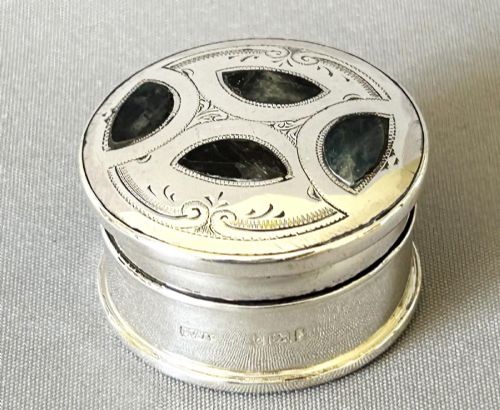
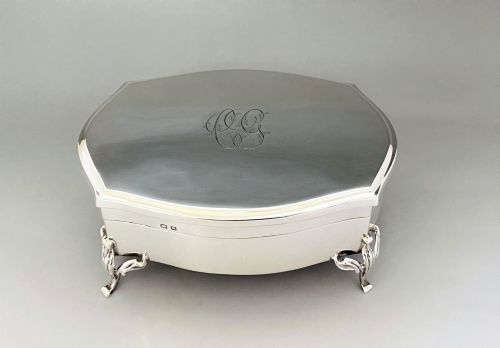
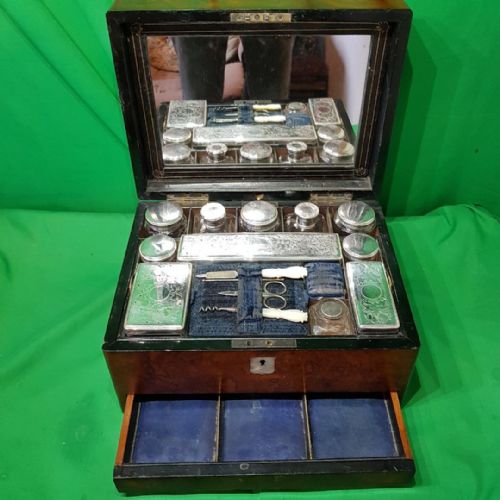
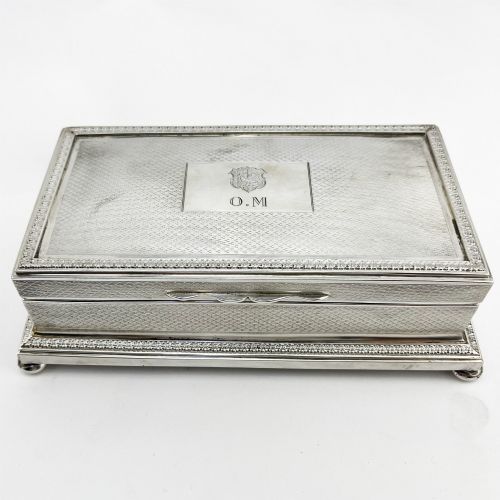
An engraved silver jewellery box encompasses compact trinket holders, velvet-lined caskets and travelling vanity cases shaped across the Victorian, Edwardian and early twentieth-century periods. These pieces serve to safeguard rings, brooches and keepsakes while displaying the decorative tastes of past workshops.
The versions most frequently encountered on this page date from the nineteenth century up to the 1920s, showing styles that range from restrained Edwardian forms to ornate Victorian Rococo revival motifs.
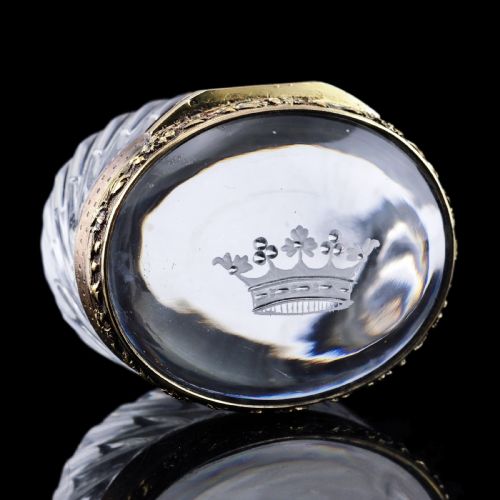
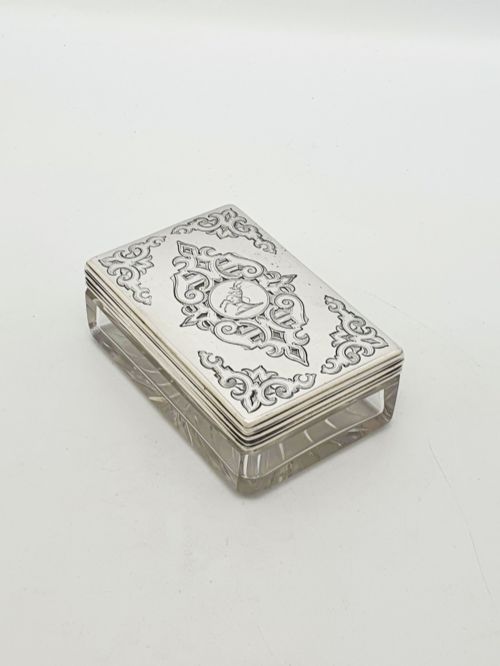
Alongside dedicated jewellery caskets, related forms such as cut glass trinket boxes with silver mounts and exported silver dragon boxes appear within the selection, sharing the defining characteristic of precious metalwork.
Materials and construction
Makers formed the body of an engraved silver jewellery box using sterling silver or silver-gilt, frequently mounting the metal over robust wooden carcases of burr walnut or coromandel. Surface decoration relies on hand engraving and engine turning to cut patterns into the metal.
Interiors typically utilise fitted linings of velvet or silk to cushion contents, while companion pieces incorporate cut crystal or cut glass bodies secured with hinged silver lids.
Engraved Silver Jewellery Box Retail Price Guide 2026
Typical asking prices for engraved silver jewellery box among the pieces listed under this phrase on Sellingantiques today, from the lower quarter to the upper quarter. They describe what is for sale here now, not the wider market.
Listings span the nineteenth and twentieth centuries, uniting sterling silver with unexpected core materials like burr walnut, coromandel, and cut crystal.
Judging quality in silver boxes
The distinction between standard containers and superior examples rests on the crispness of the hand engraving and the structural integrity of the silver hinges and mounts. Finer pieces display deep, sharply defined chased patterns rather than shallow machine stamping.
Material pairing also dictates worth, where substantial sterling silver mounts combined with high-grade secondary elements like burr walnut or heavy cut crystal elevate the piece above simpler constructions.
Wang Hing and Company·J. Gloster Ltd.·Asprey
The Engraved Silver Jewellery Box Glossary
- Sterling silver
- A silver alloy containing 92.5 percent pure silver by mass, with the remainder consisting of other metals. This standard provides the durable foundation for the majority of antique boxes.
- Engine turning
- A mechanical technique used to engrave precise, intricate geometric patterns into metal surfaces. It creates a textured, light-reflecting background on box lids.
- Silver-gilt
- Sterling silver that has been coated with a thin layer of gold on its surface. This treatment imparts a warm, golden tone to the interior or exterior of the metalwork.
- Trinket box
- A small container designed specifically for holding minor valuables such as rings, pins and small brooches. These items frequently feature plush internal textile linings.
- Cut glass
- Glass shaped and patterned by cutting facets into the surface using a wheel. It adds weight and sparkle when combined with silver mounts on dressing table pieces.
Engraved Silver Jewellery Box: Frequently Asked Questions
How do I clean an engraved silver jewellery box?
Maintenance requires a soft cloth and a specialised silver polish, applied gently to avoid wearing down the shallow engraved lines. Harsh chemical dips should be avoided, particularly on pieces with velvet linings or delicate crystal bodies.
Care must be taken around hinges and maker marks to prevent residue accumulation. Regular, light dusting preserves the natural patina without stripping the historic character of the metal.
Were these boxes used exclusively for jewellery?
While primarily designed for rings and precious ornaments, many period containers served broader vanity and desktop functions. Examples frequently accommodated collar studs, cufflinks, stamps or small folding dressing instruments.
Travelling versions often integrated fitted glass bottles and trays to hold cosmetic liquids or powders during transit. The internal layout generally reflects the specific grooming habits of the original owner.
How can I tell an Edwardian box from a Victorian one?
Victorian pieces often display heavier, more exuberant ornamentation such as floral scrollwork, Rococo Revival curves or deep embossing. These items prioritize ornate visual weight and complex surface texturing.
Edwardian examples tend to exhibit lighter proportions, drawing on cleaner lines or restrained Arts and Crafts influences. The shift reflects changing aesthetic preferences toward understated elegance as the twentieth century approached.
What is the purpose of engine turning on the lid?
Engine turning creates a repetitive geometric pattern that both decorates the surface and masks minor handling marks. The mechanical precision contrasts with hand-chased floral borders.
This decorative technique provides a durable finish that resists daily wear better than smooth, polished silver sheets. It remains a hallmark of mid-to-late nineteenth-century functional metalwork.
How do I care for the velvet interior lining?
Historic textile linings require dry maintenance, utilising a soft brush or low-suction vacuum attachment to remove dust. Moisture must be kept away from the fabric to prevent staining or the deterioration of the underlying adhesive.
Original linings are part of the object's history and should be retained where possible, even if they show minor signs of age. Professional textile conservation is recommended for severely damaged interiors.