



Engraved Silver Ice Bucket
An engraved silver ice bucket brings substantial weight and crisp heraldry to a dining table.
Engraved Silver Ice Bucket
An engraved silver ice bucket encompasses grand wine coolers, champagne buckets and champagne bowls designed to chill bottles at table. These vessels emerge across distinct eras, spanning eighteenth-century forms through to nineteen-thirties pieces, rendered in substantial proportions.
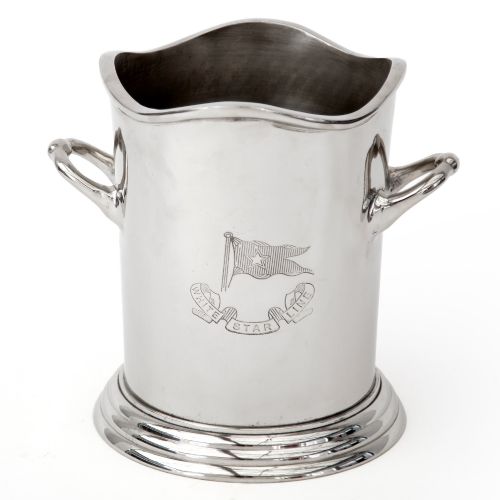
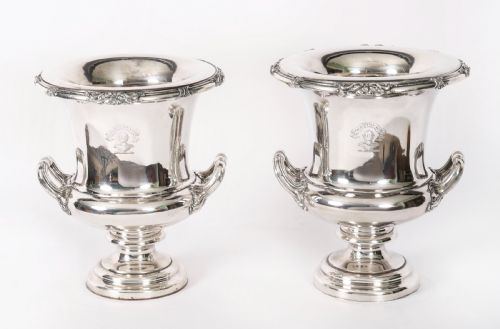
The pieces meeting this description draw heavily from Georgian, Regency and Victorian periods, alongside later maritime and twentieth-century examples. Many carry significant armorial crests or coats of arms, reflecting their original commissions for domestic dining rooms or institutional messes.
Materials and methods of construction
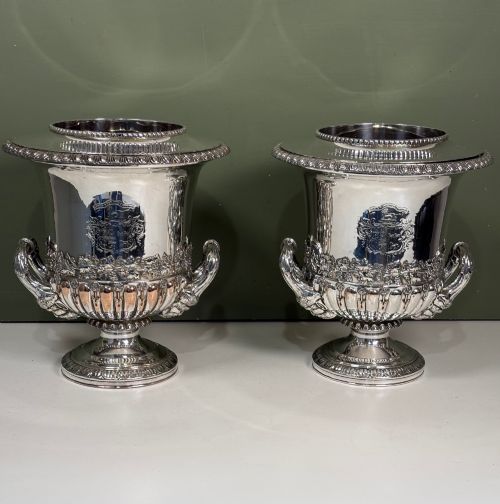
The construction relies heavily on Old Sheffield plate, silver plate and solid silver, often built over copper bases that peek through where centuries of polishing have worn the surface. Manufacturers utilised early electroplated nickel silver and Sheffield plate techniques to achieve thick, durable metallic layers.
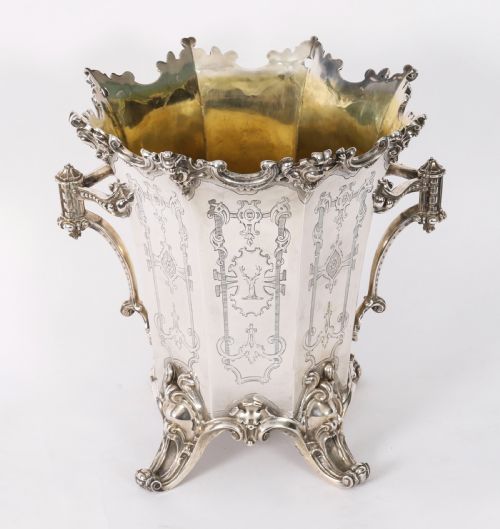
Engraving is executed by hand, cutting crisp lines into the metal to form intricate crests, coats of arms and commemorative inscriptions such as military regimental titles. Handles, rims and bases frequently feature cast applied decoration, soldering heavy cast mounts onto the main body of the bucket.
Engraved Silver Ice Bucket Retail Price Guide 2026
Typical asking prices for engraved silver ice bucket among the pieces listed under this phrase on Sellingantiques today, from the lower quarter to the upper quarter. They describe what is for sale here now, not the wider market.
Listings feature Old Sheffield Plate, copper, silver, and electroplated nickel silver across Georgian, Regency, and Art Deco styles.
Judging quality in these vessels
Quality rests upon the crispness of the hand engraving and the integrity of the base metal underneath the plating. Finer examples display deeply struck armorials and substantial gauge metal that resists denting.
The balance of applied cast mounts, such as handles and rim borders, dictates the visual success of the piece. Superior items maintain smooth, even silver surfaces where the underlying copper remains hidden except at natural high points.
Elkington, Mason & Co·Matthew Boulton & Co·Elkington
The Engraved Silver Ice Bucket Glossary
- Old Sheffield Plate
- A method of fusing a thin sheet of silver to a thicker copper core by heat and pressure. This technique produces a rich metallic lustre distinct from later electroplating.
- Coat of Arms
- A heraldic design engraved onto the body of the bucket. These markings denote the original commissioning family or institution.
- Electroplated Nickel Silver
- A base metal alloy of copper, nickel and zinc coated with a layer of pure silver using an electrical current. This process became widespread during the nineteenth century.
- Wine Cooler
- A large vessel designed to hold bottles submerged in ice or water. These objects form the direct functional ancestor to the modern ice bucket.
Engraved Silver Ice Bucket: Frequently Asked Questions
How were these ice buckets originally used?
These vessels sat upon sideboards or directly on dining tables filled with ice or cold water to chill wine and champagne during formal meals.
Servants would draw bottles from the chilled water as required throughout the course of the evening.
Can I use an old silver bucket for modern dining?
These sturdy vessels handle modern ice cubes and wine bottles just as well as they did centuries ago.
Routine care requires only gentle washing with warm soapy water and soft cloths to preserve the historic metal.
What is the difference between Old Sheffield plate and silver plate?
Old Sheffield plate involves physically fusing silver and copper sheets together before rolling them into usable metal.
Later silver plate uses electricity to bond a thin coating of silver onto a base metal alloy.
Why do some buckets feature crests?
Armorial crests and coats of arms were engraved to display the lineage and status of the original owner.
Institutions and military regiments similarly marked their plate to establish property ownership within mess halls.