


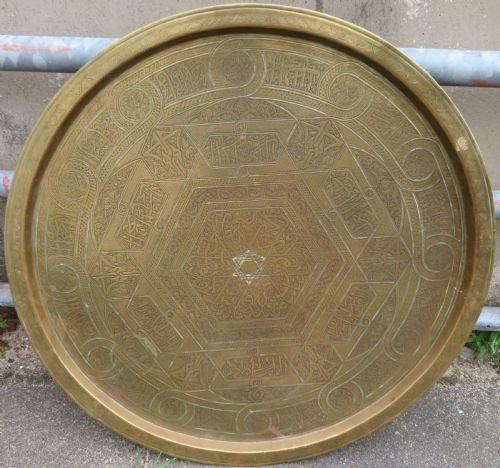


Engraved Metal Wall Charger
An engraved metal wall charger brings immediate texture to a room, offering deep chased details and historic metalwork that command attention.
Engraved Metal Wall Charger
An engraved metal wall charger serves as a striking decorative focal point, drawing the eye with intricate surface patterns and substantial proportions. When you search for an engraved metal wall charger, you encounter large platters, dishes, and shields designed primarily for display rather than dining.
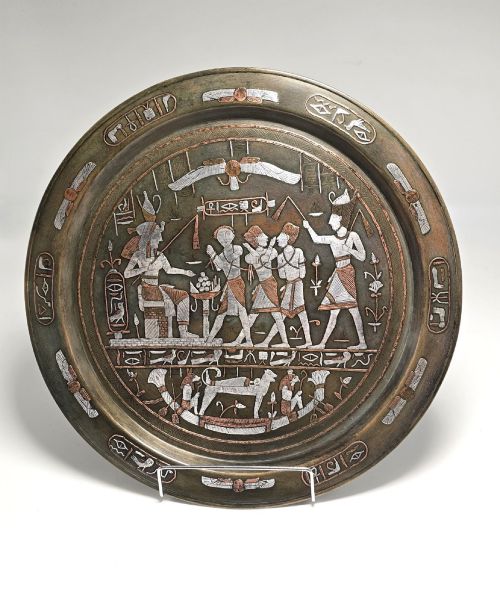
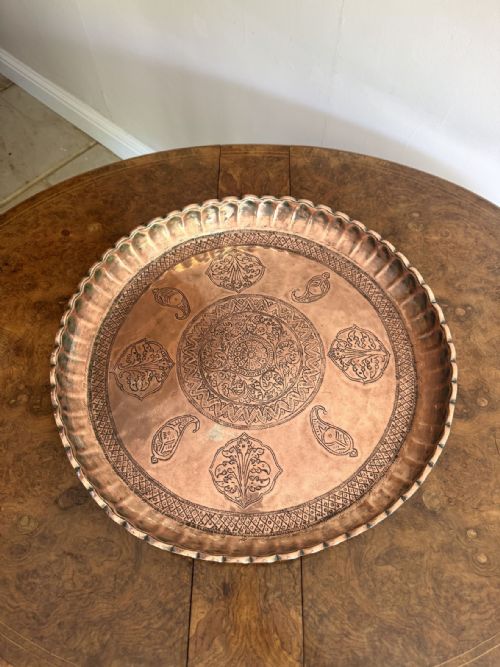
The pieces listed here span periods from the seventeenth century through to the early twentieth century. You will frequently find brass, copper, and mixed metal examples alongside silver-inlaid patinated copper dishes and pewter broad rim chargers.
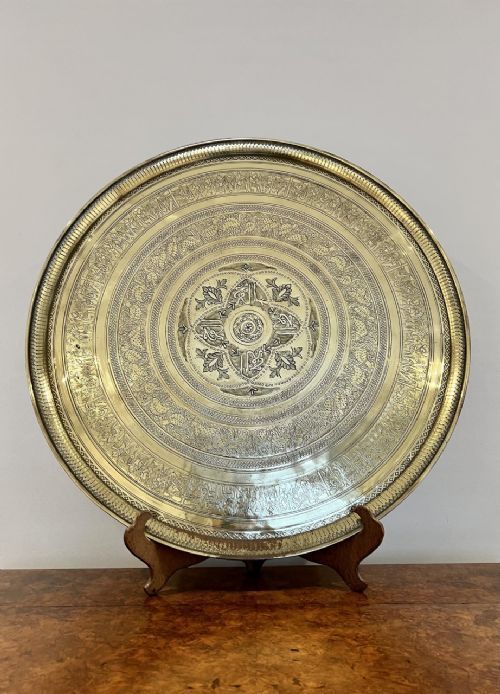
Stylistic origins are diverse, encompassing Anglo-Indian, Persian, Middle Eastern, Mamluk Revival, and Charles II designs. These regional aesthetics bring distinct decorative motifs, from foliate engraving to complex geometric and Islamic brass work.
How they were made
Maker's hands shaped these heavy chargers using brass, copper, pewter, and mixed metals, often combining base metals with silver inlay. The metal was beaten, hammered, and cast into large circular forms before receiving extensive surface decoration.
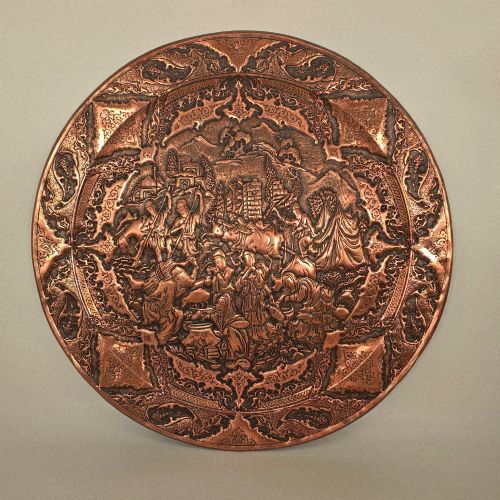
Engraving and repoussé work define the surface ornamentation across these items. Craftsmen cut deep lines into the metal and pushed the material from the reverse to create raised relief details, such as foliate patterns and family crests.
Engraved Metal Wall Charger Retail Price Guide 2026
Typical asking prices for engraved metal wall charger among the pieces listed under this phrase on Sellingantiques today, from the lower quarter to the upper quarter. They describe what is for sale here now, not the wider market.
Listings feature brass, copper, pewter, and mixed metal chargers spanning the seventeenth century to the twentieth century.
What varies in quality
The depth and crispness of the engraved and repoussé work separate standard decorative items from exceptional pieces. Sharply defined motifs and confident hand-chased lines demonstrate superior artisanal skill.
Material composition and weight also indicate quality, with heavier gauge brass, copper, and broad rim pewter chargers showing greater structural integrity. The integration of mixed metals or silver inlay further elevates the sophistication of the piece.
Lawrence Dyer
The Engraved Metal Wall Charger Glossary
- Charger
- A large decorative plate or platter traditionally used for display on walls or sideboards rather than everyday dining. These heavy metal pieces provide a broad surface for detailed engraving.
- Repoussé
- A metalworking technique where the artisan hammers the design from the reverse side to form raised relief patterns on the front. This method adds striking dimensional depth to copper and brass chargers.
- Patinated copper
- Copper that has developed a natural or treated surface darkening and tonal variation over time. This aged finish highlights the engraved lines and adds visual warmth.
- Broad rim
- A wide, flat outer border characteristic of seventeenth-century pewter chargers. This substantial framing element often bears crests, hallmarks, or engraved inscriptions.
Engraved Metal Wall Charger: Frequently Asked Questions
Were these chargers used for dining originally?
Many seventeenth-century pewter chargers served functional roles at elite dining tables before transitioning to decorative wall displays. Large brass and copper platters often functioned as presentation pieces or ceremonial vessels.
Over time, owners repurposed these ornate metal objects as wall hangings to showcase their intricate engraved designs and heraldic crests.
How do I clean an antique engraved metal charger?
Dust the surface gently with a soft, dry cloth to preserve the historic patina and age-related coloration. Avoid harsh chemical polishes that strip away original patinated copper or soften crisp engraving.
Consult a metal conservation specialist if deep cleaning becomes necessary, particularly on pieces featuring silver inlay or delicate mixed metal surfaces.
How do I distinguish Charles II pewter from later pieces?
Charles II pewter chargers typically feature very broad rims and substantial weight, often stamped with period hallmarks or maker marks. Seventeenth-century examples frequently display engraved family crests or ownership ciphers.
In contrast, later nineteenth and twentieth-century metalwork exhibits different manufacturing tolerances and regional styles, such as Mamluk Revival or Anglo-Indian motifs.