


Engraved Lead Glass Rummer
An engraved lead glass rummer is a sturdy drinking vessel from the Georgian and Regency periods, prized for its generous bowl and historic wheel-engraved decoration.
Engraved Lead Glass Rummer
An engraved lead glass rummer is a substantive drinking glass that appears across the Georgian, Regency, and nineteenth-century periods. These pieces serve as functional glassware designed for hearty toasts, ale, gin, or wine.
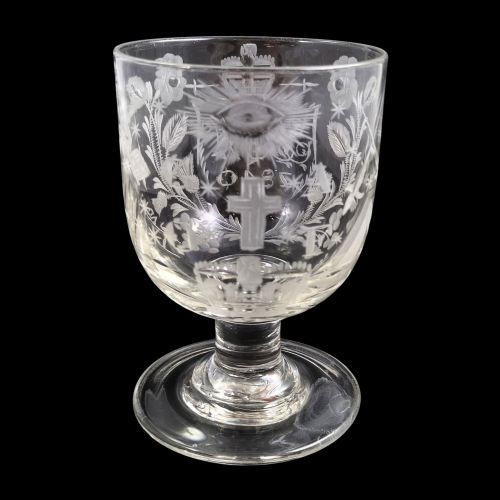
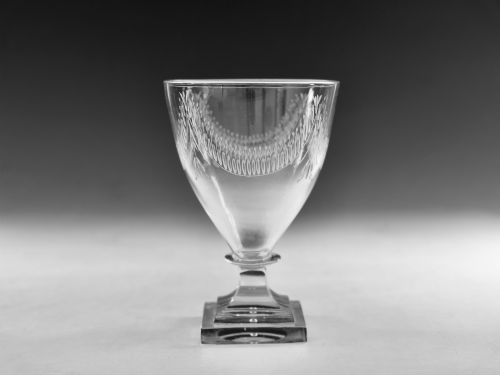
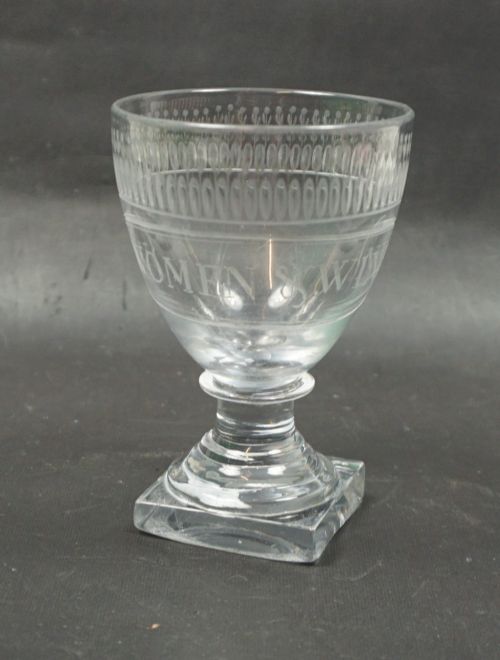
The specimens found here include large ovoid bowls, square bases, and lemon squeezer feet. Many feature specific motifs such as hops and barley, Sunderland Bridge, Masonic symbols, ships, and hunting scenes.
Makers fashioned these drinking vessels in England, occasionally pinpointed to regions like the North-East. Collectors encounter both modest domestic examples and large table rummers intended for communal or celebratory use.
How they were made
Artisans produced these vessels using hand-blown lead glass, clear glass, lead crystal, and flint glass. The heavy metal content of the glass gave the material its characteristic weight, clarity, and ring.
Craftsmen shaped the bowls while hot, attaching plain stems and various foot types, including square lemon squeezer bases formed in moulds. Subsequent decoration relied on wheel-engraving and etching to apply detailed imagery directly to the surface.
One delightfully specific rummer bears the hopeful, forward-thinking toast Women and Wine, etched in England around seventeen-eighty.
What varies in quality
Quality rests upon the proportion and metal of the glass itself, alongside the skill of the engraving. Heavier, clearer crystal displays greater brilliance and substance in the hand.
The execution of the wheel-engraving distinguishes individual pieces, moving from naive domestic work to confident, intricate armorials and detailed topographical scenes like Sunderland Bridge. The stability and symmetry of the foot and stem also determine the overall refinement of the vessel.
The Engraved Lead Glass Rummer Glossary
- Rummer
- A heavy drinking glass with a large bowl, popular in Britain during the eighteenth and nineteenth centuries. These vessels typically held ale, wine, or spirits.
- Lemon squeezer foot
- A square glass base pressed into a ribbed shape resembling a traditional kitchen lemon squeezer. This form is characteristic of the Georgian period.
- Wheel-engraving
- A technique where a glassblower holds the vessel against small rotating copper or stone wheels fed with an abrasive slurry. This process creates detailed motifs and textured lines.
- Flint glass
- An early British term for high-quality lead glass containing potash and lead oxide. It offered superior clarity and weight compared to standard soda glass.
- Ovoid bowl
- An egg-shaped drinking vessel profile commonly found on Georgian rummers. This curve helps concentrate the aromas of the drink.
Engraved Lead Glass Rummer: Frequently Asked Questions
What is an engraved lead glass rummer?
An engraved lead glass rummer is a heavy drinking vessel produced in England during the Georgian and Regency eras. These glasses feature hand-blown forms decorated with wheel-engraved motifs.
They functioned as substantial tableware for ale, wine, and spirits. Today, collectors value their historic designs and material weight.
How do I date a Georgian rummer?
Dating relies on stylistic clues such as bowl shapes, stem formations, and foot types. Pieces with square lemon squeezer bases typically point towards the late eighteenth or early nineteenth centuries.
Engraved subject matter also aids attribution. Topographical scenes, Masonic symbols, and agricultural motifs often reflect the prevailing tastes of the Georgian and Regency periods.
What were rummers used for?
Rummers served as robust drinking vessels for everyday and celebratory use in homes and taverns. Their large capacities suited servings of ale, punch, and wine.
Specialist examples commemorated events, associations, or toasts, such as the Women and Wine inscription or armorial commissions.
How should I display antique glass?
Display these pieces in stable cabinets away from direct sunlight and heavy foot traffic. Ensuring adequate shelf support protects their heavy lead crystal weight.
Hand washing in lukewarm water with mild detergent preserves the surface. Avoid sudden temperature changes to protect the historic glass.