



Engraved Glass Wine Carafe
An engraved glass wine carafe brings together period craftsmanship and functional serving, offering collectors a striking table vessel from the nineteenth and twentieth centuries.
Engraved Glass Wine Carafe
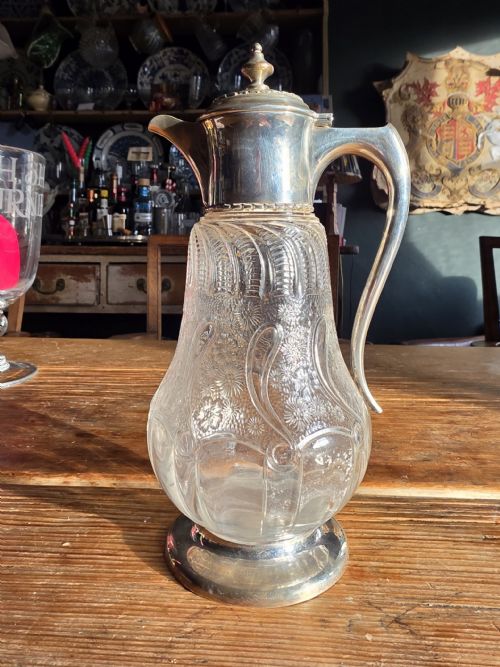
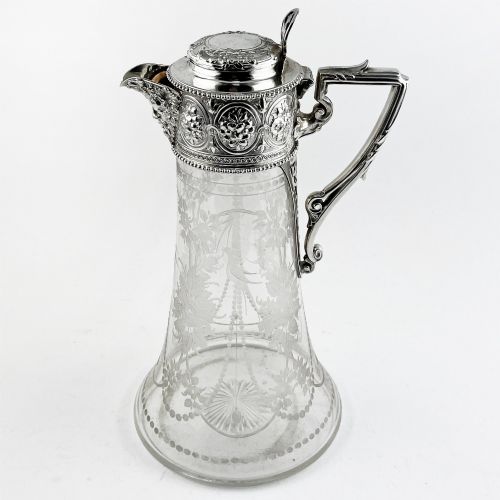
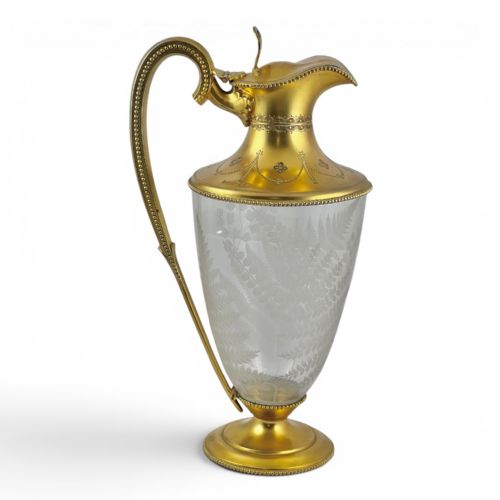
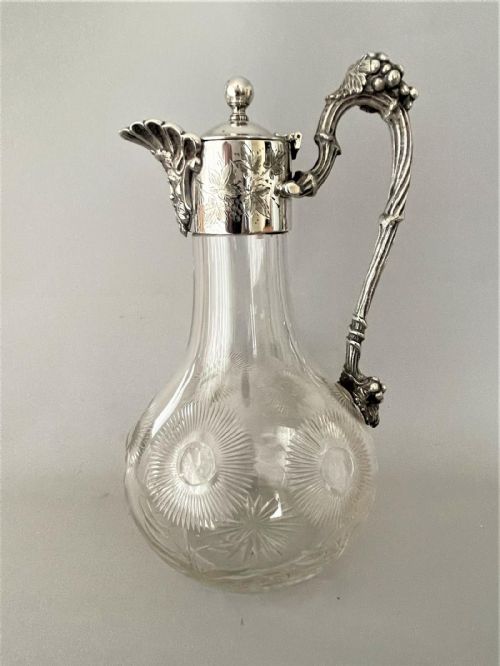
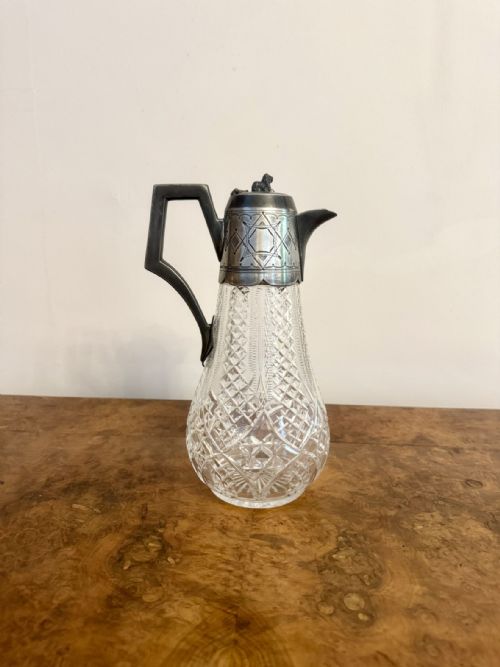
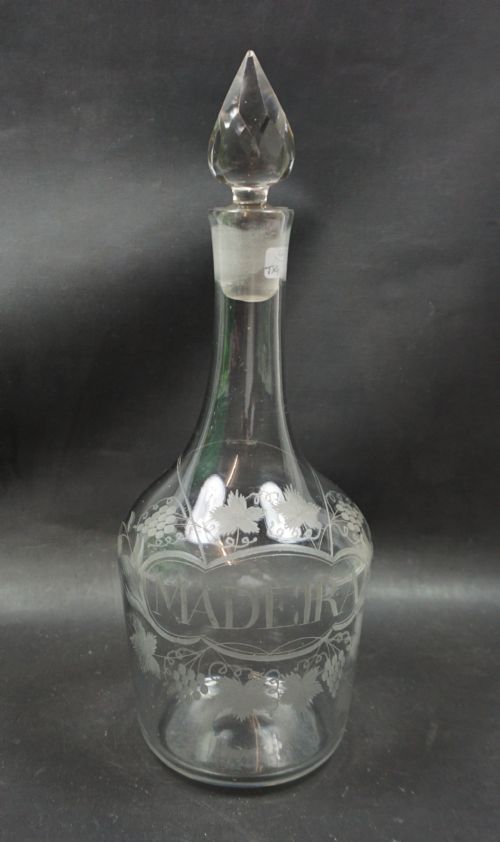
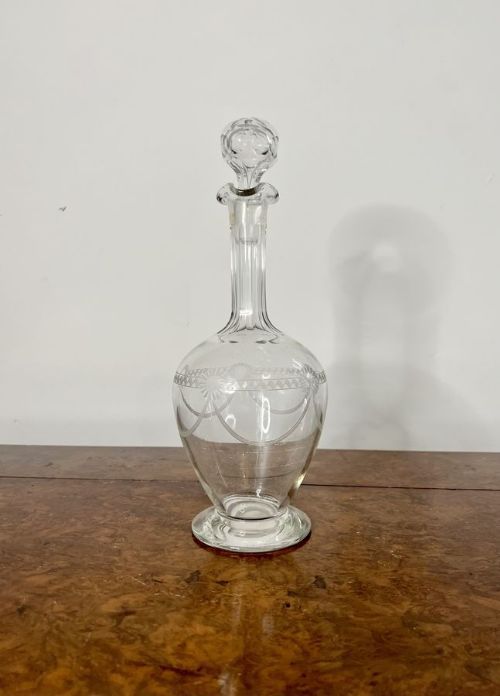
When you search for an engraved glass wine carafe, you encounter vessels spanning the Georgian, Victorian, and Edwardian eras alongside later twentieth-century examples. The selection includes claret jugs, serving ewers, and spirit decanters paired with glass bodies.
Victorian pieces dominate the range, often combining cut glass or coloured crystal with silver plate and sterling silver mounts. Earlier Georgian examples and later twentieth-century carafes appear less frequently but share the same fundamental purpose of serving wine.
Materials and technique
Makers utilised lead glass, crystal, and ruby or amethyst coloured glass, shaping vessels through blowing and cutting. Surfaces received detailed hand engraving, frequently displaying floral motifs or fruiting vines.
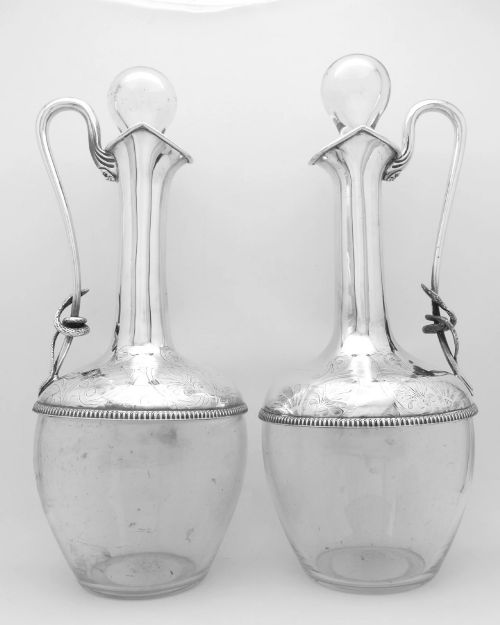
Mounts incorporate sterling silver, silver gilt, silver plate, and wrought iron collars or handles. Makers often added cast details such as Bacchus masks or serpent handles to the metalwork.
Silver-plated mounts appear more frequently than solid sterling silver collars on these carafes.
Assessing execution
Quality rests upon the crispness of the glass cutting and the depth of the wheel engraving. Vessels with sharply rendered floral or vine patterns display superior artisan skill compared to softer, shallower work.
The weight and clarity of the crystal or coloured glass distinguish finer examples, as do the proportion and solid gauge of the silver or silver-plated mounts.
William Comyns·Asprey and Co. Ltd·William Davenport·Orfèvrerie Produx Saint Hilaire
The Engraved Glass Wine Carafe Glossary
- Claret jug
- A specialised pouring vessel designed for red wine, usually featuring a hinged metal lid and a handle. These pieces often combine clear cut glass with sterling silver or silver-plated mounts.
- Lead glass
- Glass containing metallic oxide to increase brilliance, weight, and clarity. This material allows for deeper and sharper wheel engraving.
- Silver plate
- A base metal foundation coated with a thin layer of silver. This technique provided the decorative mounts on many Victorian serving vessels without the cost of solid silver.
- Ewer
- A large jug with a wide spout and a curved handle, used for serving wine or water. Victorian examples frequently utilised coloured or ruby glass bodies.
- Shaft and globe
- A specific bottle shape featuring a long slender neck above a spherical body. This form appears commonly in Victorian decanters.
Engraved Glass Wine Carafe: Frequently Asked Questions
How do I date an engraved glass wine carafe?
Dating relies on combining stylistic clues from the glass cutting with hallmarks on the silver mounts where present. Victorian examples often show distinct rococo revival or floral motifs, whereas Georgian pieces tend towards simpler shoulder shapes.
Examining the pontil mark on the base also helps establish the manufacturing period. Hand-blown pieces from the nineteenth century typically display a polished or rough pontil scar.
Can I use these carafes for serving wine today?
These vessels were originally made for serving wine and remain functional for modern dining tables. Hand washing ensures the antique glass and silver mounts remain protected from harsh detergents.
Avoiding thermal shock prevents damage to nineteenth-century lead glass. Lukewarm water and mild soap are sufficient for cleaning internal residues.
Why are some glass carafes coloured?
Coloured glass, including ruby, cranberry, and amethyst hues, gained immense popularity during the Victorian era. Adding specific metal oxides to the molten batch created these rich tones.
Coloured carafes shielded certain wines from direct light while adding decorative visual contrast to the dining table. Engraving through the coloured outer layer revealed the clear glass beneath.