



Silver Topped Wine Pitcher
A silver topped wine pitcher brings tactile weight and bright reflection to a dining table.
Silver Topped Wine Pitcher
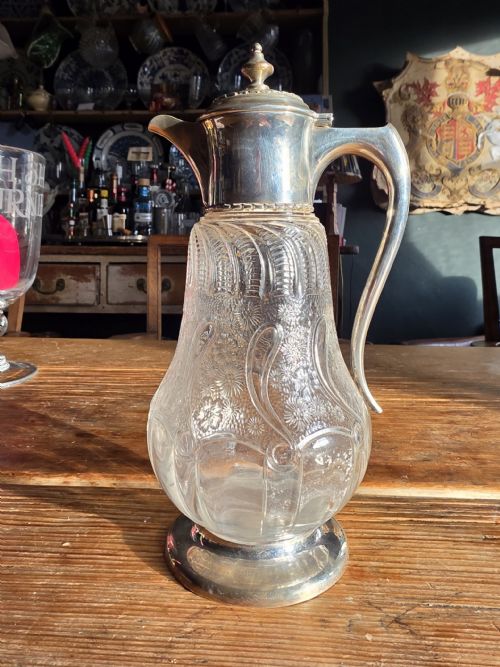
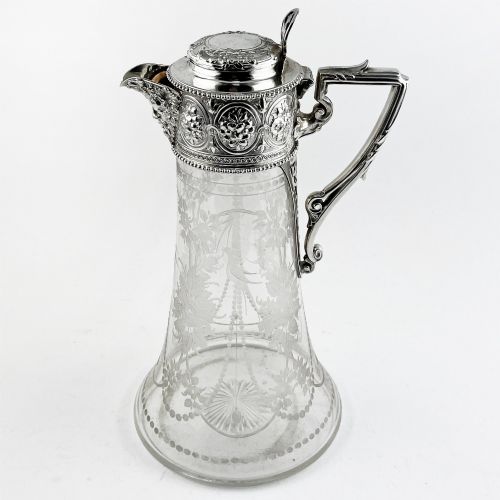
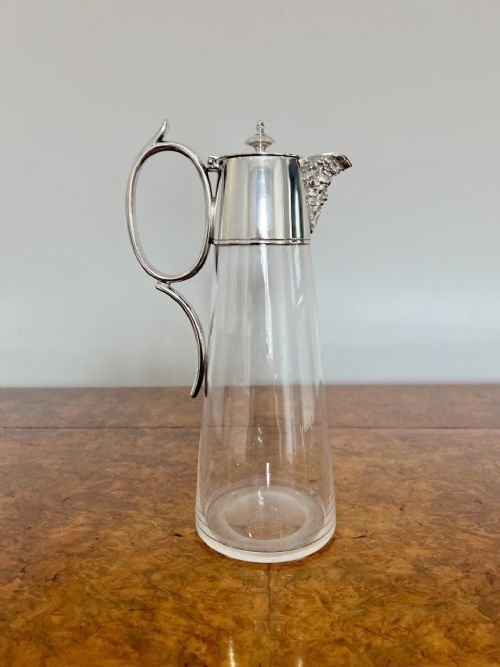
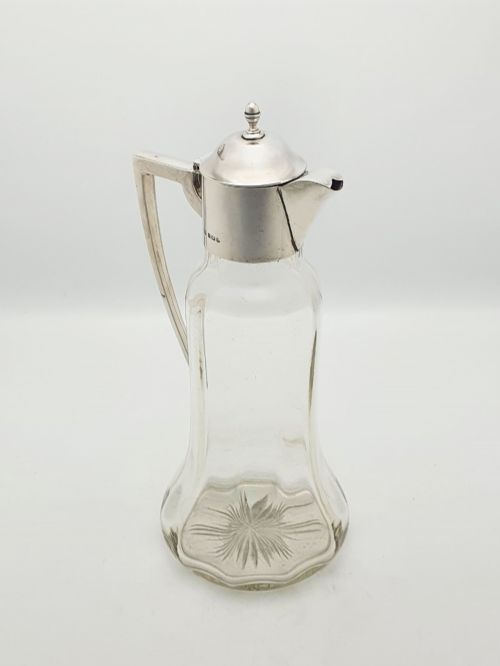
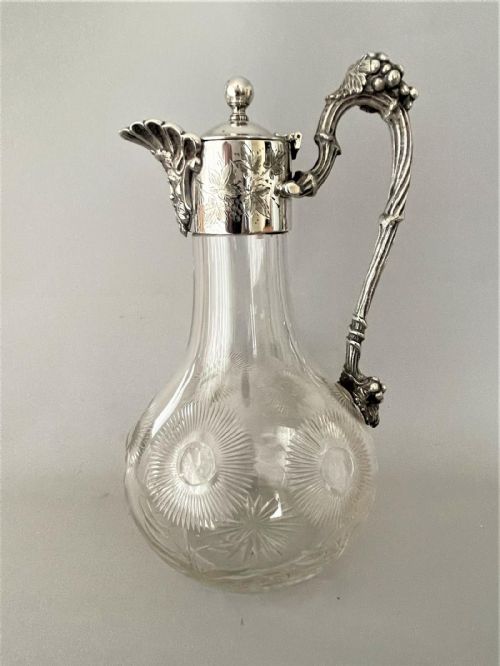
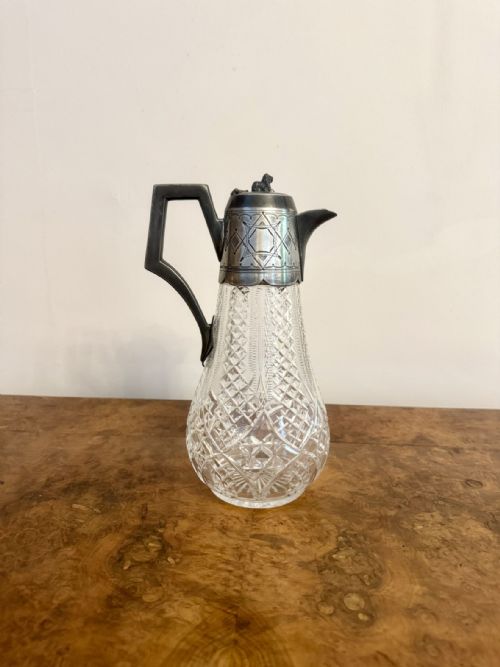
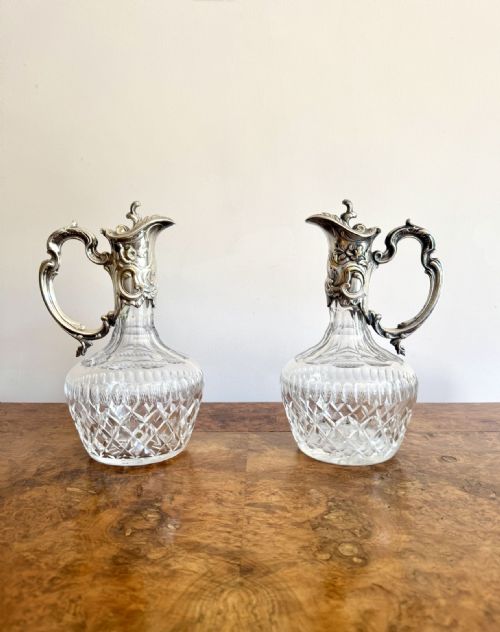
When you search for a silver topped wine pitcher, you are looking at vessels designed for serving wine, most commonly encountered here as claret jugs and decanters. These pieces combine a glass body with metal mounts, spanning periods from the Victorian era through the Edwardian years and into the twentieth century.
The versions most likely to meet you on this page pair cut glass, cut crystal, or etched glass bodies with silver plate or sterling silver mounts and hinged covers. Forms range from tall ewers and tapering jugs to smaller whisky noggins and decanters.
Originating primarily within British silver and glass traditions, these vessels reflect the dining habits of the nineteenth and twentieth centuries. The selection here brings together various styles, including Victorian Rococo Revival, Arts and Crafts, and Mid-Century Modern designs.
How they were made
Makers formed the transparent bodies of these vessels using glass-blowing and crystal-cutting techniques, often applying wheel-cut patterns, etching, or cranberry tinting to the material. The resulting glass or crystal provided a heavy, refractive container for wine.
Silversmiths and metalworkers constructed the mounts, handles, and hinged covers from sterling silver or silver plate, sometimes incorporating cast decorative elements such as Bacchus masks or face spouts. These metal components were secured to the glass necks with collars and pins.
Some Edwardian jugs hide tiny face spouts beneath their lids, greeting the pourer with an unexpected expression.
What varies in quality
The distinction between tiers rests upon the depth and crispness of the glass cutting, the weight of the metal used in the mounts, and the integration between glass and silver. Superior examples demonstrate precise hand-cutting on the crystal and substantial metal gauge for the handle and cover.
Design ambition separates standard production pieces from notable works, with some items displaying plain mounts while others incorporate sculptural handles, cast masks, or specific stylistic movements like Arts and Crafts.
Asprey and Co. Ltd·Hukin and Heath
The Silver Topped Wine Pitcher Glossary
- Claret jug
- A vessel specifically intended for serving red wine, typically featuring a pourer and a hinged lid.
- Silver plate
- A base metal coated with a layer of silver, commonly utilised for mounts and handles on nineteenth-century vessels.
- Sterling silver
- An alloy containing ninety-two point five percent silver by mass, hallmarked for purity on quality British mounts.
- Cranberry glass
- A transparent red glass coloured with gold chloride, frequently observed in Edwardian pieces.
- Cut crystal
- Glass with a high lead content shaped by cutting and polishing wheels to increase brilliance and weight.
Silver Topped Wine Pitcher: Frequently Asked Questions
What is a silver topped wine pitcher used for?
These vessels were originally manufactured to hold and pour claret or other table wines during formal dining and entertaining. The hinged cover kept the contents protected while allowing smooth pouring at the table.
Today, they function both as decorative dining accessories and as usable decanters for serving wine to guests.
How do I date a silver mounted jug?
Dating relies primarily on the silver hallmarks stamped on the mounts, which indicate the assay office, year, and maker. Stylistic clues such as cut glass patterns and handle shapes also help narrow down the period.
Victorian pieces often display heavier ornamentation, whereas Edwardian and later examples sometimes favor simpler outlines or specific revival styles.
What is the difference between silver plate and sterling silver?
Sterling silver is a solid precious metal alloy regulated by strict purity standards and marked with official hallmarker's stamps. Silver plate consists of a thinner layer of silver applied over a base metal core.
Both materials appear frequently on these jugs, with sterling generally indicating a higher tier of manufacture.
How should I clean the glass and silver?
The glass body responds well to warm water and mild detergent, avoiding sudden temperature changes that might stress antique crystal. Silver mounts require a specialised silver cloth or gentle polish to maintain their brightness without touching the glass.
Keeping moisture away from the interior of cemented mounts helps preserve the original construction.