




Engraved Glass Bottles
Engraved glass bottles bring functional elegance to a table, uniting crystal form with sharp wheel-cut lettering and ornament.
Engraved Glass Bottles
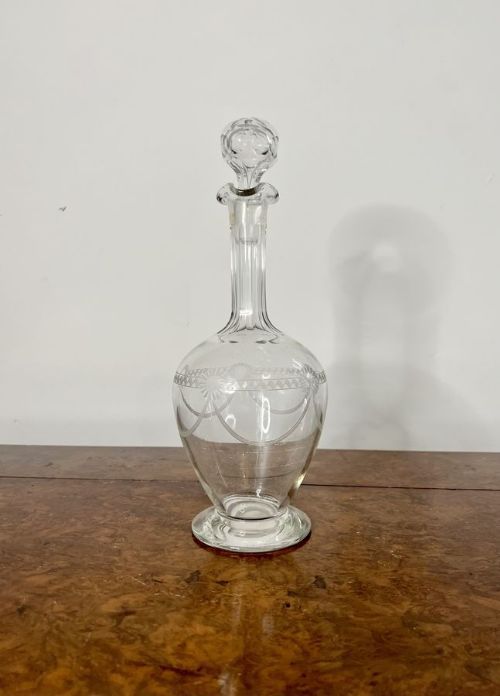
When you search for engraved glass bottles, you encounter a diverse range of vessels spanning the Georgian, Victorian, and Edwardian eras. These pieces primarily function as decanters, perfume bottles, and serving flasks, with Victorian and Georgian examples dominating the selection.
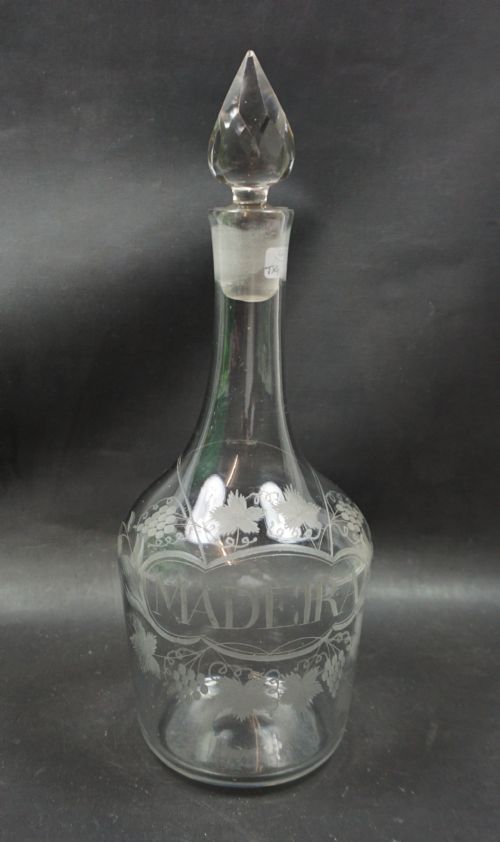
The objects vary from large shoulder decanters and shaft and globe forms to small pocket perfume flasks and spirit bottles. Many pieces bear specific wheel-cut labels such as Madeira, Brandy, and Whisky, indicating their original contents in a dining or dressing room setting.
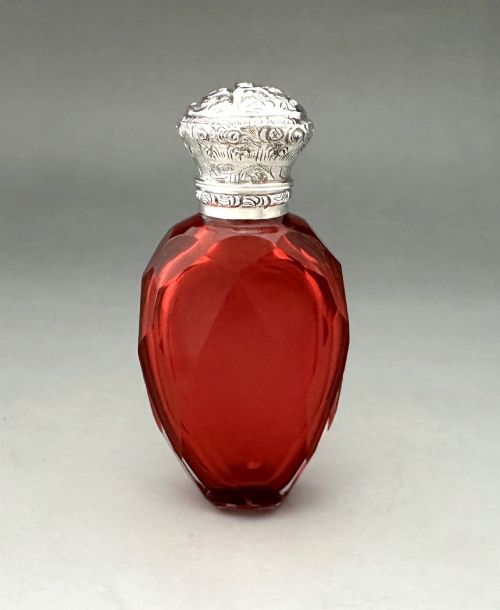
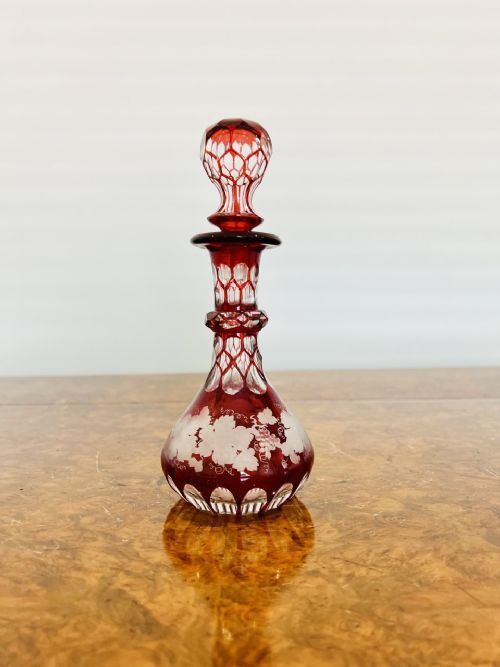
Origins stretch across English, French, and continental workshops, incorporating coloured materials like ruby and amethyst alongside clear lead crystal. You will find that decanters and scent bottles fitted with sterling silver collars or hinged lids represent the most frequent iterations on this page.
Distinctions in craftsmanship
The standard of an engraved glass bottle rests upon the depth, clarity, and precision of the wheel-cut decoration. Superior pieces display crisp, sharply defined lettering and fluid botanical motifs without wander or wobble in the line.
Weight and metal purity also separate standard production from exceptional examples, particularly in the density of the lead crystal and the gauge of the accompanying silver mounts. Thickly cast ruby and amethyst glass with flawless optical clarity indicates superior raw materials.
The integration between the glass body and any metal collar reveals the skill of the original assembly. Tightly fitted collars, matching numbered stoppers, and well-preserved silver hallmarks elevate the overall standing of a piece.
Georgian drinkers kept track of their rum and Madeira with labels cut straight into the glass, ensuring nobody poured the wrong dram.
James Powell·Orfèvrerie Produx Saint Hilaire·S. Morden and Co
The Engraved Glass Bottles Glossary
- Lead crystal
- Glass containing a high proportion of lead oxide, which increases weight, brilliance, and refractive index. This material allowed makers to achieve deep, sharp cuts during the engraving process.
- Shaft and globe
- A specific decanter silhouette featuring an elongated neck above a spherical or bulbous body. This form provides a stable base for serving spirits and wines.
- Double ended scent bottle
- A perfume container featuring a hinged lid at both ends to hold two different scents. These Victorian accessories often incorporate cut glass bodies with engraved silver caps.
- Silver gilt
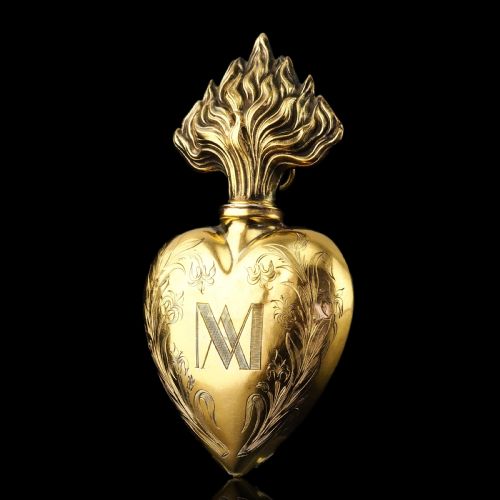
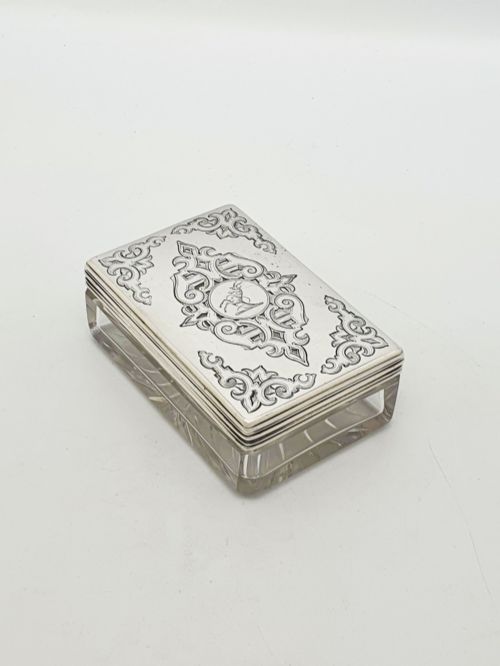
- Silver that has been coated with a thin layer of gold on its surface. This technique provided a rich, warm finish to bottle collars and trinket box mounts.
Engraved Glass Bottles: Frequently Asked Questions
How do I clean an antique decanter?
Fill the vessel with warm water and specialised cleaning beads, avoiding harsh chemical abrasives that might scratch the interior or damage old glass.
Allow the piece to air dry completely upside down on a soft cloth before replacing the original stopper.
Can I still use these bottles for serving?
Many Victorian and Georgian decanters remain entirely functional for serving spirits and wine at the modern dining table.
Inspect the interior for residue or cloudiness first, and ensure any silver collars are dry after washing.
How do I date an engraved bottle?
Examine the style of the lettering, the depth of the wheel-cutting, and the presence of any silver hallmarks or registration marks.
Georgian pieces often display deeper, bolder wheel work, while Victorian examples frequently pair cut crystal with sterling silver collars.
What is the difference between a decanter and a perfume bottle?
Decanters are substantially larger vessels designed for holding wine or spirits on a sideboard, typically featuring a heavy glass stopper.
Perfume and scent bottles are pocket or dressing table sized, frequently fitted with screw caps, hinged silver lids, or glass dabbers.