




Antique Purple Glass Bottles
These antique purple glass bottles are vibrant personal and table accessories, bringing deep violet hues and silver mountings to dressing tables and interiors.
Antique Purple Glass Bottles
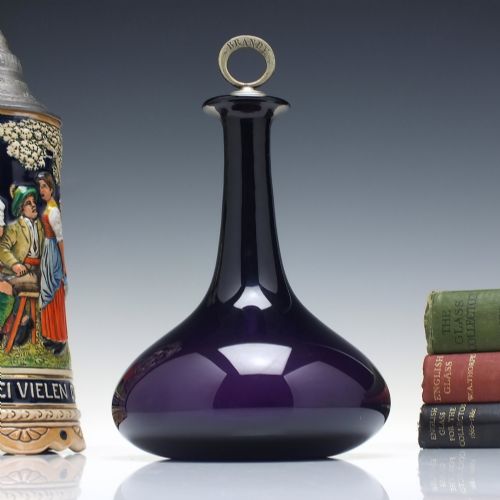
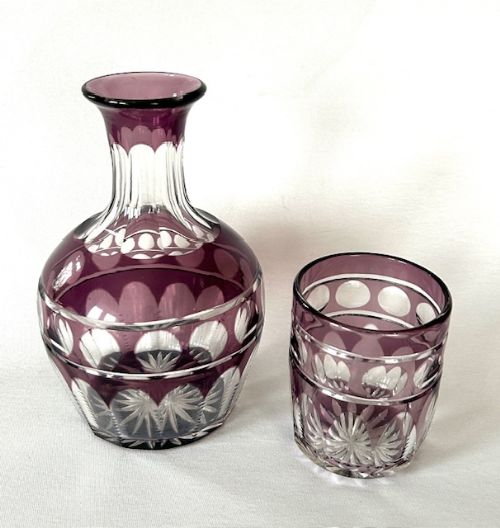
When you search for antique purple glass bottles, you find a collection spanning scent bottles, decanters, dressing table jars, and carafes. The Victorian period and the nineteenth century supply the bulk of these items, alongside Edwardian and Art Deco examples.
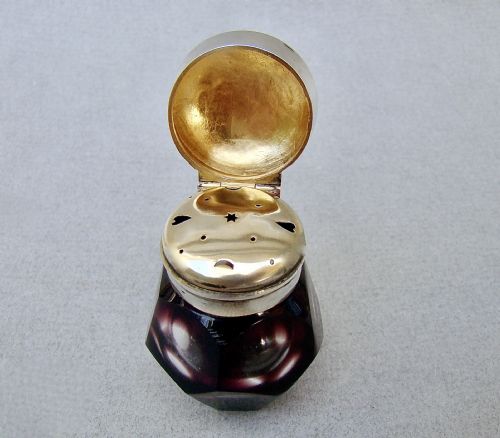
The forms range from personal scent bottles and vinaigrettes designed for travel to larger table decanters and matching globe perfume bottles. English and French origins predominate, often combining rich amethyst glass with precious metal mounts.
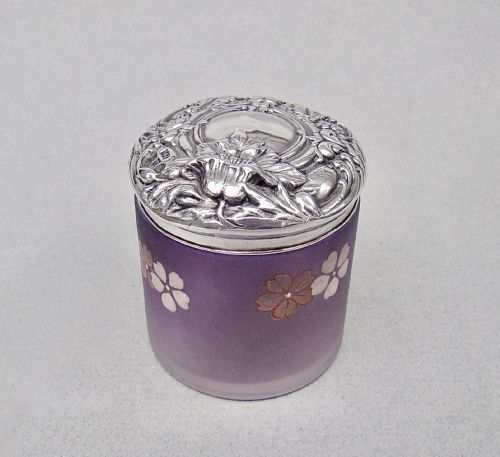
You are most likely to meet Victorian and nineteenth-century amethyst glass vessels fitted with silver lids, stoppers, or overlay work. These serve both decorative and functional roles in domestic settings.
How they were made
The foundation of these objects is blown or cut glass, frequently in shades of amethyst, paired with sterling silver, silver-gilt, or metal mountings. Artisans utilised techniques such as glass cutting, frosting, and silver overlay to decorate the vessels.
Enamelling also appears, notably guilloché enamel work on French pieces from the early twentieth century. Makers combined glass bodies with hinged or screw-top silver lids, sometimes incorporating inner glass stoppers for security.
Travellers once relied on tiny amethyst bottles to survive Victorian carriage rides.
What varies in quality
Quality rests upon the crispness of the glass cutting, the depth and consistency of the purple colour, and the execution of any metalwork or overlay. Pieces by known designers or specific makers stand apart through refined proportions and detailed chasing on the silver.
The integration between the glass body and the metal mounts dictates the overall finish, where tight closures and intact enamel or overlay elevate the piece. Simpler utilitarian bottles contrast with elaborately decorated French and English dressing table examples.
Karl Palda
The Antique Purple Glass Bottles Glossary
- Amethyst Glass
- A purple variety of glassware achieved through the inclusion of manganese or other metallic oxides during the melting process. This hue defines the primary aesthetic of these antique bottles.
- Vinaigrette
- A small ornamental hinge-lipped box or bottle containing a sponge soaked in aromatic vinegar. These were carried during the nineteenth century to mask unpleasant odours.
- Guilloché Enamel
- A decorative technique where a precise geometric pattern is mechanically engraved into metal beneath a translucent layer of enamel. It is frequently seen on Edwardian and early twentieth-century vanity items.
- Silver-Gilt
- Silver that has been coated with a thin layer of gold on its surface. This treatment provides a warm golden sheen alongside the durability of silver.
- Silver Overlay
- A decorative process where silver is applied directly onto the exterior of a glass vessel, often in floral or abstract motifs. The metal bonds permanently to the glass surface.
Antique Purple Glass Bottles: Frequently Asked Questions
What are antique purple glass bottles?
These are historical glass vessels coloured in shades of violet or amethyst, shaped into scent bottles, decanters, and dressing table containers. They date primarily from the nineteenth and early twentieth centuries.
Many examples feature decorative metal mounts, silver collars, or cut glass patterns that reflect the aesthetic tastes of the Victorian, Edwardian, and Art Deco periods.
How were scent bottles used?
Victorian and Edwardian scent bottles held liquid perfumes for personal use at home or while travelling. Smaller vinaigrettes held scented vinegar to revive the user.
They sat on dressing tables or fitted into specialised travelling sets within protective boxes for daily grooming routines.
How do I clean antique glass?
Cleaning requires warm water and mild soap, avoiding harsh scrubbing or soaking silver-mounted elements for extended periods. Gentle care preserves the original glass surface and any delicate metalwork.
Dry the pieces thoroughly with a soft cloth to prevent water spots on the amethyst glass and polished silver mounts.
How do I identify a Victorian piece?
Victorian pieces often display characteristic heavy amethyst glass, distinct cut patterns, and hallmarks on their sterling silver lids. Style markers include ornate floral silver overlay and robust dressing table forms.
Comparing the manufacturing style and mounting techniques helps distinguish mid-nineteenth-century items from later Edwardian or Art Deco productions.
Can I use them for perfume?
Most antique bottles function well for holding modern perfumes if the inner stopper and neck remain intact. Care must be taken with antique seals and delicate silver-gilt interiors.
Many collectors prefer to display them empty as decorative objects on dressing tables or cabinet shelves.