









Engraved Drinking Glasses
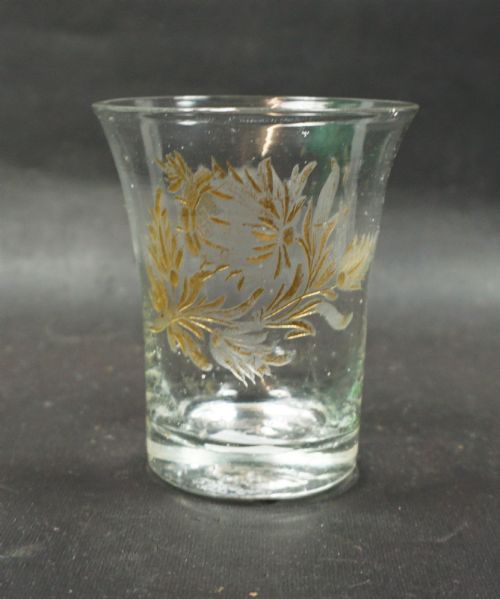
Engraved drinking glasses bring historical table culture to life, offering tactile connections to centuries of social drinking through detailed wheel-cut and diamond-pointed decoration.
Engraved Drinking Glasses
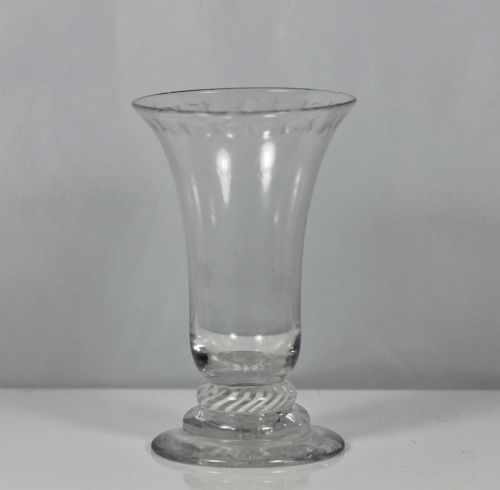
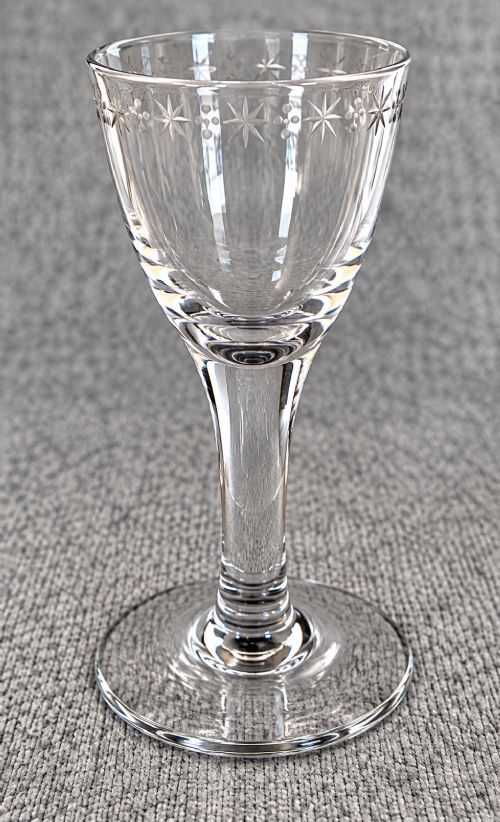
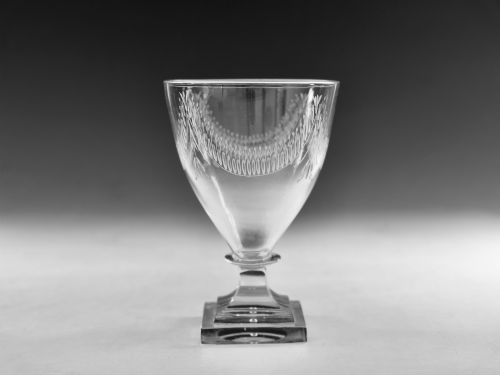
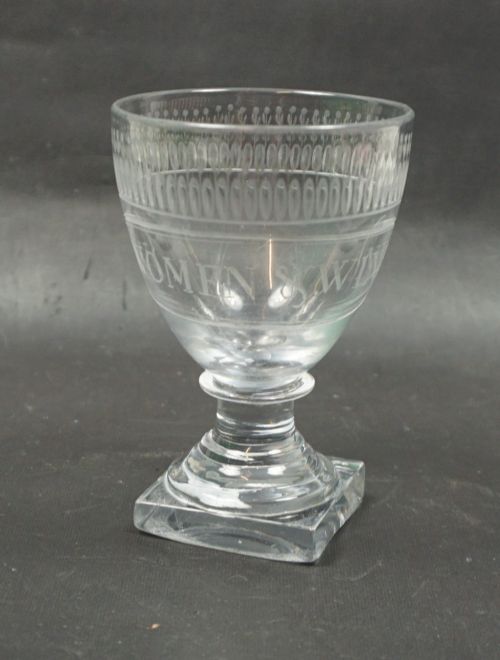
Engraved drinking glasses encompass vessels shaped for wine, ale, spirits, and water, carrying decorative motifs cut directly into the surface. The majority of pieces met here belong to the Georgian and Victorian eras, alongside select Edwardian and Art Deco examples.
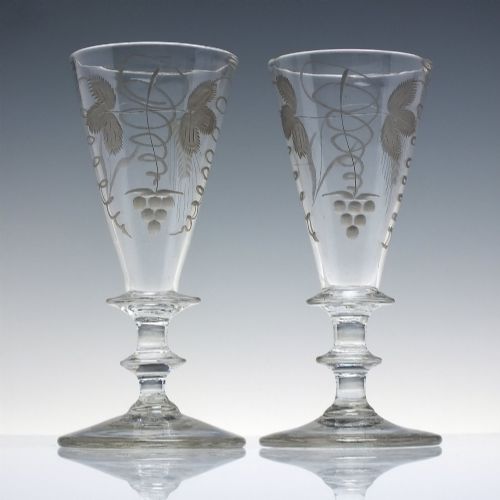
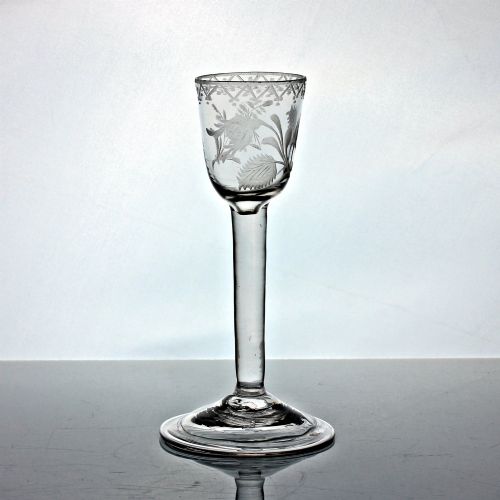
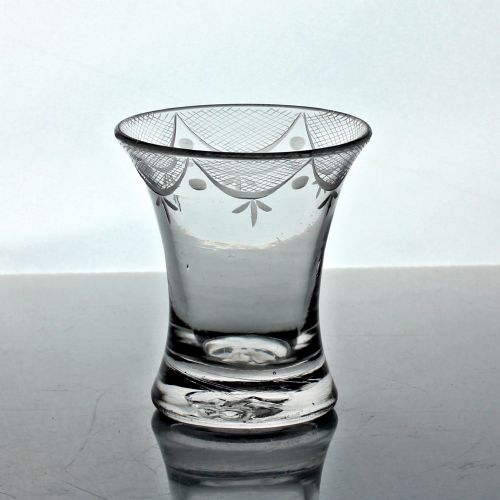
Forms range from intimate dram glasses and firing glasses to substantial rummers and wine goblets. Stems vary from plain and baluster to complex air twists and opaque twists, supporting bowls adorned with floral, heraldic, or commemorative subjects.
English production dominates the selection, featuring lead glass and flint glass alongside continental items from Spain and France. Collectors encounter specialised glassware designed for specific toasts, political sentiments, and fraternal orders.
Materials and Working Methods
Maker operations rely heavily on lead glass, clear lead glass, and flint glass, materials chosen for their heavy weight, clarity, and capacity to hold crisp wheel-cut lines. Artisans also utilised enamel and gold leaf to highlight specific engraved motifs.
Hot metal was blown and manipulated into stems and bowls, incorporating folded feet for stability and air or opaque twists inside the stems through precise manipulation of internal gas bubbles and glass rods. Engraving was applied cold using rotating copper wheels charged with abrasive grit, or by hand with diamond points.
Engraved Drinking Glasses Retail Price Guide 2026
Typical asking prices for engraved drinking glasses among the pieces listed under this phrase on Sellingantiques today, from the lower quarter to the upper quarter. They describe what is for sale here now, not the wider market.
Objects span drinking glasses, rummers, tumblers, and stemware produced across the eighteenth, nineteenth, and early twentieth centuries.
Distinctions in Quality
Quality rests upon the crispness and depth of the engraving, where skilled wheel-cutting yields clean lines and convincing depth rather than shallow surface scratching. Proportion, symmetry, and metal clarity further separate standard vessels from exceptional collector pieces.
Stevens & Williams·La Granja de San Ildefonso
The Engraved Drinking Glasses Glossary
- Lead glass
- Glass containing lead oxide, which increases brilliance, weight, and workability for cutting.
- Opaque twist
- A stem containing white or coloured enamel glass rods twisted into a spiral thread.
- Rummer
- A large, capacious drinking glass on a short stem, popular for beer, wine, and grog during the Georgian and Victorian periods.
- Firing glass
- A heavy-footed glass designed to be banged on a table rather than set down, used in Masonic and social toasts.
- Ogee bowl
- A bell-shaped bowl with an S-curve profile, curving out at the rim and in near the base.
Engraved Drinking Glasses: Frequently Asked Questions
What is a Jacobite glass?
Jacobite glasses are political artefacts engraved with covert symbols such as the white rose of Stuart, oak leaves, or specific ciphers used by supporters of the exiled royal family.
These drinking vessels served for secret toasts during clandestine gatherings, carrying deep ideological significance alongside their functional form.
How do I identify an air twist stem?
Air twist stems contain elongated spiral threads of trapped air running through the transparent glass stem, created by manipulating internal bubbles during manufacture.
This technique requires precise thermal control by the glassblower, resulting in delicate optical effects within eighteenth-century stemware.
Were these glasses used daily?
Many of these vessels functioned as everyday tableware for ale, wine, and spirits in domestic or tavern settings, while others marked specific events like marriages or club memberships.
Heavier rummers and firing glasses endured robust use, whereas delicate twist wine glasses often saw service on more formal dining tables.
What does hop and barley engraving mean?
Hop and barley motifs symbolise the ingredients of beer and ale, appearing frequently on eighteenth and nineteenth-century drinking vessels.
Such decoration directly indicates the intended contents of rummers, flutes, and ale glasses used across British taverns and homes.